
Movie Review – Mercy
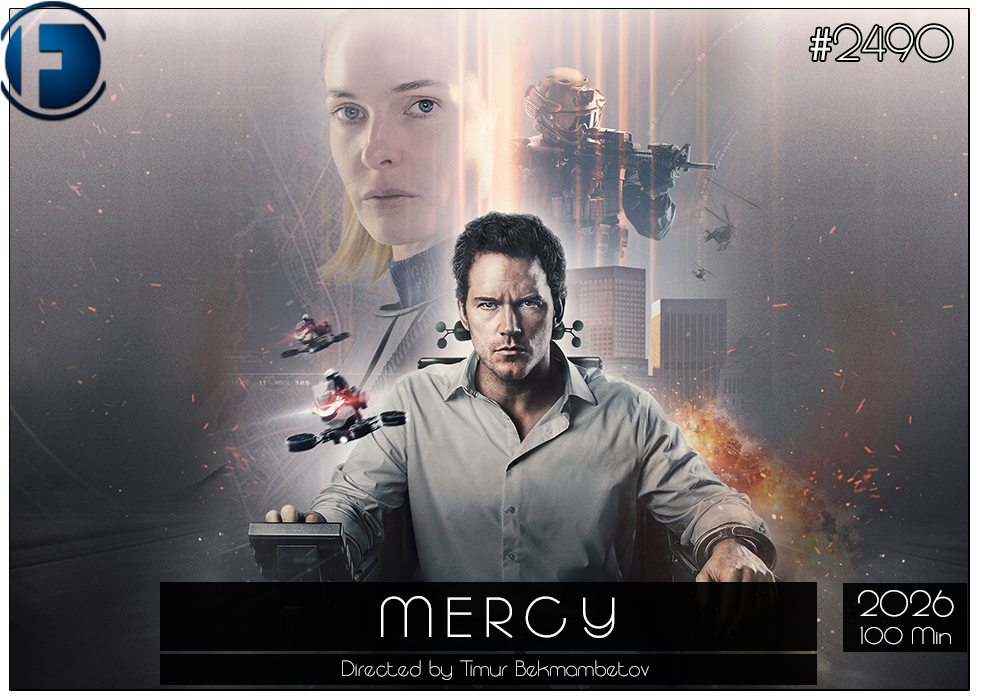
Principal Cast : Chris Pratt, Rebecca Ferguson, Kali Reis, Annabelle Wallis, Chris Sullivan, Kylie Rogers, Kenneth Choi, Rafi Gavron, Jeff Pierre.
Synopsis: Set in the near future, a detective accused of murdering his wife has 90 minutes to prove his innocence to an advanced AI judge.
********
There’s a particular subset of modern thrillers that hinge almost entirely on a central gimmick. These are films that live or die not by their characters, nor by the complexity of their plotting, but by the ingenuity with which their central conceit is executed. The “screenlife” style popularised by films like Searching and Unfriended is perhaps the most obvious contemporary example — narratives constructed entirely through computer screens, video calls, digital interfaces and fragments of technology that form the entire visual language of the film. When done well, the format can be surprisingly immersive; when mishandled, it becomes an irritating exercise in cinematic gimmickry.
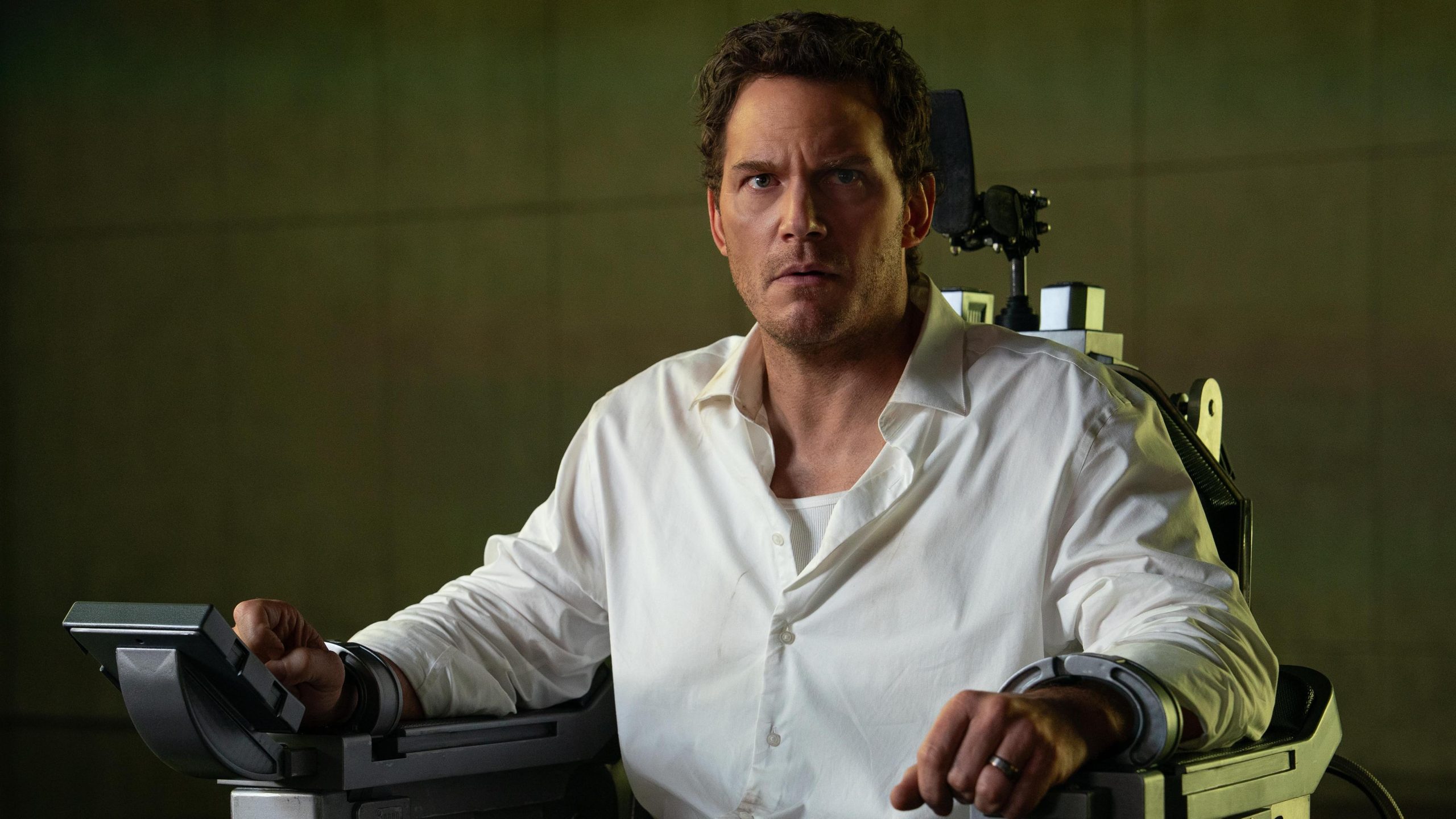
Mercy, directed by Timur Bekmambetov, falls somewhere between those two poles. It is neither a revelation nor a disaster, and certainly not the catastrophic viewing experience its low audience reception might suggest. With a cast led by Chris Pratt and Rebecca Ferguson, the film arrives bearing the hallmarks of high-concept science fiction thriller territory: a near-future justice system governed by artificial intelligence, a decorated police officer suddenly accused of murder, and a digital courtroom in which the verdict seems predetermined before the trial even begins. It’s an undeniably pulpy premise, one that doesn’t pretend to be more intellectually profound than it actually is, and in that sense I think the film’s modest ambitions actually work in its favour.
The story centres on Pratt’s character, a decorated city cop who suddenly finds himself the primary suspect in a high-profile murder case. In the world of Mercy, the legal system has been streamlined into a digital process governed by an artificial intelligence entity known as Judge Maddox — a supposedly impartial arbiter designed to eliminate human bias from the judicial process. The trouble, of course, is that when the algorithm determines Pratt’s character is guilty, the entire system effectively locks him into a digital prison of evidence, procedure and automated judgement. As the narrative unfolds, the film gradually reveals that what appears to be an open-and-shut case might in fact be something far more sinister, with the AI’s conclusions themselves becoming the central mystery.
What gives the film its propulsion is the brutally simple ticking-clock mechanism underpinning the entire story. The trial itself is limited to a strict ninety-minute window, and Bekmambetov makes sure the audience is constantly aware of it. A literal on-screen countdown clock — essentially resembling a familiar Apple Clock timer — sits glaringly in the corner of the digital interface, steadily ticking down towards zero. When that timer hits its final seconds, the AI will automatically trigger the execution. It’s a blunt device, perhaps, but an effective one. Every revelation, every piece of evidence and every frantic attempt to unravel the truth unfolds beneath that steadily shrinking time limit, giving the film a genuine sense of urgency that keeps the narrative moving.
I’ll admit, I went into Mercy with fairly low expectations. A Rotten Tomatoes audience score hovering around the twenty percent mark doesn’t exactly inspire confidence, and the “AI justice system thriller” premise feels like it could easily descend into overwrought techno-paranoia. Yet surprisingly, the film is not nearly as painful as those numbers might suggest. In fact, I found it reasonably entertaining for most of its hour and a half runtime. The screenplay embraces its high concept rather than trying to smother it under layers of faux-intellectual commentary. There’s no tedious sermonising about the dangers of artificial intelligence or long speeches warning us about the death of humanity under algorithmic control. Instead, the script simply accepts that the audience already understands the inherent dangers of a fully automated justice system and uses that premise as the engine for its tension.
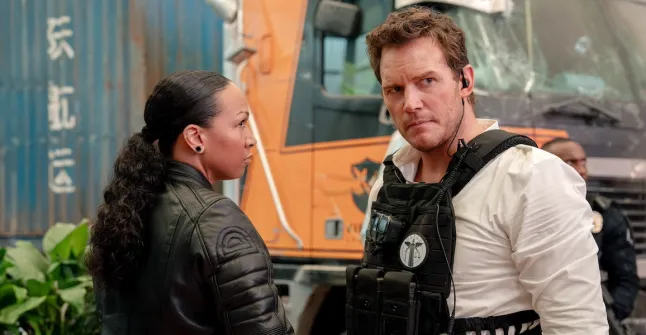
That choice proves to be a wise one. By focusing on the immediate stakes — a man trying to prove his innocence against a machine that has already condemned him — the narrative maintains that constant countdown pressure hanging over every scene. The mystery surrounding the AI’s decision gradually unspools, revealing new layers of deception and manipulation as the story progresses. It’s not the most sophisticated plotting in the world, and there are moments where the logic becomes a little tenuous, but the film remains engaging enough that those cracks don’t completely derail the experience.
Pratt, perhaps recognising the somewhat ludicrous nature of the material, approaches the role with a level of seriousness that the script arguably doesn’t deserve. In many ways, that commitment helps anchor the film. Pratt has built much of his modern career around wisecracking charm — particularly through his portrayal of Star-Lord in the Marvel Cinematic Universe — but here he plays things far straighter. His character is not the lovable rogue archetype audiences may expect; instead he’s a desperate man slowly realising that the system designed to protect justice may have already decided his fate. I actually found this to be one of the film’s more interesting elements. Pratt seems determined to prove he can carry a dramatic thriller without leaning on comedic instincts, and while the script doesn’t give him a huge amount of legitimate emotional depth to work with, his performance remains solid throughout. The closest I could come to a similar turn might be Mel Gibson in Ron Howard’s Ransom.
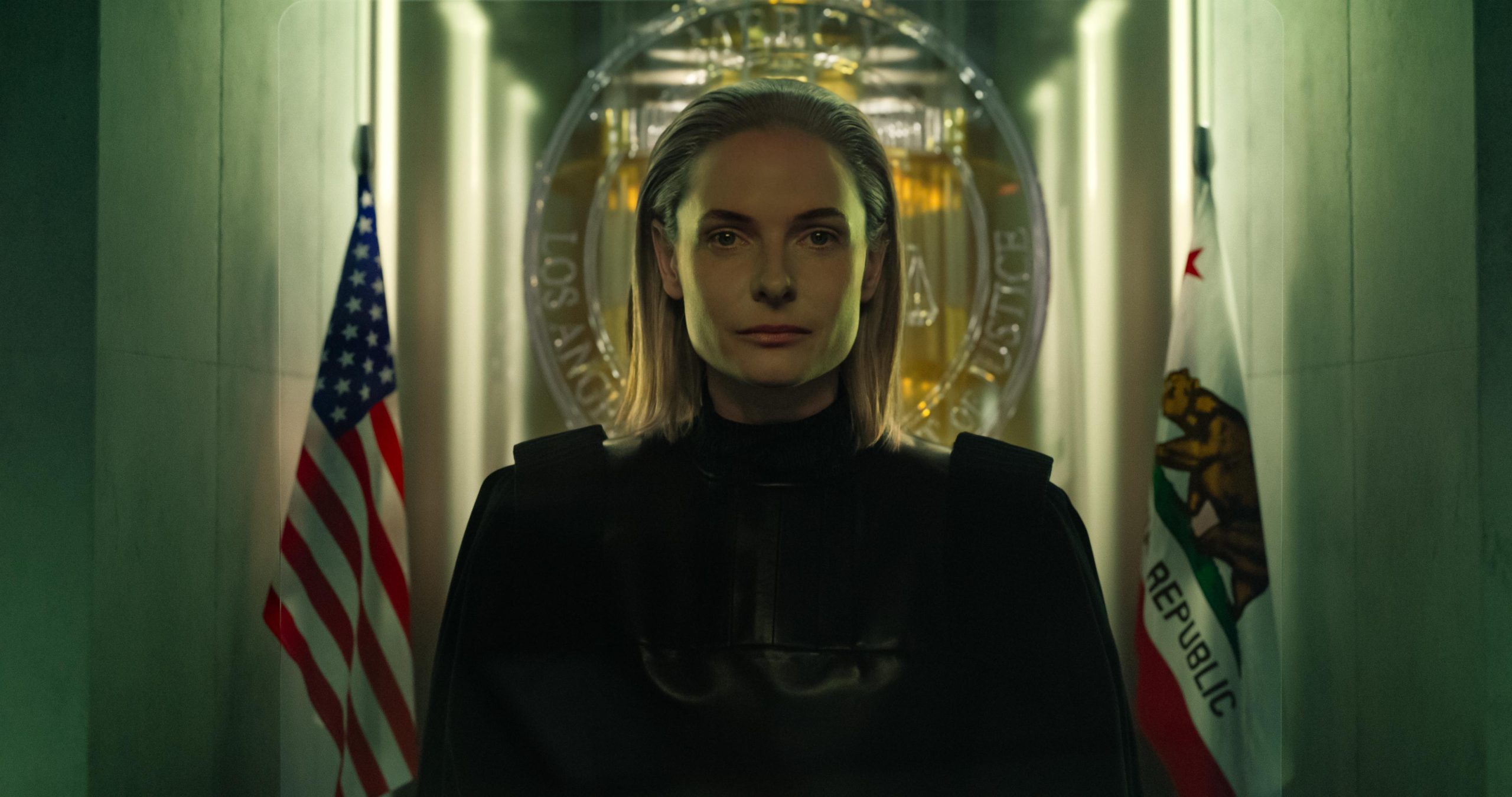
Opposite him, Ferguson plays the digital avatar of Judge Maddox — the AI arbiter presiding over the trial. It’s a fascinating concept in theory: a human face representing the supposedly neutral logic of a machine. In practice, however, the performance is a little less compelling. Ferguson gives the role her usual level of professionalism, but the character itself is written in such a rigidly artificial manner that it often feels like watching a slightly sultry version of Siri or Alexa delivering courtroom exposition. The avatar’s dialogue tends to be delivered with mechanical precision, which may well be intentional, but it also robs the film of any meaningful dramatic friction between the accused man and the entity judging him. Maddox remains more of an interface than a character, and as a result Ferguson never quite gets the opportunity to inject genuine emotional weight into the proceedings.
The supporting cast offers a few pleasant surprises. Annabelle Wallis appears briefly as Pratt’s on-screen wife, though the role is so fleeting that you could easily miss her if you blink at the wrong moment. I genuinely had to double-check the credits after the film ended to confirm it was actually her. It’s one of those blink-and-you’ll-miss-it appearances that feels oddly wasteful given Wallis’ capabilities as a performer. Far more memorable is Kylie Rogers as Pratt’s daughter Britt. Rogers brings a refreshing authenticity to the role, capturing the peculiar emotional mixture that defines teenage behaviour — the casual indifference towards parents combined with a deep underlying loyalty that emerges when things go wrong. Her performance adds a human dimension to a film otherwise dominated by computer screens and digital interfaces. In many ways, I think she’s the film’s quiet MVP outside of Pratt himself.
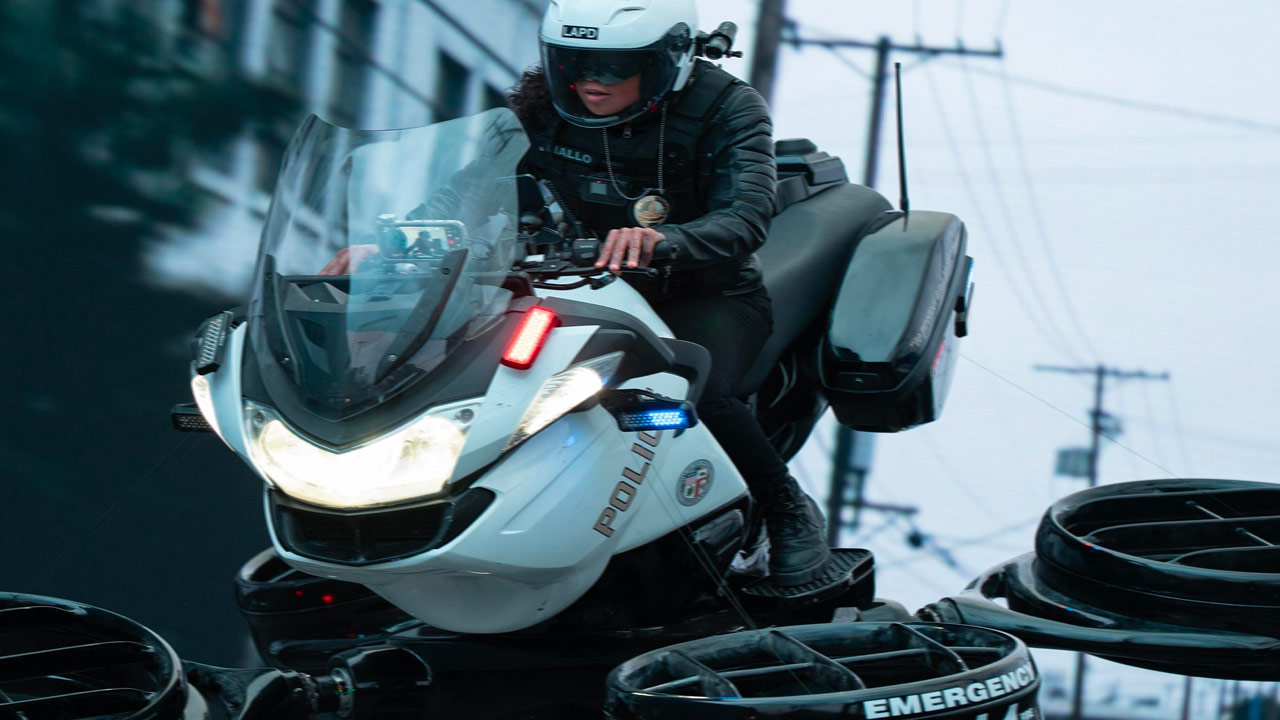
Visually, Mercy is remarkably polished for what could easily have been a visually monotonous concept. Bekmambetov has considerable experience working within the “screenlife” framework — he’s been one of the driving forces behind the format’s development — and that familiarity shows in the film’s slick visual execution. The cinematography is crisp and clean, with digital interfaces layered across the screen in a way that remains readable without becoming overwhelming. Video calls, security feeds, text messages and computer desktops all combine to form the film’s visual grammar, creating a sense of constant technological mediation between the characters and the audience.
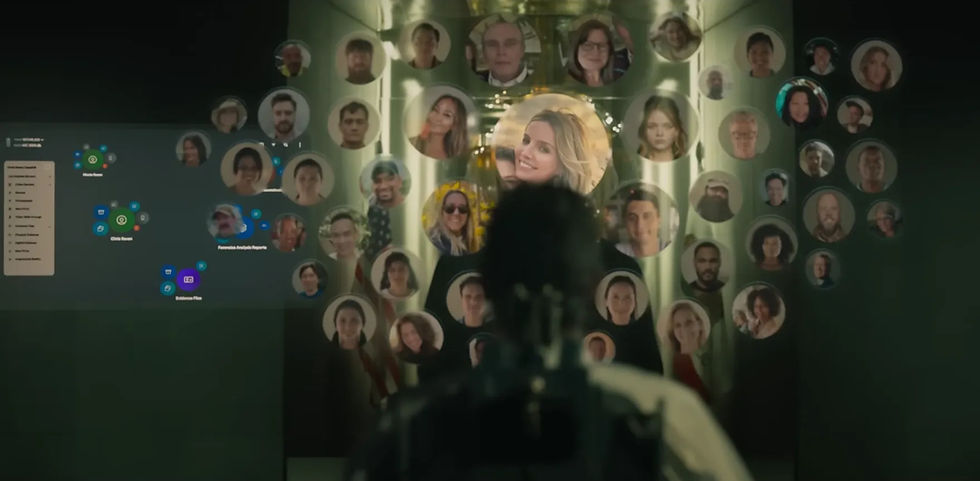
What impressed me most was the sheer density of on-screen information. The film constantly bombards the viewer with data — windows opening and closing, HUD-style overlays tracking evidence, multiple video streams competing for attention — yet the editing keeps everything surprisingly coherent. It never devolves into visual noise. Instead, the interface-heavy aesthetic becomes part of the storytelling, reinforcing the sense that every piece of information in this world is being filtered through machines. The ever-present countdown clock only heightens this sensation, acting as a constant reminder that the digital system controlling the trial is not merely observing events but actively determining the pace at which they unfold.
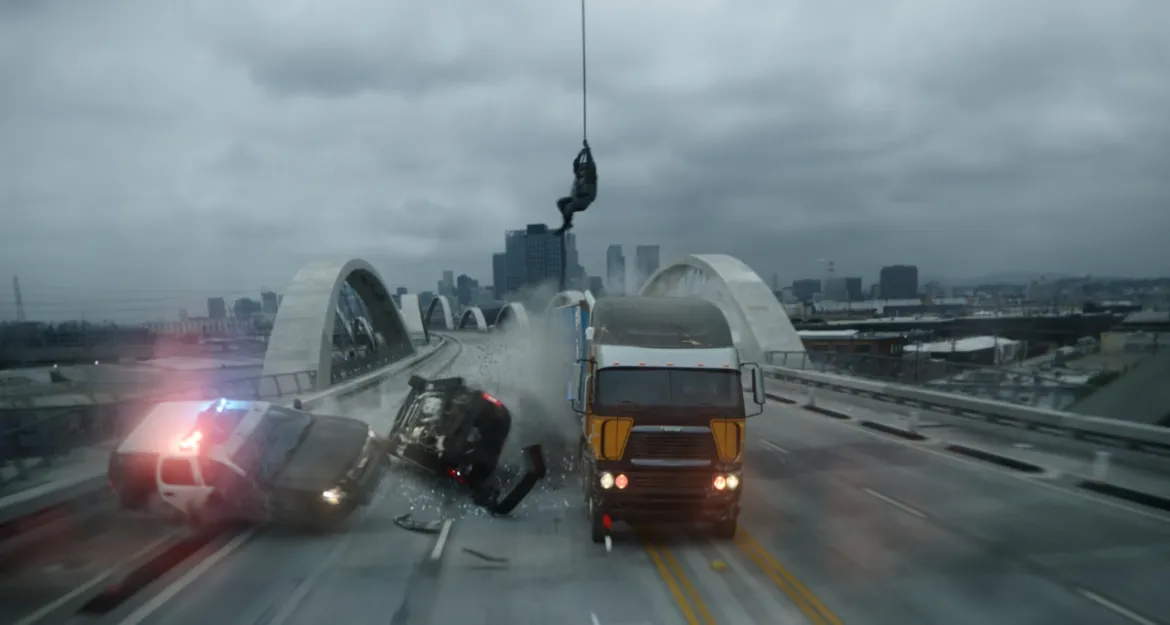
Bekmambetov’s direction leans heavily into maximalism. This is not a restrained or subtle thriller. The pacing is fast, the editing frenetic, and the narrative escalates with a kind of breathless absurdity that borders on the ridiculous. Yet oddly enough, that energy works. The director treats the film almost like a cinematic rollercoaster: once the premise is established, the story hurtles forward through twists, revelations and increasingly improbable developments with very little pause for reflection. And yes, you do have to suspend a fair amount of disbelief to fully enjoy the ride. The mechanics of the AI justice system are occasionally vague, and some of the plot turns rely on conveniently timed discoveries or technological loopholes that feel a little too neat. But that’s part of the film’s pulpy charm. Mercy isn’t attempting to deliver a rigorous philosophical examination of artificial intelligence and the legal system. It’s simply using that premise as the scaffolding for a fast-moving thriller.
The result is a film that feels a bit like a digital-age B-movie: slickly produced, occasionally silly, but consistently entertaining if you’re willing to go along with its logic. At just under ninety minutes, the runtime barely gives the audience time to question the implausibilities before the next narrative twist arrives. In an era where many thrillers feel bloated and overlong, there’s something refreshing about a film that knows exactly how long it needs to tell its story and gets out before the concept wears thin. Is Mercy a great film? No, I wouldn’t go that far. It’s not likely to become a defining entry in the science fiction thriller genre, nor does it offer the kind of thematic depth that many films in this space aspire to. But I do think it’s considerably more watchable than its reputation might suggest. Sometimes a film simply needs to deliver a solid ninety minutes of entertainment, and in that respect Bekmambetov’s high-concept experiment largely succeeds.

I suspect audiences expecting something more intellectually ambitious may come away disappointed. Those looking for a grounded, deeply realistic exploration of artificial intelligence probably definitely won’t find it here. But if you approach Mercy with the right mindset — accepting its outrageous premise and enjoying the escalating mystery for what it is — there’s a surprisingly fun thriller lurking beneath the digital interfaces. It may not redefine the genre, but for an hour and a half of twisty, tech-driven nonsense, I think Mercy works well enough. Sometimes the best approach is simply to buckle up and enjoy the ride.
Who wrote this?