
Movie Review – Kraven The Hunter
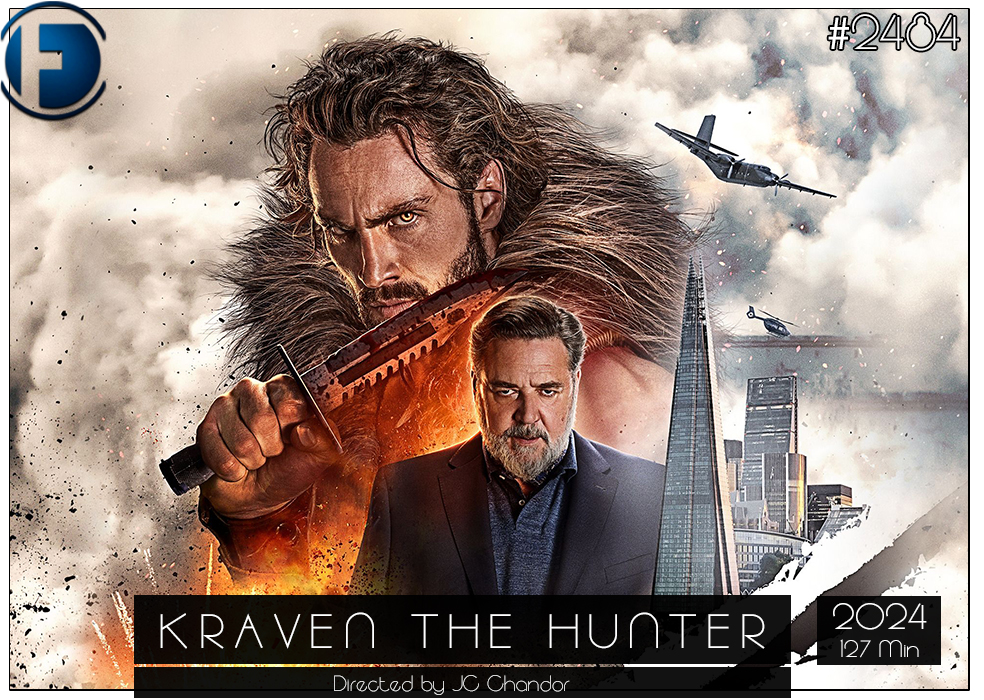
Principal Cast : Aaron Taylor-Johnson, Ariana DeBose, Fred Hechinger, Levi Miller, Diaana Babnicova, Billy Barratt, Alessandro Nivola, Christopher Abbott, Russel Crowe, Murat Seven, Yuri Kolokonikov.
Synopsis: Kraven’s complex relationship with his ruthless father, Nikolai Kravinoff, starts him down a path of vengeance with brutal consequences, motivating him to become not only the greatest hunter in the world, but also one of its most feared.
********
There’s a very specific kind of disappointment that comes with watching a film that clearly had money thrown at it but seemingly no idea what to actually do with it. Sony’s attempt to spin another villain out of its increasingly bizarre Spider-Man-without-Spider-Man cinematic universe arrives with Kraven the Hunter, a glossy but hollow comic-book effort that looks impressive on the surface yet collapses almost immediately under the weight of its own confused storytelling. Following on from the baffling misfire that was Madame Web, this instalment in Sony’s villain-centric Marvel offshoot feels like yet another film desperately searching for a reason to exist. It’s big, it’s loud, it’s occasionally quite pretty to look at… but emotionally and thematically it’s almost completely empty.
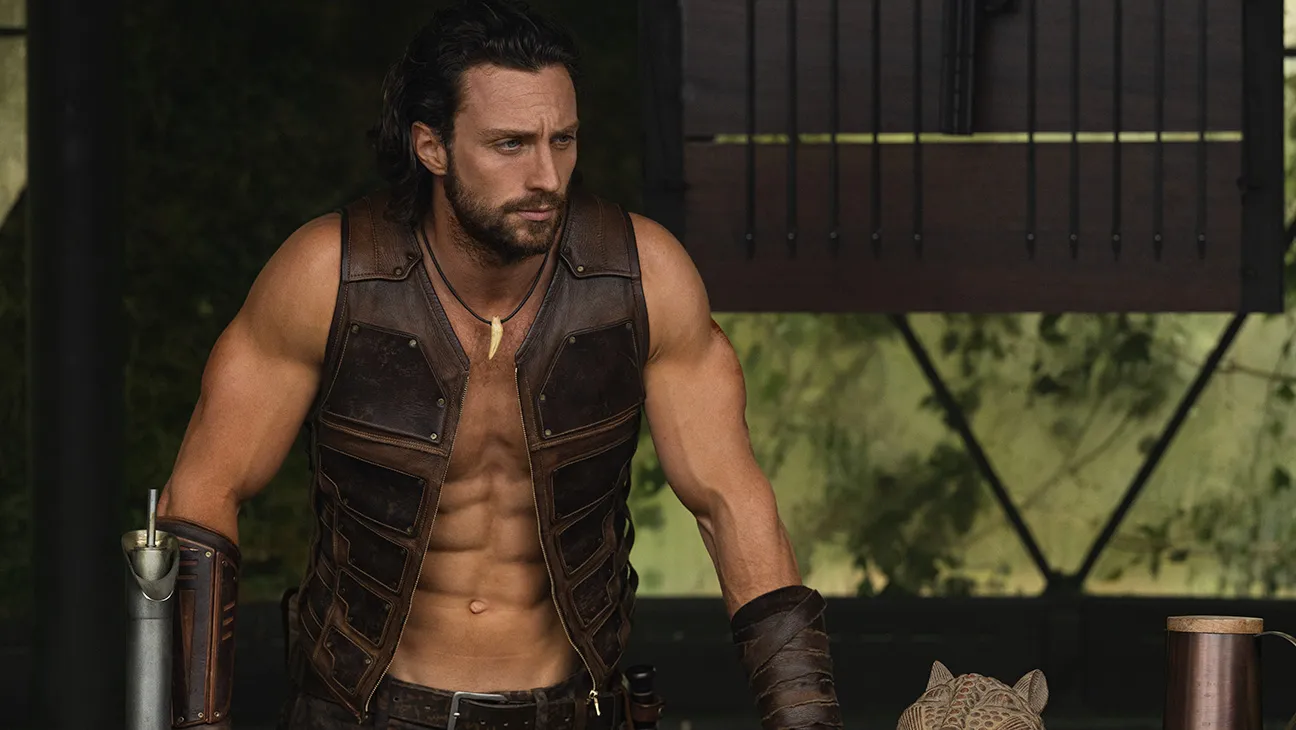
Directed by J. C. Chandor, Kraven the Hunter follows Sergei Kravinoff (Aaron Taylor-Johnson), the estranged son of ruthless Russian crime lord Nikolai Kravinoff (Russell Crowe). After a traumatic childhood shaped by his father’s brutal “predator versus prey” philosophy, Sergei is gravely injured during a hunting trip in Africa and mysteriously survives following an encounter with a lion that leaves him with enhanced physical abilities and heightened animal instincts. Now operating as the vigilante Kraven, Sergei begins hunting criminals he believes deserve punishment while grappling with the psychological scars of his upbringing and his complicated relationship with his father. Along the way he reconnects with Calypso (Ariana DeBose), a woman from his past who becomes entangled in his increasingly violent crusade.
My overall takeaway from Kraven the Hunter is pretty simple: it’s absolute nonsense. Nonsense that looks good, sure, but nonsense all the same. The production design is clearly big-budget, the locations look terrific, and the cinematography does a lovely job capturing the sweeping landscapes — particularly the African savannah sequences and the grey-dour London settings — but none of that can paper over how weak the screenplay is. This is one of those films where things just sort of… happen. Plot points appear, characters react, action scenes occur, and yet there’s rarely any sense that the story has genuine connective tissue holding it all together. Instead it plays like a sequence of events loosely stitched together with clunky exposition. And there’s a lot of exposition.
The dialogue is almost entirely characters explaining things to each other, often in the most blunt and awkward ways imaginable. It feels less like storytelling and more like someone reading aloud from a bullet-point plot summary. Every motivation, every piece of backstory, every plot beat seems to be spelled out for the audience rather than emerging naturally from the narrative. At the centre of it all is Aaron Taylor-Johnson as Sergei Kravinoff, and to be fair to the bloke he certainly commits to the physical demands of the role. He glowers, he growls, he leaps around like an apex predator and flexes his impressive physique with admirable enthusiasm. There is also an astonishing amount of objectification happening here. I’m not complaining necessarily — the camera clearly loves the guy and his eight-pack abs — but it does feel like the filmmakers are relying heavily on his physique to distract from the fact that the character itself is paper thin.

Sergei isn’t particularly interesting beyond having a variety of animal-style superpowers. His motivations are confused, his emotional journey feels half-formed, and the film never quite settles on what kind of protagonist he’s meant to be. Is he a redemption-seeking anti-hero? A mercenary killer trying to do good? A traumatised son rebelling against his father? The film seems unsure, which makes it difficult for the audience to latch onto anything resembling a coherent character arc. At one point I half-expected Sony to reveal he was some bizarre multiverse offshoot of the same actor’s earlier Marvel role as Quicksilver in Avengers: Age of Ultron. At least that might have explained some of the tonal confusion.

Sony’s marketing repeatedly refers to Kraven as an “iconic” Spider-Man villain, which is doing some fairly heavy lifting. Kraven certainly exists within the Marvel canon — originally created by Stan Lee and Steve Ditko — but he’s never exactly been top-tier. In truth he’s closer to a C-list Spider-Man antagonist who becomes interesting mainly when he’s actually facing Spider-Man. Building an entire cinematic universe around Spider-Man villains while carefully avoiding the presence of Spider-Man himself remains a strange creative choice. It’s a bit like organising a grand hunting expedition but forgetting to bring the animal you’re supposed to hunt. Thankfully, Sony has since gone ahead and called time on this thematically confused series of films.
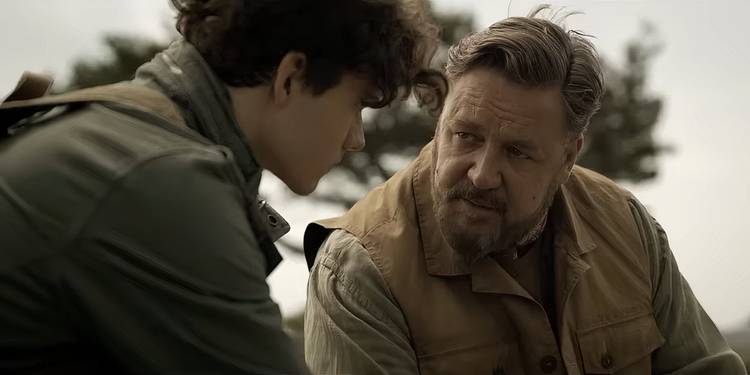
Then there’s Russell Crowe as Sergei’s father Nikolai, a domineering patriarch obsessed with strength, survival and the idea that only predators deserve to rule. It’s the sort of gruff gangster role you might normally cast someone like Ray Winstone in — lots of barking dialogue and menacing glares — and Crowe does what he can with it. Unfortunately the character is written so thinly that even an actor of Crowe’s calibre struggles to leave much of an impression. Watching someone this talented stuck delivering exposition and generic threats is a bit like seeing a trophy hunter turn up with the best rifle money can buy only to discover he’ll be shooting cardboard targets all day.
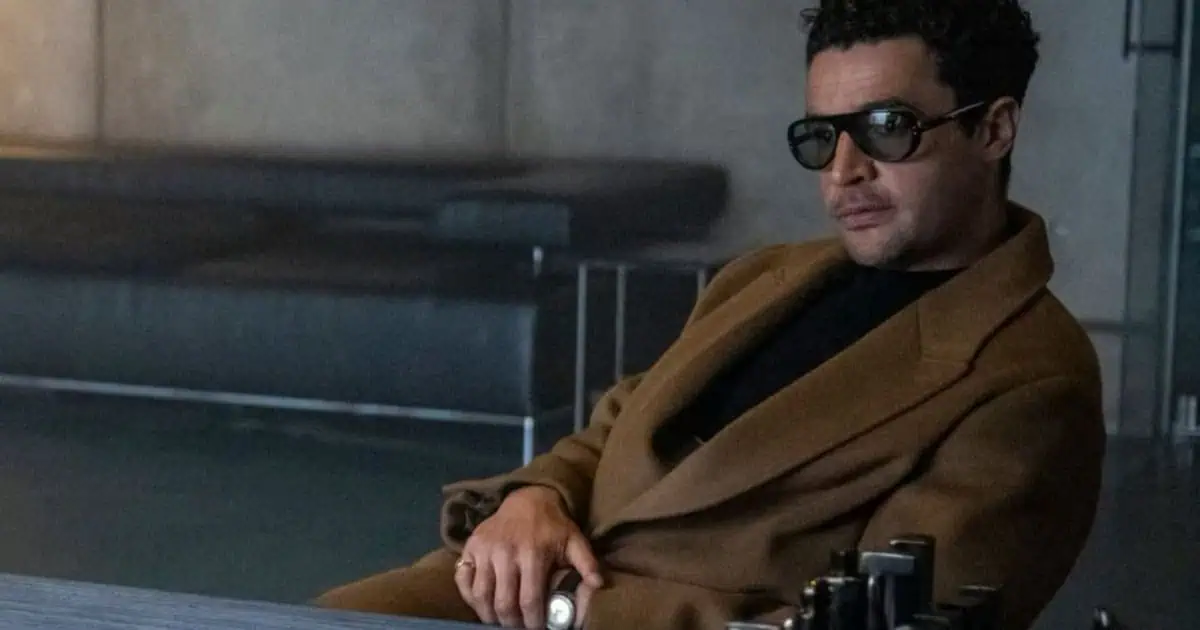
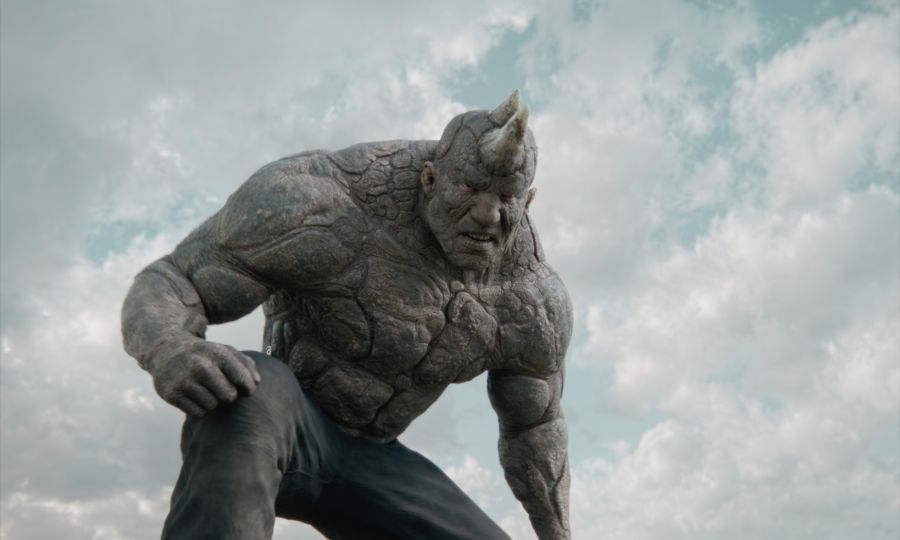
Another Spider-Man villain also turns up here in the form of Aleksei Sytsevich, better known to comic readers as The Rhino, played with surprising gusto by Alessandro Nivola. Of all the actors in the film, Nivola seems to be the one having the most genuine fun with the material. His performance leans gleefully into scenery-chewing villainy, bringing an unhinged energy that at least injects a bit of life into the proceedings. It’s the kind of over-the-top comic-book performance the rest of the film could probably use a bit more of. Ariana DeBose plays Calypso, a character whose name the film seems determined to repeat constantly so the audience never forgets it. DeBose brings genuine emotional weight to the role — not surprising given she’s fresh off Oscar glory for West Side Story — but the screenplay doesn’t give her much to work with. She mostly exists to ground Sergei emotionally and occasionally move the plot forward, which feels like a waste of a very capable performer.

The origin story itself borders on unintentionally funny. Instead of a radioactive spider bite like Spider-Man, Sergei apparently gains his abilities after an encounter with a lion. Not just any lion either, but what appears to be a vaguely mystical lion capable of granting jungle-themed superpowers. The film treats this moment with complete seriousness, which makes the whole thing even more amusing. Later Sergei even faces down a stampeding herd of buffalo like some kind of superhero remix of The Lion King, although the emotional impact of that animated classic is nowhere to be found here.
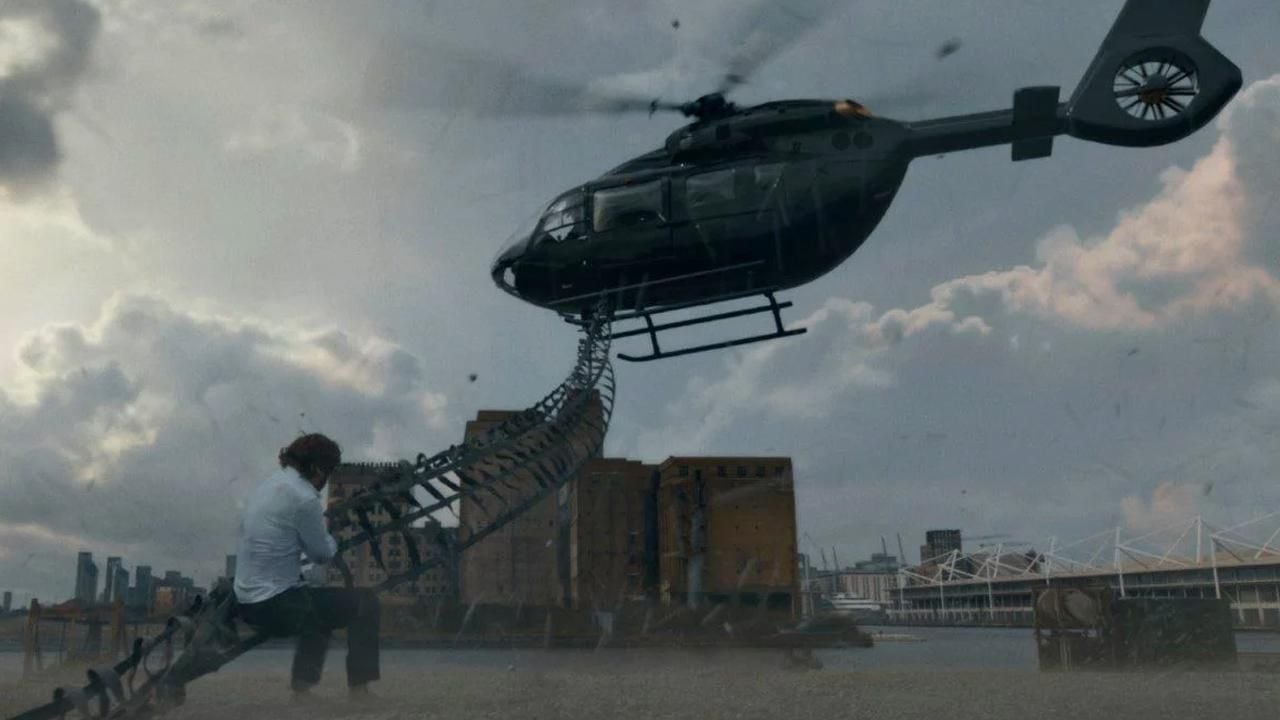
To the film’s credit, it does look fantastic. The production design is excellent, the effects work is slick and expensive-looking, and the various locations used for filming — particularly the African savannah — are gorgeous to watch through the lens of the cinematography. There’s a CGI lion in the opening act that’s genuinely impressive, and the film’s visual polish suggests a production with plenty of resources behind it. The musical score rumbles away in the background with plenty of thunder and dramatic weight, although it’s not particularly memorable. It does its job well enough without leaving much of an impression once the credits roll.
One thing Sony clearly leaned into here is the film’s more mature tone. The violence is surprisingly bloody at times, with several brutal fight sequences showcasing Kraven’s predatory instincts. Unfortunately the violence doesn’t add much to the movie beyond surface-level spectacle. Without stronger characters or a more compelling narrative spine, all the bone-crunching brutality feels oddly hollow. If the film is meant to be about redemption — and it certainly hints at that idea — it never quite commits to exploring it properly. Sergei is framed as a mercenary killer attempting to transform himself into something resembling a heroic figure, but the transition feels rushed and poorly justified. The film seems ambivalent about its own central character, which makes the supposed emotional journey feel muddled and unsatisfying.

In the end, Kraven the Hunter is a frustrating film because the ingredients for something interesting are clearly present. A talented cast, slick direction, impressive visuals and a character who could anchor a darker corner of the Marvel universe all exist here in theory. Unfortunately the horrendous writing, stock plot points and confused world-building drag the entire enterprise down. Aaron Taylor-Johnson makes for a gruff, growling screen presence, but the character simply isn’t given enough substance to support a compelling story. Rousing, this is not. For silly superhero fun you’d probably be better off hunting elsewhere. Kraven the Hunter looks impressive enough on the surface, but beneath that glossy exterior there’s not much worth chasing. No, I didn’t enjoy this.
Who wrote this?