
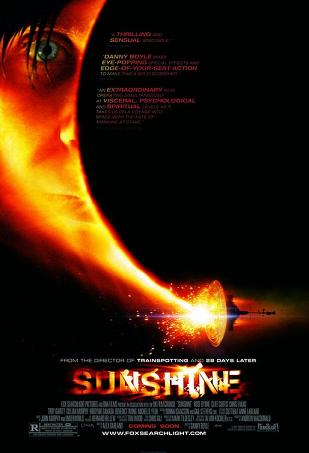
Movie Review – Sunshine
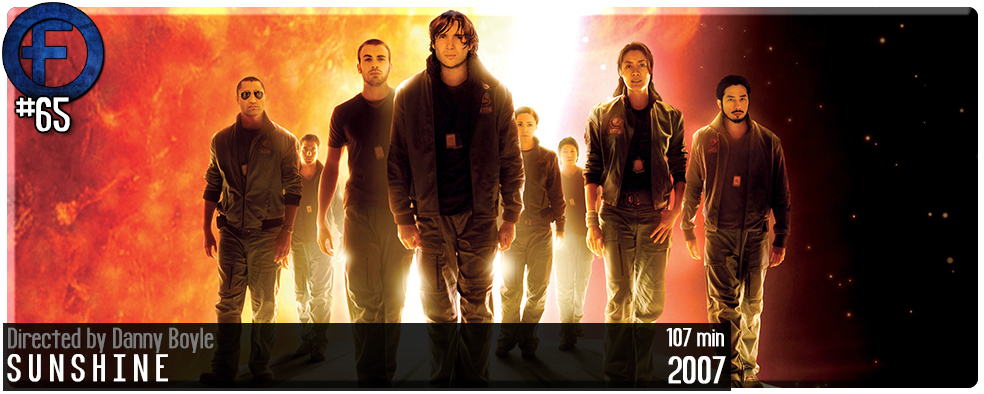
Principal Cast: Cillian Murphy, Chris Evans, Rose Byrne, Michelle Yeoh, Cliff Curtis, Tony Garity, Hiroyuki Sanada, Benedict Wong, Chipo Chung, Mark Strong, Paloma Baeza.
Plot Synopsis: A team of international astronauts are sent on a dangerous mission to reignite the dying Sun with a nuclear fission bomb in 2057.
**********
Let us, up front, lay a bit of groundwork, that is to say a whole lot of blame. Seventy percent of the “suck” in Sunshine I park at the door of scriptwriter Alex Garland (for reasons soon to become at least vaguely apparent). The other thirty percent I distribute equally among director Danny Boyle (who, as I understand it, read the first draft of Sunshine on the Tube after Garland gave it to him; I can only (a) hope that Mr. Boyle missed four to six stops on his way home and ended up stranded in Colindale and (b) remind the reading audience that usual Tube activities consist of jostling, being jostled, and staring blankly into a nether distance just past one’s nose. Which is where Mr. Boyle didn’t think to look when reading Sunshine.), the actors (who achieved a rare feat of hive-mind thinking or an even rarer level of intoxication at the pub when they agreed to sign on), and producer Andrew Macdonald.
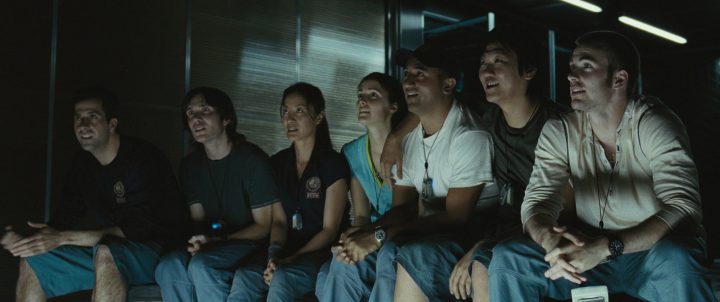
Technically, there are worse films than Sunshine. Of course I admit that. This just happens to be the film I find the most utterly disappointing and disheartening. The one that gnaws off a tiny bit of my soul every time I think about it.
Supposedly Sunshine offers insights into the futility of hope or of human endeavor (no one lives forever, after all; but where’s the insight in that? I’m not immortal? Well, shock my monkey!) and religion versus atheism, science versus belief. A subtle difference lies, however, between exploring humanity’s relationship with the unknowable and simply playing God. And that’s what Alex Garland does. He plays God. In Sunshine, he plays God like a capuchin on crack.
We could argue that it’s his sandbox, and his characters and settings are his toys, not ours, and that he’s free to do with his toys as he wishes. That doesn’t bode well, however, for either logic or narrative flow, not to mention the hapless misfits who find themselves trapped in The Eight Stooges Star in ‘Saw: The Space Edition.’ If Garland set out to trigger an avalanche of errors, to compose a veritable primer on how to screw up a vitally important task, he did a very good job. If he set out to sell with any degree of believability this story or the characters populating it, he effed the eff up.
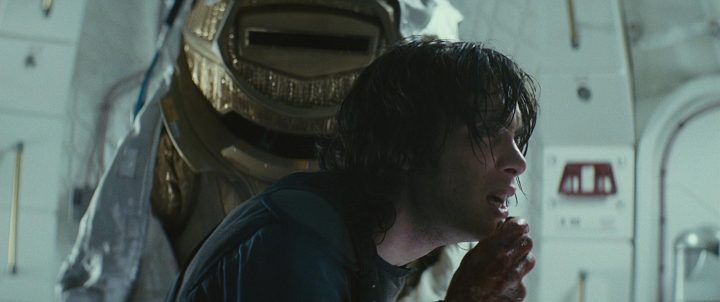
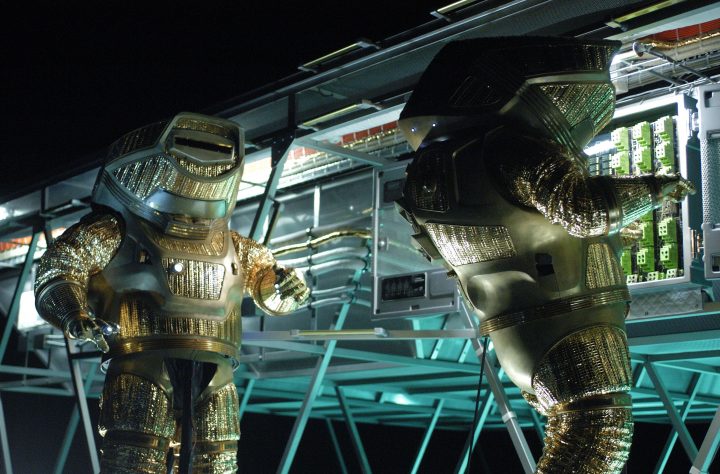
Sunshine as a whole suffers from what a very good friend of mine calls “just-’skuz-itis”: Why are the spacesuits so ridiculously huge and clunky (other than the fact that Danny Boyle, in what has to be one of the most misguided moments of inspiration in recent film history, decided that eternally doomed Kenny from South Park made a dandy design template), when the huge clunkiness does nothing special to protect the wearer (and in fact renders said wearer practically immobile and blind in the bargain)? Just ‘skuz. Why is the computer so big, when present trends point toward ever-smaller components? Why is that computer housed in a vertical vat of coolant six feet deep? Why can that computer run a ship with a bajillion moving parts and chat with the human crew, yet prove inadequate to check a course correction? Just ‘skuz, ‘skuz, and ‘skuz. Why are there no spare parts for that computer, when any present-day computer geek can swap out RAM chips, hard drives, or even processors? Why is there now a radio “dead zone” near Mercury– when, in reality, good ol’ Mariner and friends have been sending radio signals back from the vicinity of Mercury for decades? Just. ‘Skuz.
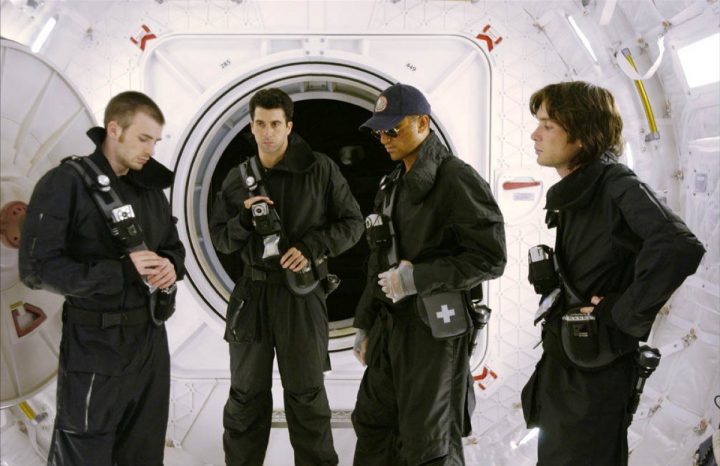
Of course, the list goes on. And I’m getting ahead of myself. I’ve gone and neglected the Plot Capsule. In the case of Sunshine, for the many millions of you lucky enough not to have seen it, the story goes like this:
Some fifty years from now, the sun is dying. (Oh, yes it is: Cillian Murphy tells us so in the opening voiceover, and he’s playing Capa, the film’s physicist and resident genius, so he ought to know.) A crew of astronauts, aboard a ship ominously (ironically? sarcastically?) named the Icarus II, are heading out to jump-start our sputtering star with a dark-matter bomb (mm hm) possessing “a mass equivalent to Manhattan Island.” (And we’re not supposed to know this, at least from what the script itself tells us, but if you wade into the DVD commentary or venture onto the Internet [making it necessary for your audience to consult outside sources: certainly a sure sign of a sound script], you’ll learn that the sun is dying five billion years ahead of schedule because a nasty bit of business called a “Q-ball” has wedged itself in the sun’s guts and that Capa and his pals basically have to eight-ball that Q-ball the hell outta Dodge before the Q-ball permanently disrupts the sun’s nuclear groove.)
Those of you not still mired in the preceding parenthetical may have noticed the “II” in the previous paragraph. (Orienteering badges all ‘round!) See, a crew was sent out previously on sun-fixing duty; the Icarus I, their good ship, dropped off the radar and was never heard from again. (Why the mission’s planners thought to name it “number one” in the first place is one of those questions that, well– Oh, never mind.)
So what happened to the Icarus I…? And her crew? Are you itching to find out? Are you dying to know? Do you wish I’d never learned to italicize…?
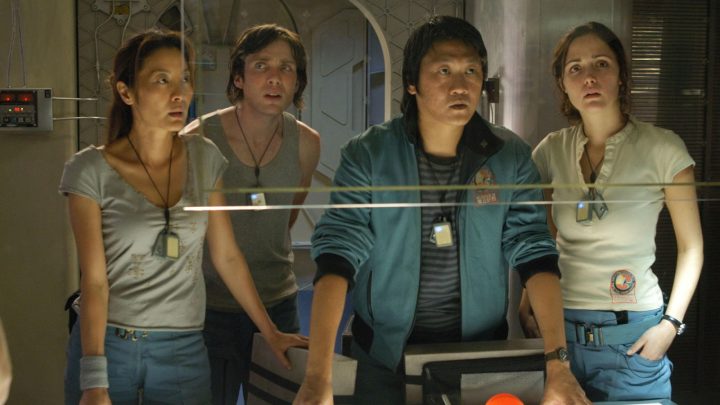
To make a long story short (and mercifully render the remainder of the synopsis in Roman type), our intrepid second team of sun-starters picks up a distress beacon from the first ship somewhere in the neighborhood of Mercury. And– being (creatively) out of radio contact with Earth– they decide all on their own to stop and have a look-see.
Which is when Sunshine goes right off the high rails and plummets to its doom.
A disclaimer: Human fallibility is fine as far as it goes, but you have to believe that people in a movie would screw up the way they do. To put it bluntly, I’ve never been so frustrated by a script or by the behavior of a group of characters. I’ve never, ever muttered (in the privacy of my own home, I have, in fact, been known to shout at this thing) “Why are you doing that–? What–? What are you DOING?!?” so many times during a film as I have when watching Sunshine.
Another disclaimer: Danny Boyle gets kudos from his fans for being able to master any genre on which he sets his sights. I would modify that. I think he’s not afraid to tackle any genre, and we should give him a shred of credit for his fearlessness– or, conversely, for being unafraid of falling flat on his ass. Keep in mind that both Evel Knievel and Ed Wood were similarly unafraid. Just because you try something doesn’t mean you’ll do it well, and the current philosophy of patting people on the head just for trying is well past its sell-by date.
We might think that this has been a long, tiring voyage for the Icarus II and her crew (the trip has taken something like sixteen months, or so Capa says), and that nerves and discipline have frayed, ala Dark Star, but Garland and Boyle choose to dump us right in at the end of the mission, in the last days leading up to the deployment of the sun-boosting payload, and all they can think to do to convey the tedium and tension weighing on the crew is to show Rose Byrne looking bored as her character, ship’s pilot Cassie, reads, Chris Evans’s character, Mace, in need of a shave and a haircut, and a dumb, slash-fic-friendly brawl between Mace and Capa, who has hogged the space-phone, thereby preventing Mace from making a final call home. This is enough, think Danny and Alex, to excuse the sheer dimbulbery that follows.
Sorry, boys: it isn’t.

Mace, having reaffirmed his commitment to the mission in a visually manly-man way by cutting his hair, immediately fudges that commitment by volunteering phone-hog Capa for a dangerous repair job that Capa, who, as bomb-meister and arguably the mission’s most irreplaceable member (Mace, as befits Alex Garland’s magnificently poor continuity skills, in a later scene notes as much) has no business performing. Which is made even worse by the fact that Kaneda, their captain (a stoic, or stoically confused, Hiroyuki Sanada: it has to be rough when not only is English not your native language but when you’re shooting scenes out of order, in a script that makes little sense to begin with, and a great deal of those scenes involve green-screen), not only goes along with said volunteering, rather than packing Mace, the ship’s mechanic, off to do the repair, but goes out on repair duty, too, instead of sending fifth-wheel comms officer and second-in-command Harvey (a whiny Troy Garity; and since when does a captain say, “You’re second-in-command. You’re not going anywhere.”? That’s the point of HAVING a second-in-command, idiot: DELEGATION. Not in Gar-land, I guess.). Furthermore, going out on shield-repair duty gets Kaneda killed stark-raving-flambe-dead: Boyle and Garland milk his death scene for all it’s worth in terms of sweaty, quick-cut, big-music drama, but when you remind yourself that Kaneda had no business being out there in the first place, it all seems really silly.
But why are they going out to repair the shield at all? ‘Cause a meteorite hit the shield, right? ‘Cause a part wore out and broke from traveling that far through space, huh?
Nope.
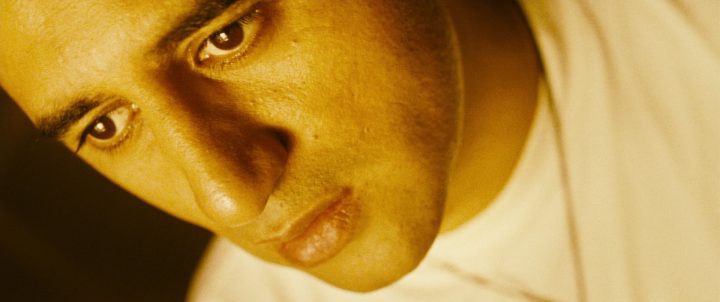
Remember that gripe about the computer not being able to check calculations? Grab a cup of coffee or a Coke and settle back: this is gonna get long.
Icarus I. The first ship. Remember? They hear its distress beacon near Mercury; they see the ship in orbit around Mercury; they decide to stop. Trey, their navigator, screws up the course correction because– yep, you guessed it!– their miracle computer can’t check his math, he wouldn’t dream of asking anyone else to help him check his math (not like there’d be PROCEDURES or anything for changing course– what sort of impossibly important, we’ve-only-got-one-shot-at-this space mission do you think this IS?), and the computer couldn’t POSSIBLY be bothered to model the outcome of Trey’s calculations before they’re executed. (Jiminy Cricket on toast, even the stupidest PC knows enough to say, “Are you SURE you want to do that…?”) So the shield at the front of their ship, the mile-wide multi-paneled salad plate that keeps them from burning up as they fly right at the sun, breaks (but not, obviously, or regrettably, enough to burn them all up right here and now), and they have to go out and fix it– but not before they decide to stop at the first Icarus in the first place, in a delightful scene that goes something like this:
“They’ve still got their solar bomb. Let’s go grab it!” says Capa.
“Let’s not and say we did,” says Mace, and anyone else with an eighth of a brain. See, contrary to the general belief of the five thousand or so people who’ve seen it, Sunshine doesn’t get dumb twenty minutes from the end. It’s dumb from the get-go. It’s dumb right out of the gate. In fact, I could say that unflinching, unflappable stupidity is one of its greatest strengths. (Consistency is a virtue, no?) It doesn’t stop and get dumb halfway through. It starts out stupid and stays that way.
(To be fair, let me offer a disclaimer: “dumb” can be quite entertaining. “Dumb” has its place in film. I suggest, however, with no humility whatsoever, that that place is not in an otherwise dour movie about the saving of the entire effing world.)
“Capa knows all about sun-bombs! Let’s let him make the decision to stop!” chirps Searle, the mission’s half-baked (literally: like any good doctor, he’s all for toasting himself in the supposedly ailing sun’s mighty rays, the risk of skin cancer be damned. Garland has him mumble bits of nonsense about “seeing” something in the sunlight, but as New Zealand actor Cliff Curtis’s American accent sounded to me like me doing my very worst Jimmy Stewart impersonation, I found it hard to listen to him.), half-nuts psychologist.
“Oh, let’s!” stoically choruses Kaneda, obviously forgetting the “captain” part of his job description, as well as mission protocols, mission goals, the chain of command, and the oh-so-minor importance of gathering input from, oh, I don’t know, the PROFESSIONAL FREAKING ASTRONAUTS who actually pilot and navigate the good ship Icarus II, the design of which hardly screams “stops on a dime.”
“Oh, shit,” says Capa, uttering the one sensible line of dialogue in the entire film, when he realizes the tonnage of responsibility he’s managed to call down on himself. Soon, though, like any good boy in a Garland script, he’s blundering blithely into the land of just-skuz-itis when he makes the final decision (or, to put it another way, when Kaneda, incapable of making a command decision or of acknowledging input from the rest of his crew, dumps said decision on Capa’s bony shoulders) to detour to the ostensibly derelict Icarus I and make off with the other ship’s sun-spacklin’ payload.
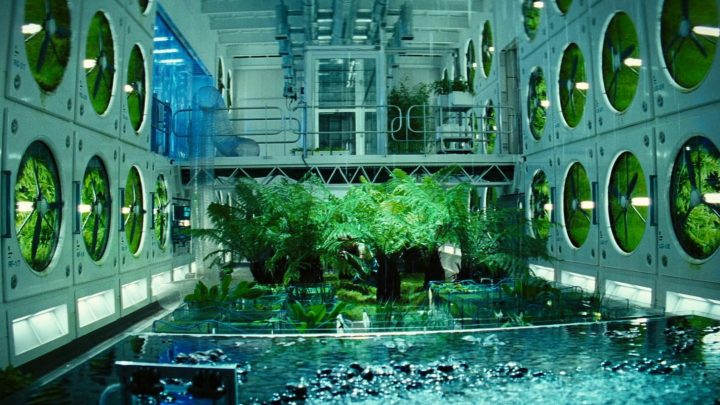
Wait. An aside. I am not a physicist. I cannot cook. To link those two statements, however haphazardly, allow me to observe that physics, like cooking, seems to require a certain amount of careful planning. So when a physicist in a film as much as announces, “We’ll just double it,” with regard to a recipe that involves a nuclear device roughly the size of the asteroid that wiped out the dinosaurs, I get concerned.
Which is what happens in Sunshine. Never mind that lobbing even two dinosaur-killing-asteroid-sized bombs into the sun would, in reality, have about as much effect as chucking a toothpick at an aircraft carrier. More apropos to the scenario at hand (that being the one in which we’ve all dutifully suspended our disbelief), never mind the delicate, elaborate, painstaking calculation that must have gone into this grand, world-saving enterprise at all: Capa sells his brilliant new plan to Captain Kaneda with a line worthy of the Bulwer-Lytton contest for crap prose: “Two last chances are better than one.”
(Which is nearly as Bulwer-Lytton-worthy as a later bit of script: “What are you trying to do– remind us of our lost humanity?”, arguably the worst line I’ve ever heard in a film not translated badly from anything else into English. It’s as though Garland ran the dialogue through a program called LameDubbing 2.0.)
But, thinks anyone with that good ol’ eighth of a brain, you can’t have two LAST chances….
And why not stop for your second last (laster? lastest?) chance later? After– or if– your first last chance doesn’t work?
And how are you going to retrieve that second last chance? You’re running with a skeleton crew as it is; are you going to hook the SLC (second last chance) to the FLC (the first– oh, you know the rest) using space-bungees? Do you even have the password to launch the SLC?
Ah, listen to the silly skeptic!
For Sunshine is not just about illogic and sheer inanity (not to mention a lack of discipline that would put most frat parties to shame– and that’s not entirely fair: your average boozehound with a beer bong on his head exhibits more focus than these ADHD rejects), it’s about PRETTY. And SHINY. And GLITTERY. And LOUD.
It’s as if someone at Fox, having waded through Alex Garland’s thirtieth rewrite (and there were thirty-three rewrites; for once I’m not exaggerating), called up the special effects and music people and said, “The script is D.O.A. For God’s sake, do something–!”
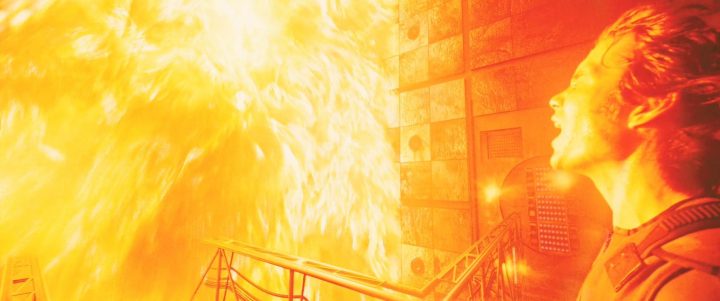
To their credit, they do do something. The sun is very bright. The ship is very spindly. It has many moving parts. (We have no idea where we are on the ship at any given time– I think, mercifully, the F/X kids weren’t given a copy of the actual script– but that’s sort of okay: the ability to orient ourselves wouldn’t slow Garland’s stampede of blunders anyway.) Things explode and burst into flame with great aplomb. Space beeps and blips and makes roary-burny noises. (Never mind that “lack of air” idea: the Foley people kindly showed up and put in a whole lot of work, and who are we to tell ‘em that there is no sound in space?) The music is, for the most part, with the exception of two monumentally inappropriate pop tracks dropped like bowling balls onto the end credits, epic and and heartbreaking and magnificent (composer John Murphy was given a copy of the script, it seems– I would give my wisdom teeth to know what movie his script was for.).
Besides GLITTERY and LOUD and all the rest, Sunshine features DEATH. Lots and lots of DEATH. Because death is profound (not). And original (not). And beautiful (if you’re extremely naive, that is, or kind of a perv, or both. Otherwise– most emphatically– NOT). Cillian Murphy has a moment of death-porn at the end that qualifies as the most disheartening (and ridiculous: if it’s all happening in a billionth of a second– and it is, according to “those who know” at the film’s official website– then how can his hand move in “real time”?) movie moments I can recall. Our lesson for the day: You can fudge up your mission all day and all night, but being burned alive is your reward, kids, and it’s GLORIOUS!
Especially if your family and friends back on Earth will never know what happened to you and all your crewmates. For anyone who’s ever had a child go missing, who’s ever had a loved one go M.I.A. in wartime, who’s ever had a family member die alone, watching Cillian Murphy beatifically become one with the light for no good reason whatsoever must seem especially cool. Uh huh. Sure.
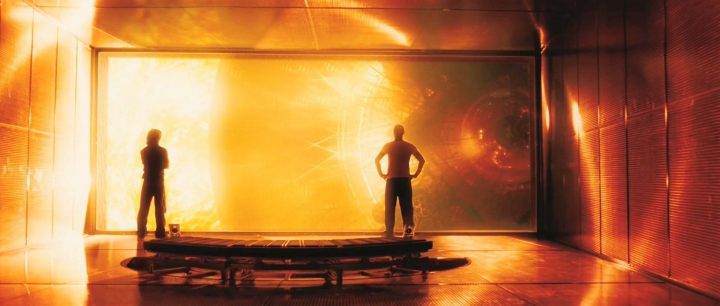
In the end, Capa’s undeserved success (for it’s not just about Mr. Murphy’s hair extensions fluttering angelically in the solar breeze in the billionth of a second before he’s flash-fried: Capa does succeed in planting his payload where the sun shines, but more on that below) is nearly as irritating as the failures, mistakes, and shortcomings with which Garland has peppered the script throughout. A great portion of that irritation comes from the fact that Capa’s success is thoroughly by chance: all the planning, all the targeting of that so-called Q-ball, go right out the window in the film’s final minutes as Capa and the payload and the film’s evil guest star (and more on him below) and lovely-but-weepy Cassie (still alive– perhaps a throwback to a version of the script in which she and Capa shared– in a thoroughly not-cliched way, of course– a shipboard romance) make an absolutely uncontrolled plunge into the sun. The world is saved; we finally get to see the world, in fact, for one brief (and very lame and tacked-on) instant as Boyle treats us to a shot of light washing across the wintery field (and– hold on– there’s the Sydney Opera House under about thirty feet of snow in the background: you can’t tell me that the humanity isn’t beyond saving at this point if Sydney Harbour is that thoroughly frozen over) where Capa’s niece and nephew are building a snowman while Capa’s older sister herself views Capa’s final video message (oh, gosh, the poignancy–!) on a Blackberry-type thingamabob.
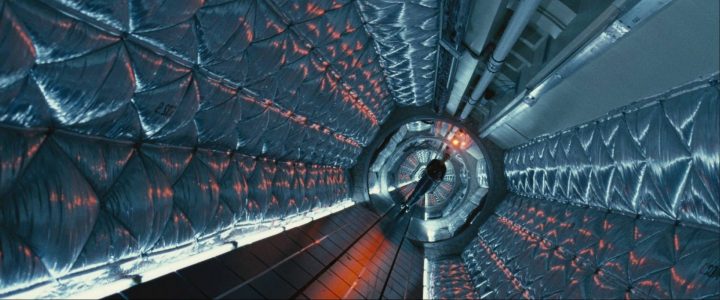
Here, coincidentally, Garland treats us to his third, and most serious, contender for Bulwer-Lytton glory: “Just remember,” mumbles Capa, from the Blackberry, “it takes eight minutes for light to travel from sun to Earth. So you’ll know if we’ve succeeded about eight minutes after we deliver the payload. All you have to do is look for a little extra brightness in the sky. So if you wake up one morning, and it’s a particularly beautiful day, you’ll know we made it.” Points: One: What if “that” morning happens to be cloudy? Two: What do I look like, Josef von Sternberg’s light-meter? How much “little extra brightness” are we talking here, baby brother? Three: Wouldn’t every single scientist and telescope on Earth be keeping an eye on the sun at this point, measuring its output and whatnot? Wouldn’t they tell us exactly when you boneheads have done your groovy thing (or, as seems more likely, when you haven’t)? And four: Isn’t my ability to memorize crap dialogue truly awe-inspiring? (What gives me an extra little nasty tingle at this point is a gut-instinct sense, as a fellow writer of oh-so-serious-sounding schlock, that for the one and only time in the script, Garland here thought he was being profound and moving. I can practically see the tears welling up in his shark-brown eyes as he wrote Capa’s final message. Heh.)
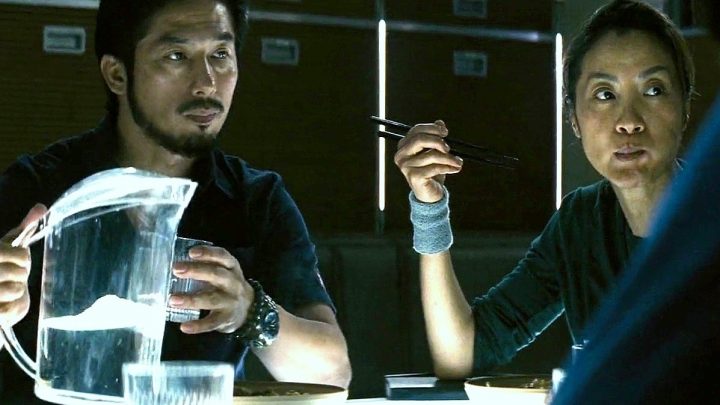
Which brings us– indirectly, at least– to a question of narrative, or point of view. (Ostensibly Sunshine is Capa’s story, since he gets the mutter-mouthed opening voiceover as well as “last message” time at the end, and he’s the longest-lived of the Icarus II’s crew of dimbulbs, but characterization isn’t Garland’s strong suit, to put it mildly.) Who’s telling the story? And if it’s all conjecture, then why are these idiots exactly that? Why would the official story be that they screwed up for all they were worth, they deviated from their mission, they picked up a guy from a derelict ship who makes Rutger Hauer in The Hitcher look like Mister Rogers by comparison (oh, did I forget to mention that? The captain of the Icarus I, having lived with second- to third-degree burns over ninety percent of his body for seven years, is still alive, and crazy, and he sneaks aboard the Icarus II and starts killing people– messily and clumsily, yes [he is a Garland character, after all, but still]), and then they succeed in saving the world absolutely by chance? Garland, I’m sure, would frown condescendingly and tell me that I don’t understand the “human condition” or “irony” or the “futility of hope” or something like that; I’d respond by saying he wouldn’t recognize “logic,” “plot,” or “common sense” if any or all of them walked up and kicked him in the tits.
See, Alex, I would say, while lacing up my heaviest pair of Marten’s and casting a calculating eye at his burly frontside, your story is not about prevailing in the face of overwhelming odds. It’s about stacking the odds against your characters, then having them stack the odds against themselves, by not allowing them to act according to their training and experience. It’s about creating drama arbitrarily. It’s about having people come that close to failure by having them mess up (which happens, but not, one would hope, on such a preposterous scale to highly trained professionals en masse). And finally it’s about handing them success not because they’ve earned it, or because their training and planning have paid off, but simply JUST ‘SKUZ.
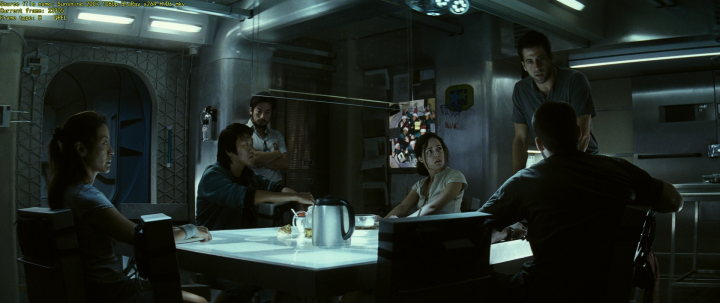
The hugest problem is that Garland tries to present a commonality of experience using characters who are anything but common. In trying to create people to whom we can relate (and here I’m giving him credit I don’t believe he deserves: he seems to have just as much contempt for his audience as he has for the people he writes), he jettisons Kaneda and company’s most essential, defining traits. He ditches all the things that would make them them. It’s an across-the-board dumbing-down: to make them characters with whom Joe and Josephine Average can empathize, he keeps them from being themselves, that is to say the people the nations of Earth would send to save all of humanity. Let’s put it another way: Garland would have us believe that the dream team we would send to save us all would be just as ordinary as the rest of us. In actuality, the crew of the Icarus II would be Earth’s platinum Olympics team, never mind gold; Garland writes them as people you wouldn’t trust to do an Olympic team’s laundry. Certainly, people react in different ways under stress: they grow fearful, they make mistakes, they lose their tempers. But it’s unfair and unrealistic to think that the group entrusted with the saving of all life on Earth would foul up to the extent Garland has them foul up in Sunshine. A degree of up-fudging is fine, if not to be expected, if you’re sending civilian scientists to study a new planet (as in Solaris); it’s not so fine if you’re sending people who are arguably the world’s best astronauts to perform a specific, deeply important task (as in the piece of celluloid folderol at hand).
In short, it’s not a question of what we would do (with apologies to the one or two seasoned space-jockeys or physicists who might be slumming with us here today). It’s a question of believing that Kaneda and his crew are the people we would trust to do this job. Not just this job, in this movie: any team performing any job in any movie. Unless you say up front, “The A-team blew up on the tarmac; these are just some bums we grabbed off the street at the last minute.” But this isn’t The Dirty Dozen. Unfortunately.
So unless you’re a top-level astronaut, pilot, or physicist, you have no business watching Sunshine and thinking (preferably with a defensive, misty-eyed sniff), “I couldn’t have done any better!” Well, of course you couldn’t. And I couldn’t. (That’s an out-and-out lie, actually: I could do better than Garland’s Sunshine bozos, even if I were blitzed-drunk, blindfolded, and locked in a safe. I’m just trying to sound like a humble team-player for the sake of argument.) But Kaneda and his people could. And they should.
Only Garland won’t let them.
Arguably, populating your script with folks who are top professionals and pretty much geniuses could paint you into a corner in terms of generating tension. But having the big, gulpy lion’s share of Sunshine’s drama result from internal screwups is not only frustrating, it makes no sense: these people wouldn’t behave this way. Even if they’re bored, they’ve let their hair grow out or, God help them, they have to read books.
So, what to do?
Have the environment act against them, of course. But Garland gets this wrong, too. The Icarus II is a ship designed by professionals, right? The product of a world-wide engineering effort, correct? Safety features, sturdiness, redundancies, and spare parts galore? Take another gander at the “just ‘skuz” paragraph way up above. The way Garland and Boyle present the Icarus II, it ought to be the cover ship for the updated 2057 printing of Ralph Nader’s Unsafe at Any Speed.
It’s as though, in watching the science fiction films from which Sunshine blatantly borrows, Garland so desperately sought to avoid cliches that he came to believe that avoidance was an end in itself: he doesn’t replace those cliches with anything. Or with anything that makes sense.
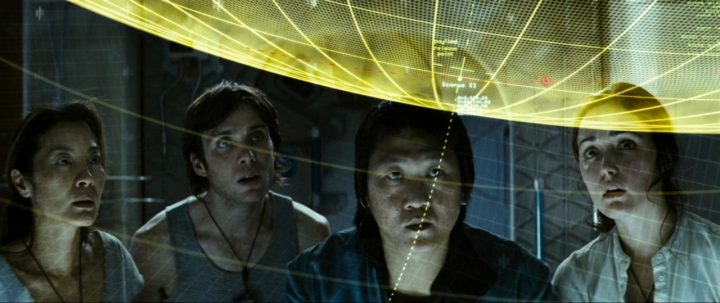
Besides having a ship that breaks– a lot– in most illogically unfixable ways, thinks Garland, let’s see– instead of a practical, commanding captain, I’ll make my captain a guy who lets psychos and alpha-male muscleheads bully him into making decisions– or make his decisions for him. Hell, I’ll even have him be the guy who has to perform drudgework, like repairing the ship’s shields. Repairing the shields should be the job of the ship’s mechanic, but having a mechanic who actually fixes things is a cliche, right? (Remember mechanics Parker and Brett repairing stuff in Alien? It’s been done, baby!) Repairing the shields will also be the job of the ship’s one civilian and only, irreplaceable physicist (I’ll goad him into the repair using a ridiculous “reverse-volunteer” line from the ship’s mechanic and alpha-male musclehead that our indecisive sissy-boy [but NOT-CLICHED. (THAT’S THE IMPORTANT THING.)] captain won’t think to veto, and then toss in a line about how our irreplaceable physicist-civilian has rehearsed such repairs “a thousand times in high Earth orbit”– what?— and everything’ll be fine, even though he’s practically quaking in terror as they suit him up). (And here you thought all you’d have to do is sit around thinking deep thoughts before you push the “Go, Bomb, Go!” button, right, Capa, you pretty-boy yutz? Not in my movie!) No way will the ship’s navigator think to run a simulation or ask someone to check his math before he makes a vital course change, even though– JUST ‘SKUZ– the otherwise all-powerful computer can’t help him with the maneuver — man, BOW before my superior originality, plebes! The doctor will be a sun-worshiping whacko– Wait: has the “whacko” thing been done? To be on the safe side, let’s have him mumble nonsense about “seeing” stuff “in the light.” My God– Cliche, Away! New from the makers of Lysol! And the pilot woman will be a weepy, cringing little thing. Not a trace of Sigourney Weaver-style spine anywhere! (As a precautionary measure, let’s make her the “conscience” of the crew, too. Maternal instinct: it’s a female thing, yeah? And not at all a cliche.) Will she speak up about how difficult, stupidly dangerous, and flat-out inadvisable changing course to rendezvous with that other ship will be? What movie are you watching, kid? Unlike that lippy shuttle pilot you saw in Aliens, this little missy’ll know to keep her yap shut ‘til it’s time to talk killing someone to stretch the oxygen that I’ll manage to write out of the movie in an especially inspired fit of JUST ‘SKUZ.
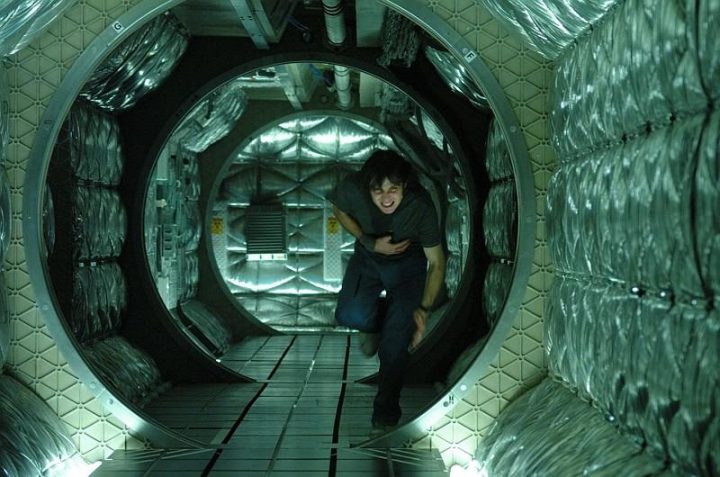
And the greatest cliche I’ll avoid: the sending of an intelligent, seasoned, disciplined crew to complete this mission. Been done to death, that competence thing!
The problem is, Alex, that one isn’t a cliche. You would send intelligent, seasoned, disciplined people– the best of the world’s best– on a mission like this. You wouldn’t send the gaggle of neurotic drama queens we see in Sunshine. You could still kill all of them (the smart, seasoned ones, that is; killing the crew presently on view in Sunshine really has “shooting fish in a barrel” stamped all over it): something can cripple their ship, destroy their life support, but that something must come primarily from the environment, not from within them.
In the end, Sunshine left me asking one hollow question: Why’d they have to be so dumb?
I know some of you liked it. The soundtrack works overtime to make the thing seem profound. And those of you who saw it with decent projection, or on uber-duper HDTVs on Blu-Ray in the latest permutation of Dolby, can say you liked it ‘cause it looked pretty. And it sounded pretty.
In other words, you liked it for the same reason it’s so monumentally, disappointingly, depressingly dumb:
Just ‘skuz.

Related articles


 Sunshine (2007)


Who wrote this?
Is Sunshine a crappy film, or a masterpiece!!! Take our Poll now!!!
[polldaddy 7828002 http://answers.polldaddy.com/poll/7828002/ polldaddy]
Chill with the parenthesis man, christ there's more brackets in this essay than words.
Though I agree the film is stupid, and far-fetched as anything – most of you're complaints are nit-picky as hell. When I heard it was a film about re-igniting the sun with a giant bomb, I immediately suspended my disbelief. It's not meant to be realistic at all – so we can put to rest all your claims about how it doesn't fit with the real world.
Your complaints about set design are just a matter of taste, honestly. wow, this stuff has shiny stuff in it and it's not explained why it has to be shiny! It doesn't make the film dumb.
I agree that the crew are a bunch of stupid jackasses, though.
But the film was entertaining, not a classic by any means, but a solid 7/10.
Ahh, somebody who agrees with our assessment that the crew are a bunch of jackasses!! Not since Prometheus has a crew made such a bad series of decisions!!!
that rant just proves you don't know what a "FICTION" is.
go and look at all the sci-fi film … you can find things "that are not scientificaly possible" in every one of them …
yes i agree to some extent that a filmmaker has to get his fact rights BUT when you write a story, it is in fact fiction so you are free to change whatever you want, even re-invent a world …
he never stated that THIS will happen in the future and we'll have to save our sun. he never said THIS is exactly how the world as we know it would react.
no no no, this is FICTION.
when you watch lord of the rings, do you say "wait? why is the world like this? why so many different species that dont even exist?" … im sure you dont say that because you accept the fact that it is FICTION.
well here, its the same thing, you HAVE to give film makers the liberty to play with your mind and let them present you with a world of their imagination. Let them tell you a story.
then if you dont like the story or the way its being told, ok i can understand.
but the fact that you just reject the world of THEIR story … THEIR FICTION … is just silly.
simply dont watch films buddy and stick do documentaries as you dont have the imagination required to watch and enjoy FICTIONS for what they are: STORIES from someone else's IMAGINATION. (as opposed to ACCUMULATION OF FACTS that have to STICK TO WHAT IS REAL AND WHAT IS SCIENTIFICALLY POSSIBLE)
Thanks, mister KL. I agree, sometimes we overlook the fact that these films are just that – fiction, and try and put reality over the top of them. Thanks for your comments!!
If Legolas was using his bow to pound in tent stakes the night before a battle, and during the battle his bow snapped, would you think, "Hey, that was kind of stupid. Why would a hundreds-year-old elf-archer do something so stupid?" Or would you say, "Shut up, it's fantasy."
If you were watching an Austen-era romance, and a male suitor said, "Yes, and in my time in India I would play cricket then afterward have tea and sex with the little indian boys and goats," would you say, "What kind of idiot would say that to a woman he's trying to marry?" or would you say, "Meh. It's a movie and the costumes are nice."
If you were watching a cop drama, and the police officer breaks off a chase with a murder suspect because he wants to ticket someone for a failing tail light, do you think, "What the hell kind of cop would do that!" would you think, "It's not supposed to be realistic."
If you saw a legal drama where the prosecutor's opening argument was, "We don't think he's guilty and we have no evidence, but someone must pay for this crime, and the defendant looks like the kind of person who would have done it" would you say, "that is totally ridiculous!" or would you say, "I'm not watching this movie to study for the bar exam"?
Having unrealistically, unjustifiably incompetent characters is extremely distracting — at least for me. And it's not because I lack imagination, it's exactly because I *have* the imagination to put myself on the Icarus and think about how I would approach things, what would need to be done, what risks I would take against which benefits, that Sunshine is unwatchable.
I do follow your point, though, that we have to accept the world the author presents us with. However, since our world and the movie world coincide in so many particulars, the author has to tell us what is different about their world. In this case, the sun is 'going out'. What the author also has to explain is that, for some reason, the climate crisis has also lead to people being both incredibly stupid and emotionally unregulated; if that could be established, then I could enjoy. Otherwise, it's like if all the characters had hooves. Why do all the characters have hooves? Would you say, "It doesn't matter why the characters who are otherwise entirely human living in what seems to be a world just like our, have hooves, it's part of the authors world? Why can't you just enjoy the movie? Why do you have to nitpick every single goddamn thing?"
That "just skuz" shit is one of the most annoying paragraphs I have ever read.
I have nothing more to say, because Hieronim covered all of it.
Each to their own, I guess….. Thanks for commenting, Theo!
I just watched this on TV.. it is just as awful as the first time I saw it.
Goddamn, one of the GREATEST leave-your-brain-at-door movies ever!
Then you get these people that saw "it was a great movie cos of the visuals yadda yadda" gimme a break!
2001 shat all over this for visuals and it was made over 40 years ago.
FYI
The ships' payload was actually many copies of the script of the movie in big boxes and the only way for the Earth to survive
was for it and all the DUMB characters to burn. Amen.
Amen indeed. I don't think i can add much more, Marc! Thanks for stopping by!
Yes! I'll get in line for that one! 🙂
It's a fast-moving line.
Your such an ignorant fool, the film is about sacrifice, hopeless dilemmas, the mysterious of the universe and the deadly beauty of what we have never done before. Its not something to be taken serious.
The movie is actually really good, excisite cinematography and beauty, the characters weren't half badly developed either.
Furthermore, you seem to be fixated on the only slightly illogical flaws which are hardly even that bad. I mean they had a big computer because the ship they were in was big and had to support them for the whole journey, i don't think you have much right to conclude thats stupid considering your a critic and not ANY type of engineer.
Your such a retard, i hope someone slaps you for your ignorance.
The line for slapping starts over there.
Dude your logic for ripping on this movie is completely bogus. You become so arbitrarily negative about ridiculous things: "What if it's a cloudy day" JESUS man are you serious? Just to clarify you are complaining that Capa was trying to be too meaningful with the last message he is going to send to his family? Oh and about your "Just 'skuz" rant: You could do that with ANY movie. I mean it. Give me a movie and I will come up with ten things in five minutes. I would not even be wasting my time writing about this review if not for the BS you pulled when you started talking about "anyone who’s ever had a child go missing". What? Because a character dies in a meaningful way the movie is insensitive to people who have lost family members? You are the guy sitting in the movie theater snickering about nothing while everyone else enjoys themselves because it makes you feel superior somehow.
In all honesty, I never considered that when I was reading Doug's review. That does sound condescending, and I don't think it was meant to be.
It's called science fiction, dumbass. Not science fact. Did you hate Star Wars because the technology to create lightsabers is unrealistic? Sunshine is just a story. It's a movie, and a good one at that. I want the half-hour it took to read this overanalytical, nit-picky 500 page thesis on why a great film sucked back.
Do you have your receipt sir?
I really enjoyed the film.Saw it 3 times on the big screen in London where it really had to be seen rather than on a TV. Yes there were lots of illogical things but isn't that the case in any film? If everybody did what they're supposed to do then films would be pretty boring .Everything would be nice and safe……..and bland.
Only thing I would agree with the reviewer on is the music.John Murphy did a superb job on the film score. I could name loads of films worse than Sunshine.The fact that it was made on a small budget in a East London film studio deserves credit when you see the billions squandered in Hollywood on crappy remakes of classic horror films like The Wicker Man and The Omen.
Agree that this was a terrible film.
I came by this review because, watching it on tv, I missed the flims intro and the part about why they changed course. I figured it must be a really good reason. The fact that the only reason was "to check out the other ship that failed" lowered my already flagging estimation of the film. I had also missed that it was supposed to be only 50 years in the future, and that just added insult to injury.
I can forgive some things like where the computer cannot change course, or doing any of that because the crew wasn't supposed to change course. I can also forgive not having a spare part for everything on board, because if you allow yourself to follow the logic of the film, it's a last-ditch attempt to fix a dying sun.
I don't know why people rave about the visuals. They're ok for the most part, but some of the psychotic visuals are more likely to give epileptic fits than anything else.
The ending was probably the worst and was totally anticlimactic. After all the (confused and muddled) buildup, the bomb is released quickly, easily and successfully. They should have stamped a big THE END over the Sydney scene to remind people to go to bed. To be fair, maybe the visuals department had run out of money or were already so thoroughly disheartened they also just wanted to go back to bed.
This film is only good if 1) you mute the audio or 2) can erase any memory of anything that's happened more than a minute ago.
As to @Kei and @The Epic One's comment on genre, this is just a space horror / fiction film. Just because the setting is space doesn't make it science fiction.
Glad we could help you out there AC! Glad you liked the review too. If you're interested, we're doing another Worst Film Week later in September, so check back with us then and you might stumble across another crappy film you've seen!!!
Kei – Come on… that doesn't even make sense… look at the definitions below. 🙂
Fiction – the class of literature comprising works of imaginative narration, esp. in prose form.
Fantasy – imagination, esp. when extravagant and unrestrained.
Science Fiction – a form of fiction that draws imaginatively on scientific knowledge and speculation in its plot, setting, theme, etc.
Science Fantasy – You are seeing Ask web results for Science Fantasy because there was not a match on Dictionary.com.
Anyways, I enjoyed Sunshine… I thought the review was really nit-picky lol… The clunky suit – well come on he needs to be protected from the SUN! Broken Ship – Well how many ships have to make a trip to the sun? Maybe they just miscalculated? etc… whatever… lol you can say anything to fight back what you said in your review… Overall it received good ratings… but to be honest I hadn't even heard of the movie until my fiance and his best friend (Who both hate almost any movie) told me I should watch it. And… it was awesome. 🙂 Of course, I wouldn't watch it if it wasn't on bluray on a HDTV… but hey! 🙂
This film was not science FICTION but science FANTASY. While I do like both I DO NOT appreciate when fantasy claims to be fiction. One of the reasons I decided to see this film was because of the supposed scientific accuracy (Dr. Brian Cox). I was willing to tolerate small errors for artistic licence. However, in the film when the decision to extinguish a fire IN SPACE involved FLOODING the SEALED chamber with oxygen to burn all the available fuel, my tolerance ended. After that, the errors compounded until it was impossible to enjoy the film. I agree with Doug…wholeheartedly.
Despite its shortcomings, I thought this was a beautiful film, visually. I don't think any other film will come close to the visual representation of this one.
Can't do much but agree here, Veyn. Sunshine is indeed one of the prettiest space films to come along in a while.
There is no 1-10 rating for uptight pricks.
For a second I thought you'd written upRight pricks. LOL!!
wow…it's called fiction for a reason. (side note: all your justskuz's are accounted for in the film, and, if you're a huge nerd, the special features)
this reminds me of the review i read by a guy who predicted that inglourious basterds would be too unrealistic for critics and audiences to tolerate…
why don't you lay off the espresso and go watch a nova special. you may be more suited for the documentary crowd.
Sure – some of the facts a are a little off – but shut up with your "just 'skuz"s. I really enjoyed Sunshine – the cinematography was amazing, the music just right (though I'm with you on the end credits music), and the editing fantastic. I agree with Hieronim when he says that you are nitpicking. A film is meant to get its message across and please the viewer for the 2 hours it lasts for, plus maybe some deep thinking induced afterwards. It doesn't matter about issues with the computer, because we're never meant to think about it in that much detail. It's a film, for God's sake, you've got to take it with a pinch of salt. If you wanted a realistic film you'd just get the overwhelming dullness of NASA's ISS security tapes.
So yes – if we ignore the burnt Pinbaker, who's included just to give Boyle his dose of horror – Sunshine is a brilliant film, and you've got it all wrong. A well-written review nonetheless.
Sunshine, in my opinion, is one of the best movies I have seen. Maybe it's not the most realistic, but it is extremely creative, visually and audibly breathtaking, and succeeds in conjuring up a lot of emotion. I thought the theme of desperation had never really been addressed in a way like this before. I could argue some smaller points; for instance someone was saying something about using a wrench on a computer mainframe, well the wrench was being used to fix the device that raises and lowers the mainframe into the coolant that had been sabotaged by Pinbaker. I don't have a problem with people disliking this movie, but it seems a lot of the issues with the movie that Doug has are very superficial and arrogant. Other points about Kaneda being an idiot and Capa making a poor decision or being the person without the authority to make that decision aren't really that strong; Kaneda is developed as character that accepts his responsibility and duty, and the reasoning behind Capa making his decision and being the one to make the decision are all logical. But I guess people are entitled to their opinions; I don't agree with you Doug but you made the effort.
I've watched Sunshine several times and i never cease to enjoy it. Sure, it may not be entirely realistic as far as the super computer and all the other stuff in the movie, but that's why the genre is called Science-FICTION. I think Sunshine is one of the best Sci-Fi movies out there today. Now, with that said, I still enjoyed Doug's review for it. A little lengthy, but a good review to defend his opinion, which is what every comment is also doing. And @ Catajosfist/Joshua Finch: No opinion is true. NOT A SINGLE ONE. That's why it is an opinion.
this is one of the BEST sci fi movies of our era!!!!!? im truly offended by this
IMDB- 7.3
http://www.imdb.com/title/tt0448134/
Rotten tomateos 74 percent
http://www.rottentomatoes.com/m/sunshine/
…shame…shame on you…
You're offended that we have a different opinion than IMDB? And even the almighty Rotten Tomatoes?
Yeah, because the majority opinion is ALWAYS right? Don't make me laugh, dude!
"So unless you’re a top-level astronaut, pilot, or physicist, you have no business watching Sunshine and thinking (preferably with a defensive, misty-eyed sniff), “I couldn’t have done any better!” Well, of course you couldn’t. And I couldn’t. (That’s an out-and-out lie, actually: I could do better than Garland’s Sunshine bozos, even if I were blitzed-drunk, blindfolded, and locked in a safe. I’m just trying to sound like a humble team-player for the sake of argument.)"
Just because you need to have a piece of evidence or something that I am talking about here is one, and this is by no means the only one. I don't remember the author or the director or any of the cast saying anything like this(see above), and if Doug could have done so much better why doesn't he? It is easy to just sit back and spout bullcrap (remember the queer thing?) but if Doug can write or direct a movie better let's see it. Let's see a manuscript! I never intended to have to take it to this level, but I can sit here and pick apart his review as well as he can pick apart the movie. I don't know why I posted what I did maybe I just felt contentious. I agree with most of what he said, and I really have a problem with there only being one oxygen garden, for example. Maybe I felt the need to debate something who knows, but why are you busting my chops? I am not the only one who disagreed.
P.S. Nothing about his review sounds humble or gives me the impression he wants to be a team player.
You do make a valid point, Joshua, when you ask that people who criticize films should have a shot at making one themselves and being judged on their own merits: in this fact, I agree with you. Too many people take pot-shots at films simply for the sake of it, often without any credible argument save for the fact they don't like the director, or the lead actor is somebody they don't find worthwhile, or something similar. I guess you could approach many things this way: perhaps critics of anything should simply shut up and only get a chance to pass judgement when they themselves have done something similar. Having made a short film myself, I can appreciate the time, effort and energy expended (not to mention the pressure of dealing with hundreds of people and millions of dollars) on major Hollywood films, only for them to flat out fail or be a critical mess. I haven't experienced it myself, but I can appreciate it. I think anything as subjective as film, music, theater; in fact, anything creative like this, is always open to interpretation, which I think is invaluable in ensuring that we always strive to do better. After all, peer criticism, as longs as it's constructive, and not simply derogatory and anonymous (have you read the comments pages on Ain't it Cool News lately… sheesh!) is an invaluable tool on which careers can be made if taken the right way. Which is perhaps why I felt the need to "bust your chops" as it were, to elicit a response other than the normal comment I hear about Sunshine, which is "stupid film" with no constructive reasoning behind it. Hope I didn't get you too riled up!
That said, I re-read Dougs article again after your comment, and I tend to agree with you that the article does appear to be slanted less towards a "team player" mentality and simply go for the cheap shots at times. Whenever I asked Doug about the film, he always said it was one of his biggest dissapointments as a reviewer, and I guess when writing from the heart, that came out. Perhaps I should re-title the article as a "rant"!
Never mind it came up. I can admit that I might not be right! Can you? Just because someone has a wife doesn't mean they are not queer. Anyway you missed the entire point of me calling him queer. I don't know if he is queer and really don't care I was just trying to make a point. I should have just went on my way, but it bugs me when someone thinks they are so smart in being able to formulate a critizism when their opinions are just as hollow as the movie they are critiqing. (And no I can't spell, so what)
You still haven't given an argument for your thoughts. Exactly what do you disagree with Doug about? Stop making generalisations and give us your reasons! I can admit to being wrong about something if somebody can convince me that I am with legitimate arguments, not simple insults.
Doug actually met Danny Boyle on the set of Sunshine and was quite invested in it's success, so for the film to turn out the way it did left Doug with a bad taste in his mouth; he thought Boyle would avoid the cliched, laughably plotted motivations and story-twists Sunshine held within it.
There isn't much room in these comments so I'll make it quick despite the large comment I had planned.
1) the computer was programmed to follow his calculations only, it is programmed to ignore it's own wishes in light of what the pilot requested no matter what the cost.
2)The space suits are clunky because in the even of a solar flare or anything similar the more protection they have the better. They are under 39 million miles from the sun it's not exactly a typical summer afternoon. Typical nasa suit would be ruined completely.
3)The crazy man with the -don't play god- lines is in fact crazy he has lost the human condition and this is a very likely scenario for him to replace with his common sense. (Very similar to god complex)
4)The crew are acting like kids in a college because that's how a crew for a mission like this would be selected. They can't have the crew fighting like children they need people who can get along easily. However put under pressure this group struggles and of coruse we go back to the all important human condition.
5) It's easy to say that the people in the film are being stupid when you're sitting at your computer at home. It doesn't matter how smart they are they are terrified, put under the immense stress of being probably the last hope at being able to save humanity.
6) Claiming that the anti-matter bomb route is bullshit, is bullshit. Because it really would be the only way to obtain force that large without slamming another star into it. Anti-matter creates pure energy upon contact with any matter. Perfect way to do this.
7) Claim the human condition is bullshit all you want but this is exactly how they are expected to react in this situation. It's desperation and fear, hope and low morals. Everything weighing them down right now is creating the exact reactions you would expect.
8) Lastly, they sent Capa out there to repair the panels because who is the captain to argue with someone who's saying yes to going, as well as with their advanced computers there really is little risk involved. Until of course the radar part decides to take an unexpected turn. Also Capa won't decline because it's now a question of his man-hood to accept that challenge.
Satisfied?
i think you hit that nail with point #5, Guest. Nobody knows how they'd act in similar circumstances, and I daresay you're probably right about the stress they would be under, considering humanity is expecting a positive outcome….
Why don't post my comment so other people can decide for themselves?
I agree with leeman. Doug your review is just as stupid as the movie, but your review lacks entertainment. It sounds to me like you have some personal grudge, and your review is not professional because of this. How many times do you watch a movie and not say why are they doing that and blah blah blah whatever you said? If you are looking for a perfect movie you are not even going to find it in your romantic movies(I don't know I just got the impression your were queer). Anyway to make a long story short, just because you are able to have an opinion about something doesn't make that opinion true!!!
And just because you disagree with that opinion, doesn't make you right either. Welcome to the thunderdome folks.
PS: Doug ain't queer, I know, I saw his wife….
I would say the down vote means that his opinion is wrong. If you ask me critics are some of the biggest scum of the world… they must have been bullied to the point that they have to shit on stuff to make them feel better. I don't get "Worst Movie Reviews" its just like taking candy from a baby they can't even defend themselves for one, and like stated before its a matter of opinion. Why not just focus on what is good instead of bashing what someone else may find as a piece of art.
Most of the time we DO focus on the good of films (even if the film is crappy) but occasionally we like to rip into stuff that's crossed our desk that's just abysmal. Plus, we wouldn't be any good if we didn't cover off on the shitty films from time to time.
If you want reality, watch a documentary….this is a MOVIE, why don't you just relax and enjoy the show. If you get the stick out of your ass for minutes, you just might find this is a intensely visual film…one of my faves for sure!
I think Doug's issue with the film, in as much as it's definitely a movie, and nothing life "real life", is that it follows almost no discernible logic, even by it's own standards. While superficially the film may be enjoyable to watch, ultimately, the intellect behind the story seems to fall apart when one pokes harder. I guess the same could be said of films such as Armageddon, for example, but then, that film never set out to be a "serious" movie like Sunshine did.
I'm just glad this film has provoked so much debate!
One of the best Sci-Fi films of all time, and it appears on your bad movies blog.
You sir, are the fail.
Apparently so, it would seem. There's plenty of folks here who would agree with you.
I rarely post online, but I'll make an exception for this. I just watched Sunshine last night, and was awed by how dumb it was. I went on line, and typed, "Why was Sunshine so dumb?" and that led me to this wonderful review.
Here are a few more points of dumb that where in the movie but the reviewer did not mention.
What was the navigator/computer specialist doing with a wrench in a mainframe computer? I've done plenty of electronics work, and I have never needed to pull out a bolt wrench.
How exactly did the insane serial killer first captain survive seven years having his body incinerated? How did he even know it was seven years? Why does he have eyes in his head after staring into the sun after seven years? Why hasn't all his skin burned away just big junks? Why hasn't cancer consumed him six and half years ago? How did he survive on his craft, for he apparently has disturbed nothing, and then sneaks onto the other craft. Why didn't the spacecraft's super computer tell the crew that an outside contagion was walking about? Why didn't the computer try to contain this contagion?
Speaking of the large spacesuits, I suppose insulation is a factor, but has anybody heard about nanotechnology? How about virtual viewing or polarized visors, so the astronauts can actually see what they are doing?
Did the spacecraft have any mechanics? How about physical engineers?
When the astronauts boarded the first spaceship, why weren't they wearing protective suits? Chemical agents or unexpected environmental dangers could have killed them instantly.
When the astronauts decided to jump through naked space, why didn't they use the oxygen tanks they had at their feet?
Oxygen depletion was a rather big point of the film towards the end, so why didn't anyone in the crew use one of the say… hundreds of oxygen scuba tanks that had to be all over the craft.
If the computer was soooo smart to override manual control and put the spacecraft back on flight, why didn't it have the basic hint that the new flight direction would have had the shields totally incorrect? This is after all a really nifty smart computer.
When the captain decided to sacrifice himself, so absurdly, why did the ship psychologist have a direct link to him, that apparently no one else heard, and for no other reason then to badger him about what he saw? "What do you see. What do you see!" The rational thing to do in this moment is to have a pleasant conversation about the aesthetic wonders of flame.
Lastly, the earth had entered an ice age. Does anyone think that popping off a firecracker in the sun is going to re-achieve the exact delicate balance that life on this planet requires?
I still say there's no way time goes into reverse if you spin the Earth the other way, too. 🙂 Sorry, being silly.
Thanks for that great comment lemmingsunday, I think every point you raised is just as valid as those Doug has already touched on. I think it's safe to say Sunshine ranks as one of the stupidest sci-fi film made, with leaps in logic that beggar belief. I'll leave it to Doug to touch on your points in more detail, but for now, I'll just say: glad you liked the review, and thanks for visiting. Hope you liked what you saw!
The movie might suck, but that's one of the best movie reviews I've ever read.
Maybe slightly too long, but very entertaining.
Yeah, I had to break it up with some pics so it wasn't just a big blurb of text!
I have to say, one of the best and most well written commentaries on a film I've ever seen. Excellent work Doug. Look forward to reading more from you. 🙂