
Movie Review – Amadeus (Director’s Cut)
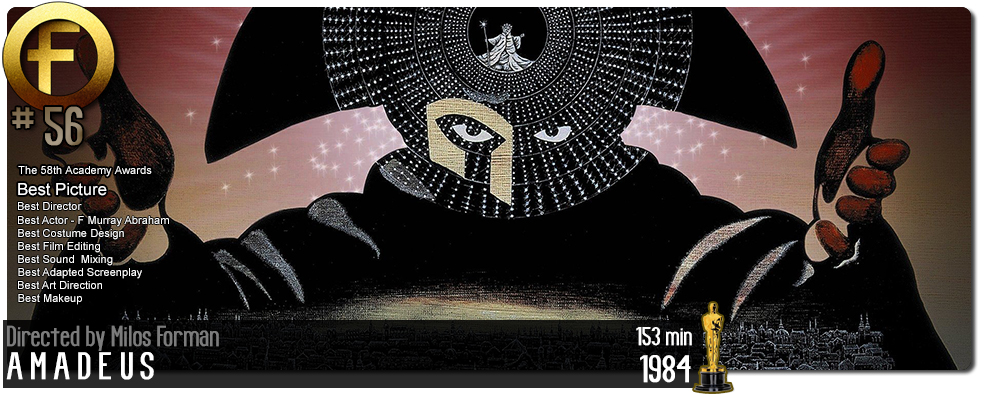
Principal Cast : Tom Hulce, F Murray Abraham, Elizabeth Berridge, Roy Dotrice, Jeffrey Jones, Charles Kay, Simon Callow, Jonathan Moore, Roderick Cook.
Synopsis: The life story of composer Wolfgang Mozart, a philandering, ignorant, arrogant man who sloughs his genius away in a slew of prostitutes, debauchery and rank frittering of his massive talent.
*****
In 1984, Amadeus won several Oscars, including best picture, best actor (F Murray Abraham), and best director (Milos Forman). Forman’s star was still burning brightly following his success with One Flew Over The Cuckoos Nest for Jack Nicholson. Here, tackling the famous stage play by Paul Shaffer, Forman showed us his mastery of the film form, with a blisteringly powerful tale of corruption, self indulgence and the madness that was Wolfgang Amadeus Mozart.
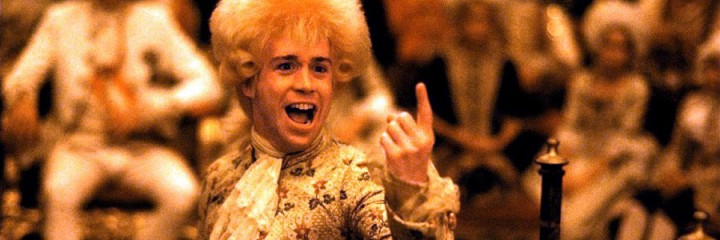
Filled with historical inaccuracies, which have now become fact perpetuated by the mass media, Mozart’s life was another of the biopics to show up on the big screen during this time. Alongside Immortal Beloved and The Music Lovers, Amadeus ranks as one of the all time great musical biographic pictures, replete with the decadence of the period and the stiflingly constrictive lifestyle the aristocracy lived with, all rubbing against the grain Mozart followed.
Of course, the Academy overlooked the fictionalisation of various facts about Mozart and granted the film the highest possible honour, Best Picture. The version currently available on DVD here in Australia is the official Director’s Cut, overseen by Milos Forman and Paul Sheffer, which is what I based this review upon.
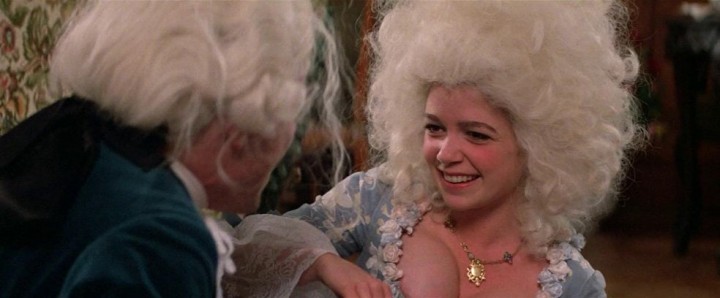
How does one sum up Amadeus into simple words? Does the film transcend the medium and become truly deserving of Best Picture? Well, if the award is merely a total of the sum of its parts, then perhaps yes, the Oscar win was deserved. However, on its own merits, taking the film simply as what appears on screen and without the trappings of current opinion, you’d be hard pressed to award the film the coveted gong. That’s not to say it’s a film devoid of merit, not at all; it isn’t one of the greats, though.
Musically, the film is sublime, with plenty of Mozart’s grandest pieces parlayed into the soundtrack to add to the emotional impact of the piece. The acting, whilst first rate from a number of the cast, is oddly awkward and somewhat stilted, as if the theater comes to the screen with all the theatricality thrown in and little “realism”. Lead actors Abraham and screechingly painful (but wonderfully characterized) Tom Hulce are superb, bringing the their respective characters to life: the jealous and sympathetic Salieri and the boorish Mozart. Abraham, while receiving top billing and perhaps the lions share of the screen time, is overshadowed by Hulce as the immature composer, who swears and drinks like a sailor even whilst in the presence of the Emperor of Austria.
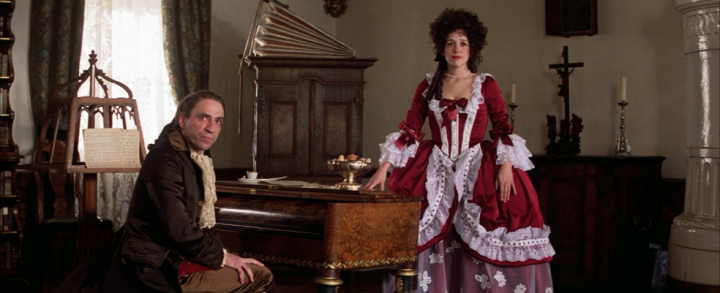
Playing to Hulce’s Mozart is his young, ambitious wife Constanze, performed with skill and icy resolve by Elizabeth Berridge. She would have been equally deserving of the Best Actress role, had she been nominated. Perhaps the best remembered role of the film, however, is that of the Emperor, played with a wonderful sense of occasion by Jeffrey Jones (the long-suffering headmaster from Ferris Bueller’s Day Off), who manages to score laughs by playing it ramrod straight. Jones’ “well, there it is!” became the film’s catch-cry, and his performance is backed up perfectly by the simpering courtiers surrounding him.
So where does Amadeus fall over? Simply put, the film’s pacing and languid pace is decidedly dull. Were it not the fine acting performances, this films rating would have dipped substantially lower, as scenes roll on and take an eternity to get to the point. The cast seem to burn from the screen with their emotive qualities, but the fact that the editing seems to have been performed by somebody on work experience works against them all. Story-wise, the film is engaging, but takes far to long to tell, and by the time Mozart lies dying in his bed, you wish he’d hurry up and get on with it and stop larking about. Critical opinion notwithstanding, oftentimes a film’s length determines its artistic weight, and in this case, Amadeus seems to be one of the real heavyweights; if this Director’s Cut is anything to go by, the extra twenty minutes or so added back in have done nothing to improve the pacing.
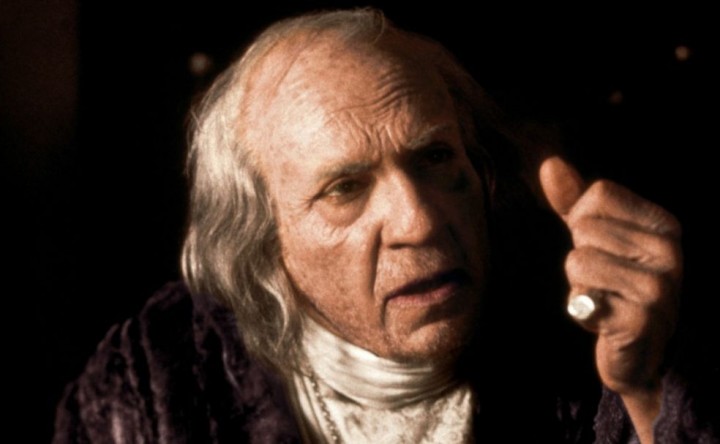
A sumptuous period film, Amadeus is lavish, if not tighter structurally. For those keen on an accurate history of Mozart, this is probably not the film you ought to see; but for sheer entertainment, then it’s still worthwhile giving it a spin. Definitely has it’s flaws, but is still entertaining.

Who wrote this?

The sheen washed off this review a long time ago…..
Keh?