
Movie Review – Marty Supreme
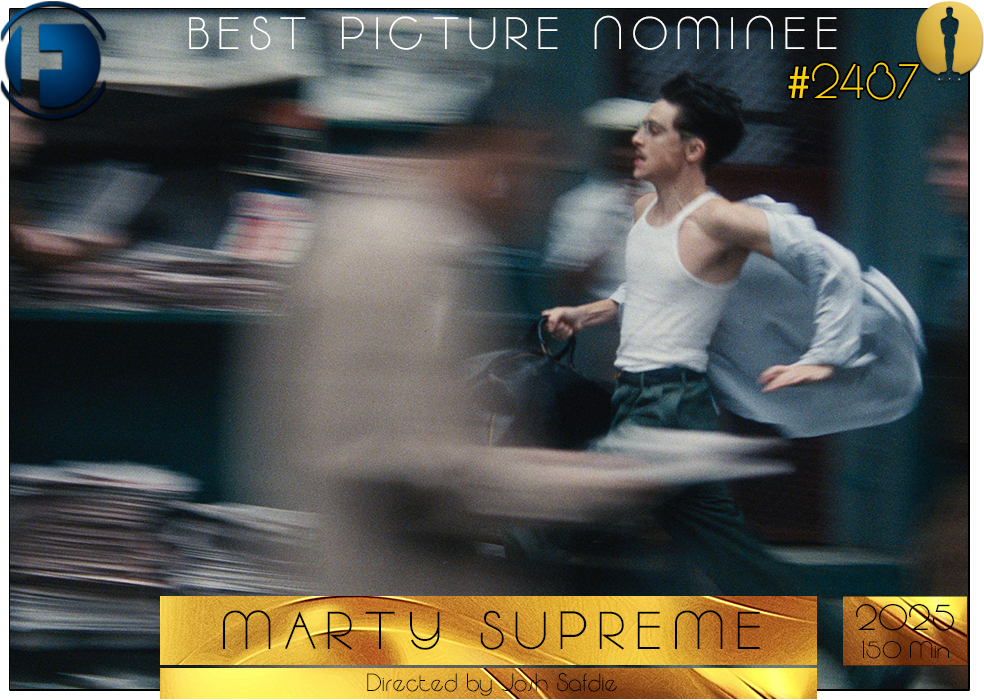
Principal Cast : Timothee Chalamet, Gwyneth Paltrow, Odessa A’zion, Kevin O’Leary, Tyler Okonma, Abel Ferrara, Fran Drescher, Luke Manley, Emory Cohen, Larry “Ratso” Sloman, Ralph Colucci, Geza Rohrig, Koto Kawaguchi, Pico Iyer, John Catsimatidis, Sandra Bernhard, George Gervin, Ted Williams, Penn Jilette, Isaac Mizrahi, David Mamet, Fred Heschinger.
Synopsis: Marty Mauser, a young man with a dream no one respects, goes to hell and back in pursuit of greatness.
********
Every now and then a film comes along that announces its intentions with such gleeful absurdity you immediately know you’re either going to love it or want to flee the cinema before the opening credits finish rolling. I’m not entirely sure which camp most viewers will fall into with Marty Supreme, but I’ll say this: when the name of Gwyneth Paltrow appears on screen while the film is depicting a microscopic race of sperm charging up a vaginal canal, you quickly realise that director Josh Safdie (Uncut Gems) isn’t interested in easing anybody gently into the experience. It’s outrageous, juvenile, faintly surreal, and honestly one of the funniest title card moments I’ve seen in a while. I genuinely wondered if Paltrow knew that was the visual accompaniment to her credit, because the gag lands like a thunderclap.
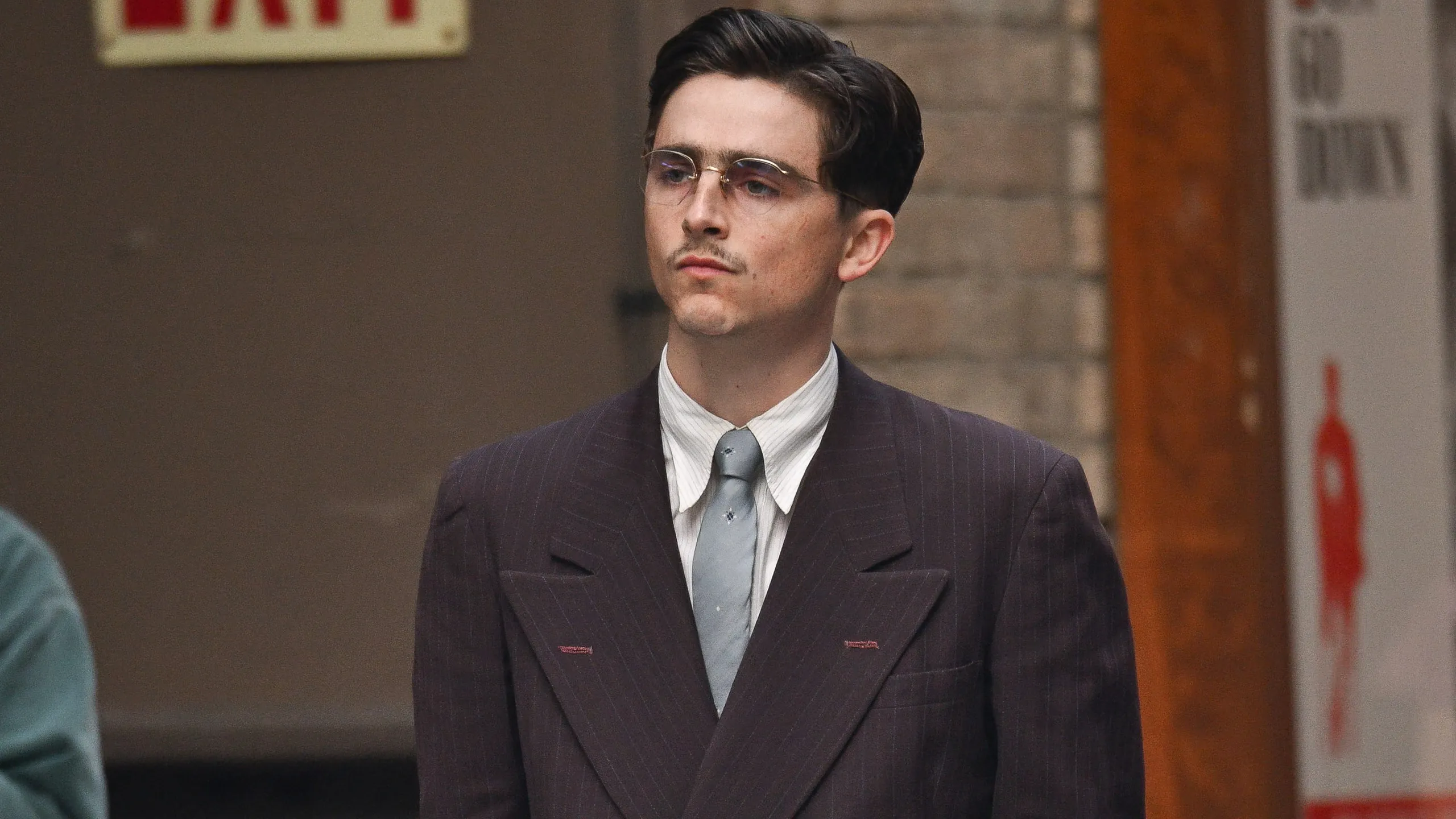
Safdie’s film follows Marty Mouser, played by Timothée Chalamet, a fast-talking, endlessly improvisational hustler who claws his way through a chaotic underworld of competitive ping-pong, opportunistic deals, romantic entanglements, and postwar cultural anxiety. Set against a vividly realised mid-century backdrop, Marty manoeuvres his way through the sport’s shadowy competitive circuits while navigating complicated relationships with a fading film star (Paltrow), his volatile romantic life, and the lingering cultural trauma hanging over a largely Jewish social circle in the years following the Second World War.

It’s a premise that sounds borderline ridiculous when written out like that. A high-stakes drama about ping-pong? I’ll admit that before seeing the film I wasn’t exactly expecting to be blown away by something revolving around table tennis. Yet somehow Safdie makes it work. In my opinion the trick lies in treating the sport less as a subject and more as a pressure cooker. The matches become arenas where personalities collide, rivalries escalate and egos explode. The ping-pong itself might seem trivial on paper, but the way Safdie shoots it — tight framing, frantic editing, the constant feeling that something is about to go catastrophically wrong — transforms every rally into something nerve-jangling.

The anxiety factor is immediate and unmistakable. Anyone familiar with Safdie’s earlier work will recognise the style instantly: breathless pacing, overlapping dialogue, and characters who talk over each other like the angriest people on the planet. It creates a constant sense of barely controlled chaos. I felt my blood pressure spike about ten minutes in and it rarely settled back down. The whole thing moves with such relentless momentum that the audience is essentially dragged along behind Marty whether we’re comfortable with it or not.
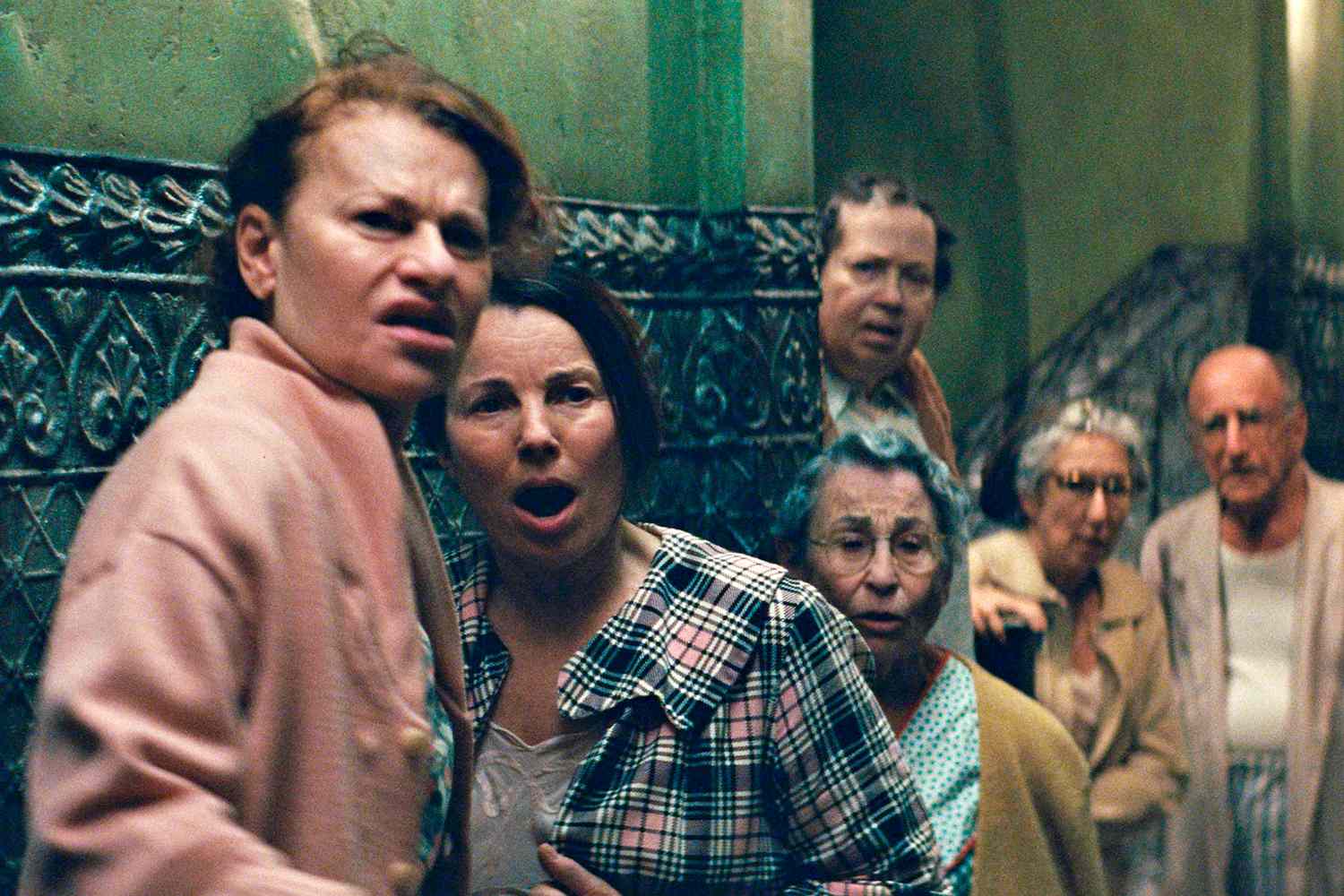
Chalamet, who also served as a producer on the film, deserves enormous credit for holding the whole circus together. I think this might be one of his most interesting performances to date. Marty is not an especially admirable person — he lies, manipulates, seduces, and generally hustles his way through life — yet Chalamet somehow makes him incredibly watchable. There’s a charm to the character that softens his worst impulses, and the actor leans fully into that ambiguity. At times Marty feels like a distant cousin to the con-man energy Leonardo DiCaprio brought to Frank Abagnale in Catch Me If You Can, albeit operating in a much grubbier, morally murkier environment.

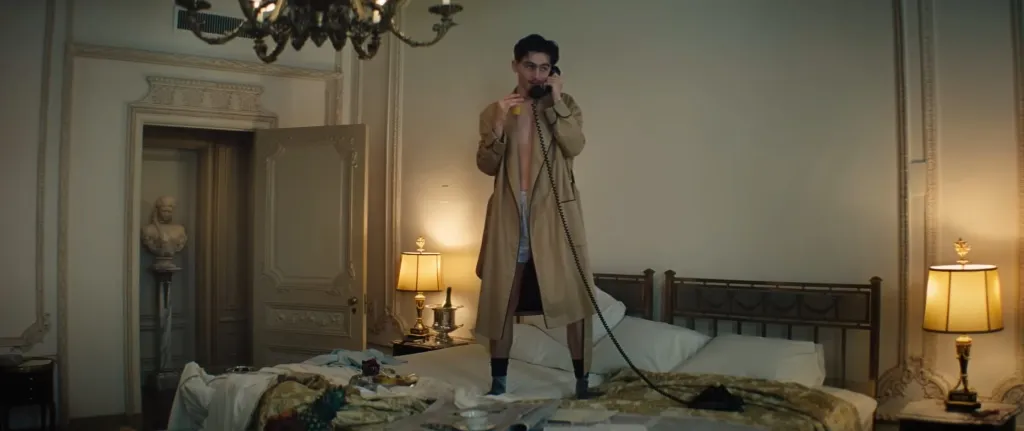
Chalamet’s physicality is also fascinating. The guy still has that slightly delicate, almost fragile look about him — I’ve joked before he resembles a baby rabbit pulled unexpectedly from its warren — yet here he’s playing someone with enormous confidence and social agility. The contrast works beautifully. Marty talks his way into and out of situations with such reckless bravado that you half expect everything to collapse around him at any moment. That unpredictability is a huge part of the film’s appeal. There’s a sequence, for instance, where Marty ends up naked helping lift a collapsed bathtub off a homeless man. I won’t pretend that sentence makes the film sound coherent, but within Safdie’s manic storytelling rhythm it somehow fits perfectly. Another tense moment involves the recovery of a lost dog, where Marty faces off against television magician Penn Jilette, of all people, the man looking like he’d had an absolute time of late. The movie thrives on those moments of bizarre escalation where you’re left thinking, “How on earth did we get here?”
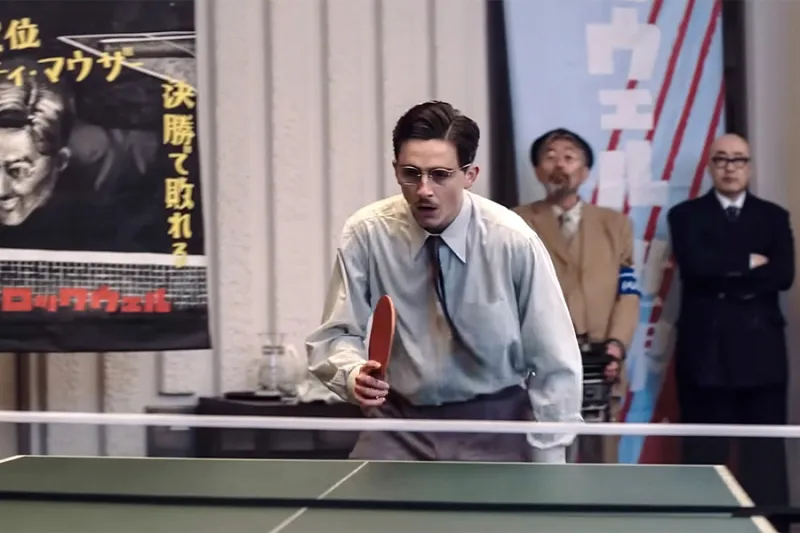
Visually, Marty Supreme is far more polished than the chaotic energy might initially suggest. The production design and cinematography give the film a rich period authenticity that looks, frankly, like it cost a fortune. The sets feel lived-in, the costuming is meticulous, and the whole aesthetic evokes a bustling, slightly grimy postwar urban world where ambition and desperation sit uncomfortably side by side. I think Safdie and his creative team deserve serious praise for building an environment that feels both heightened and believable.
The supporting cast adds plenty of texture as well. Fran Drescher appears as Marty’s mother, and I have to admit I had a moment of genuine nostalgia hearing that unmistakable voice again. Anyone who grew up with The Nanny will immediately recognise it. Interestingly, Drescher plays the role far more seriously than you might expect. The relationship between Marty and his mother carries a weight of disappointment and cultural tension that gives the character depth beyond simple comic relief.
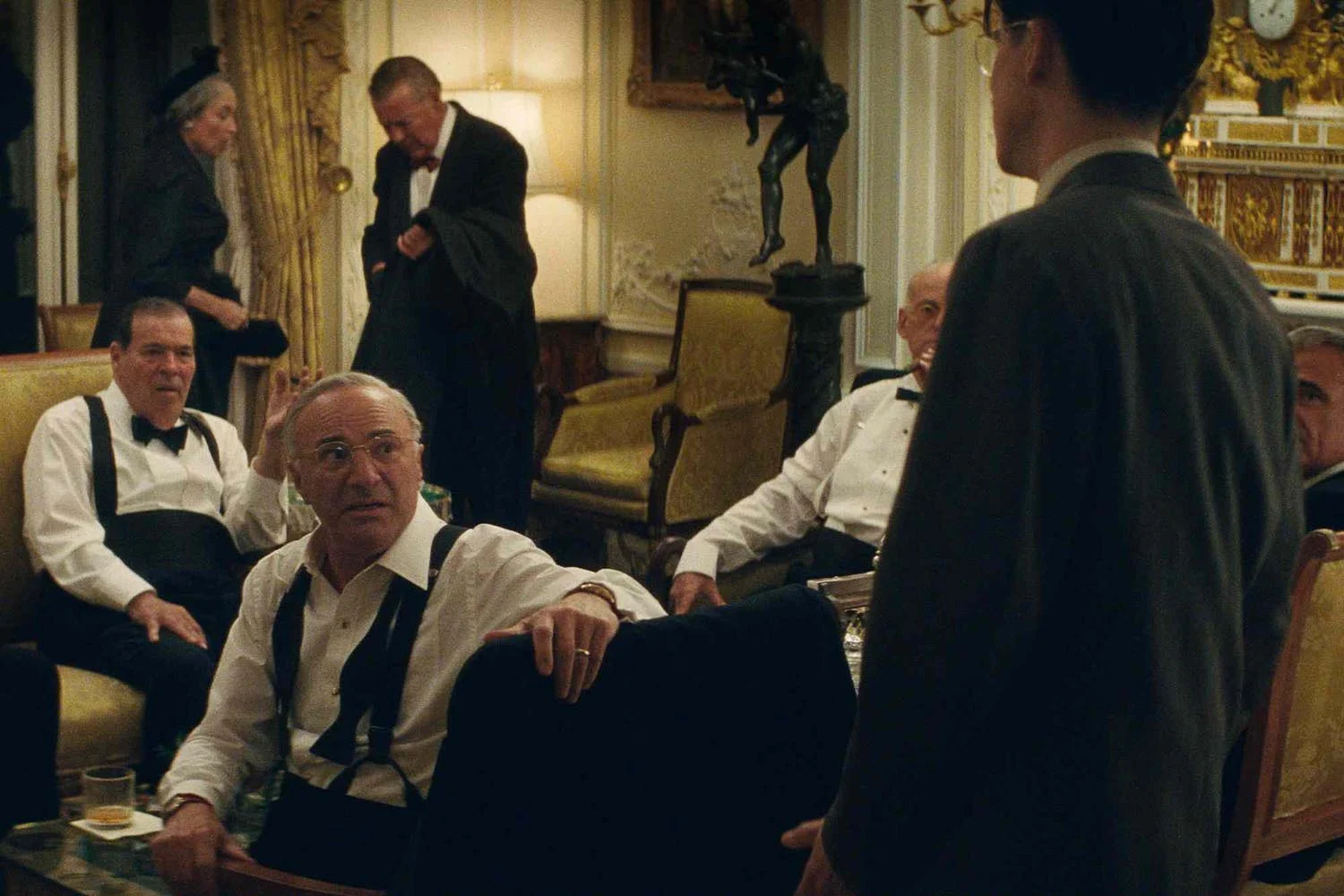
Odessa A’zion plays Marty’s long-time fling, a woman trapped in a violently unhappy marriage. The performance itself is solid — she brings plenty of emotional intensity — but I felt the script didn’t give her enough to do beyond being the victim of Marty’s chaotic lifestyle. It’s one of the few areas where the film feels slightly underdeveloped. On the other hand, seeing Paltrow lean into the role of a faded film star being seduced by Marty is gloriously awkward. Their scenes together carry a kind of second-hand embarrassment that’s almost painful, but in a thoroughly entertaining way. The dynamic feels intentionally uncomfortable, which only amplifies the film’s sense of social unease. Elsewhere, Tyler Okonma pops up as one of Marty’s hustler associates and injects some welcome comedic energy, while Kevin O’Leary plays Kay’s husband — a man who seems almost wilfully oblivious to the affair happening right under his nose. The ensemble contributes heavily to the film’s atmosphere of barely controlled pandemonium.

One element I appreciated more than I expected was the authenticity of the ping-pong itself. I’m hardly an expert in the sport, and I’ll freely admit the finer rules escape me, but several of the rallies look astonishingly realistic. I’ve actually seen real professional players pull off some of the shots depicted here, which gives the sequences an added layer of credibility. Even if you don’t know the intricacies of table tennis, Safdie shoots the matches with such energy that you instinctively understand the stakes.
Underneath all the frantic hustling and comic absurdity there’s also a faint but persistent undercurrent of historical tension. The film’s Jewish characters exist in the long shadow of the Holocaust, and that cultural trauma quietly informs many of their interactions. It’s never hammered over the audience’s head, but the atmosphere is there — a reminder that the postwar world these characters inhabit is still processing enormous collective grief. The result is a film that feels chaotic in the best possible way. Scenes pile on top of each other with manic energy, characters collide and separate like particles in an accelerator, and the whole narrative feels like it could spin out of control at any second. And yet Safdie somehow keeps it all coherent. Do I think it’s a film everyone will enjoy? Probably not. The relentless tension alone will be enough to send some viewers running for the exits. I genuinely felt my anxiety levels spike more than once. It’s the cinematic equivalent of drinking six espressos in rapid succession.

But I’ll be honest — I loved it. Marty Supreme is messy, loud, and completely unhinged in places, yet it’s also sharply directed, beautifully produced, and anchored by a tremendously committed performance from Chalamet. I’m not sure I’d rush to watch it again anytime soon without increasing my blood pressure medication dosages, but as a singular cinematic experience it absolutely works. And honestly, any film that manages to turn competitive ping-pong into a nerve-shredding drama deserves at least a little admiration. Highly recommended for everyone, save those with a nervous disposition.
Who wrote this?