
Movie Review – One Battle After Another
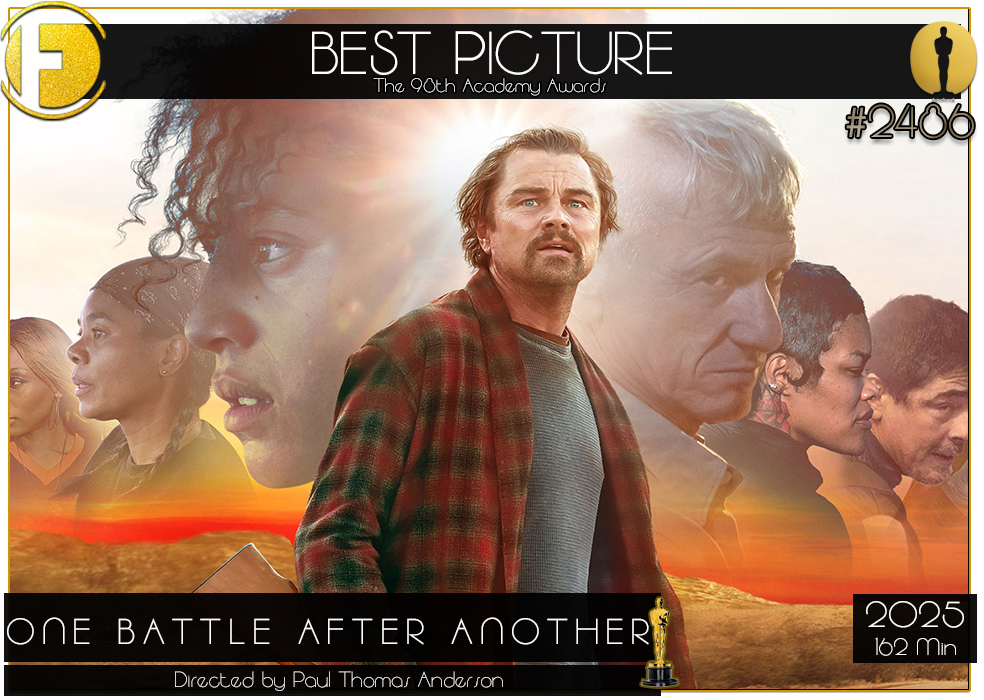
Principal Cast : Leonardo DiCaprio, Sean Penn, Benicio del Toro, Regina Hall, Teyana Taylor, Chase Infiniti, Wood Harris, Alana Haim, Paul Grimstad, Shayna McHayle, Tony Goldwyn, John Hoogenakker, Starletta DePois, Eric Schweig, DW Moffett, Kevin Tighe, Jim Downey, James Raterman, Dijon Duenas, Dan Chariton, Jon Beavers, Jena Malone.
Synopsis: When their enemy resurfaces after 16 years, a group of ex-revolutionaries reunite to rescue the daughter of one of their own.
********
When a filmmaker like Paul Thomas Anderson releases a new film, expectations inevitably begin orbiting the project long before we ever see a frame of it. His 2025 feature One Battle After Another arrived with precisely that level of anticipation — a politically charged, tonally slippery action-comedy starring Leonardo DiCaprio alongside Sean Penn and Benicio del Toro. Loosely inspired by Thomas Pynchon’s novel Vineland, the film marries Anderson’s trademark character-driven storytelling with a propulsive chase narrative that rarely lets the audience catch its breath.
What surprised me most about One Battle After Another is not how clever it is — Anderson’s films are usually clever and visually inventive to a fault — but how unabashedly fun it is. For a film loaded with political subtext and cultural tension, it plays out like a kinetic, satirical thriller, driven by urgency and fuelled by a script that feels razor-wire tight. It’s gritty and grounded in its realism yet never forgets to wink at the absurdity of its characters and circumstances. By the end I realised I’d spent the entire runtime completely locked in, riding the film’s chaotic energy from its opening moments through to its final emotional beat. For my money, this lands as a solid cinematic experience — the kind of film that reminds you how entertaining a prestige-leaning production can be when everything clicks into place.

The story follows Bob Ferguson (DiCaprio), a former revolutionary bomb-maker whose past refuses to stay buried. Once associated with a radical outfit known as the French 75, Bob now exists in a haze of faded ideology, bad decisions and chemically assisted confusion. When his estranged daughter Willa vanishes amid the resurfacing of an old enemy — the monstrous Colonel Lockjaw (Penn) — Bob is thrust back into a world he’d long since abandoned. Tracking down former comrades and piecing together fragments of his own fractured memory, he embarks on a frantic search to find Willa before Lockjaw’s brutal network closes in.

That central premise could easily have become a straightforward political thriller, but Anderson complicates the landscape with contemporary anxieties simmering just beneath the surface. Immigration tensions and state violence — evoking ICE-style crackdowns — create a volatile social backdrop for Bob’s increasingly desperate search. Yet the film never feels didactic; instead these issues operate like atmospheric pressure, constantly tightening around the narrative while the characters scramble to survive. Much of the film’s success rests squarely on Anderson’s screenplay, which feels both sprawling and tightly engineered at the same time. Dialogue crackles with wit and off-kilter humour, characters bounce between conversations like pinballs, and every interaction feels just slightly unpredictable. The script’s pacing is particularly impressive: the film is dense with sidequests and secondary characters, yet it rarely feels bloated or unfocused.

Adding another unexpected flavour to the film’s tonal mix is the score by Jonny Greenwood. Greenwood leans heavily into funky jazz textures, layering propulsive rhythms beneath scenes of pursuit and paranoia. It’s an unusual choice for a film with this level of tension, but the contrast works beautifully. The playful musicality sits in strange opposition to the looming threat of violence, creating a tonal friction that keeps the audience slightly off balance.

At the centre of it all is DiCaprio, who delivers a wonderfully messy performance as Bob. This is not a heroic lead in the traditional sense; Bob is disorganised, unreliable and frequently intoxicated, a man whose revolutionary past feels almost accidental in hindsight. DiCaprio captures the character’s chaotic personality with real comic instinct, allowing Bob to be both irritating and strangely endearing. He’s essentially a deadbeat father stumbling through a crisis of his own making. Bob can be obnoxious, self-absorbed and occasionally downright pathetic — yet DiCaprio finds the humour in those flaws, turning what could have been an unlikeable character into someone the audience reluctantly roots for. There’s a scruffy authenticity to the performance that fits perfectly within Anderson’s world.

Sharing much of the screen with him is Benicio del Toro, whose relaxed charisma provides an ideal counterbalance. Del Toro plays Sergio, a karate instructor who unexpectedly becomes one of Bob’s allies, and his laid-back presence injects the film with several of its most enjoyable exchanges. The chemistry between the two actors feels effortless, grounding their unlikely partnership in something that feels believable. Then there’s Sean Penn, who storms into the film like a force of nature. As Colonel Lockjaw he creates one of the most grotesque antagonists Anderson has ever put on screen — a snarling authoritarian with links to a clandestine white supremacist group and a deeply unsettling Christmas obsession. Penn leans into the character’s theatrical cruelty with gleeful ferocity, growling and bullying his way through the film with an energy that frequently threatens to steal the spotlight from DiCaprio entirely.
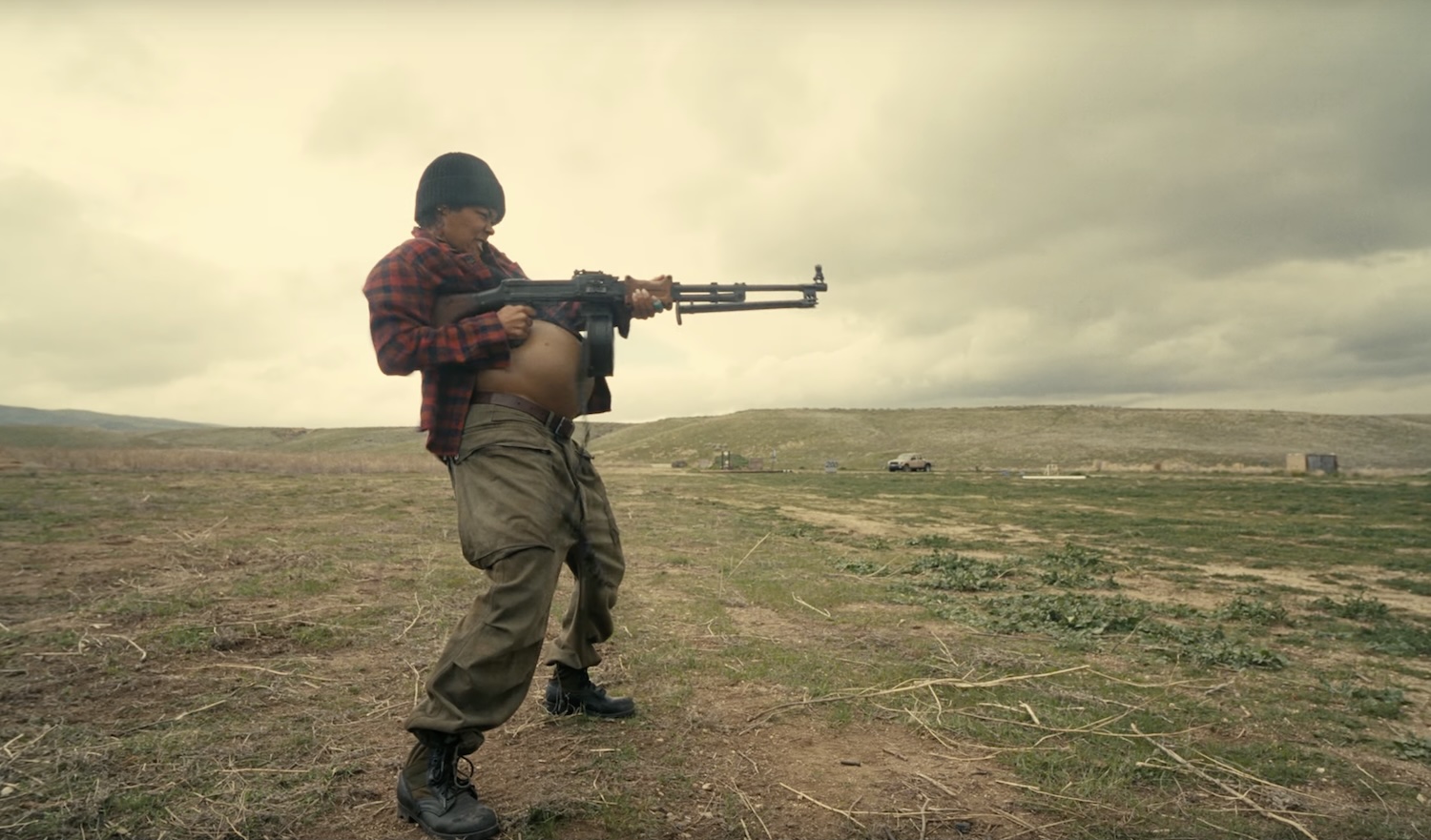
Elsewhere in the ensemble, Chase Infiniti makes a strong impression as Willa. Aside from possessing what might be the most memorably cinematic name in the entire cast list, Infiniti proves exceptionally good in the role. Willa’s world is violently overturned by the film’s events, and Infiniti captures the confusion, desperation and emotional upheaval that comes with that upheaval. The character never feels like a passive objective in Bob’s quest; instead she emerges as a fully realised presence whose absence drives the story’s emotional stakes. Another standout is Teyana Taylor as Perfidia Beverly Hills, the fierce and enigmatic figure who once served as the de facto leader of the French 75. Though placed into witness protection after her capture, Perfidia’s influence echoes throughout much of the film’s second and third acts. Taylor brings an intimidating intensity to the role, ensuring the character’s shadow looms large over the story even when she isn’t physically on screen.

The ensemble extends even further, with smaller but memorable turns from Regina Hall, Tony Goldwyn and John Hoogenakker. Each actor makes the most of limited screen time, even if their characters occasionally become lost within the narrative sprawl of Anderson’s increasingly elaborate sidequests. That’s perhaps the only downside to the film’s ambitious scope — the sheer number of characters and narrative detours means some performances flicker past almost too quickly.
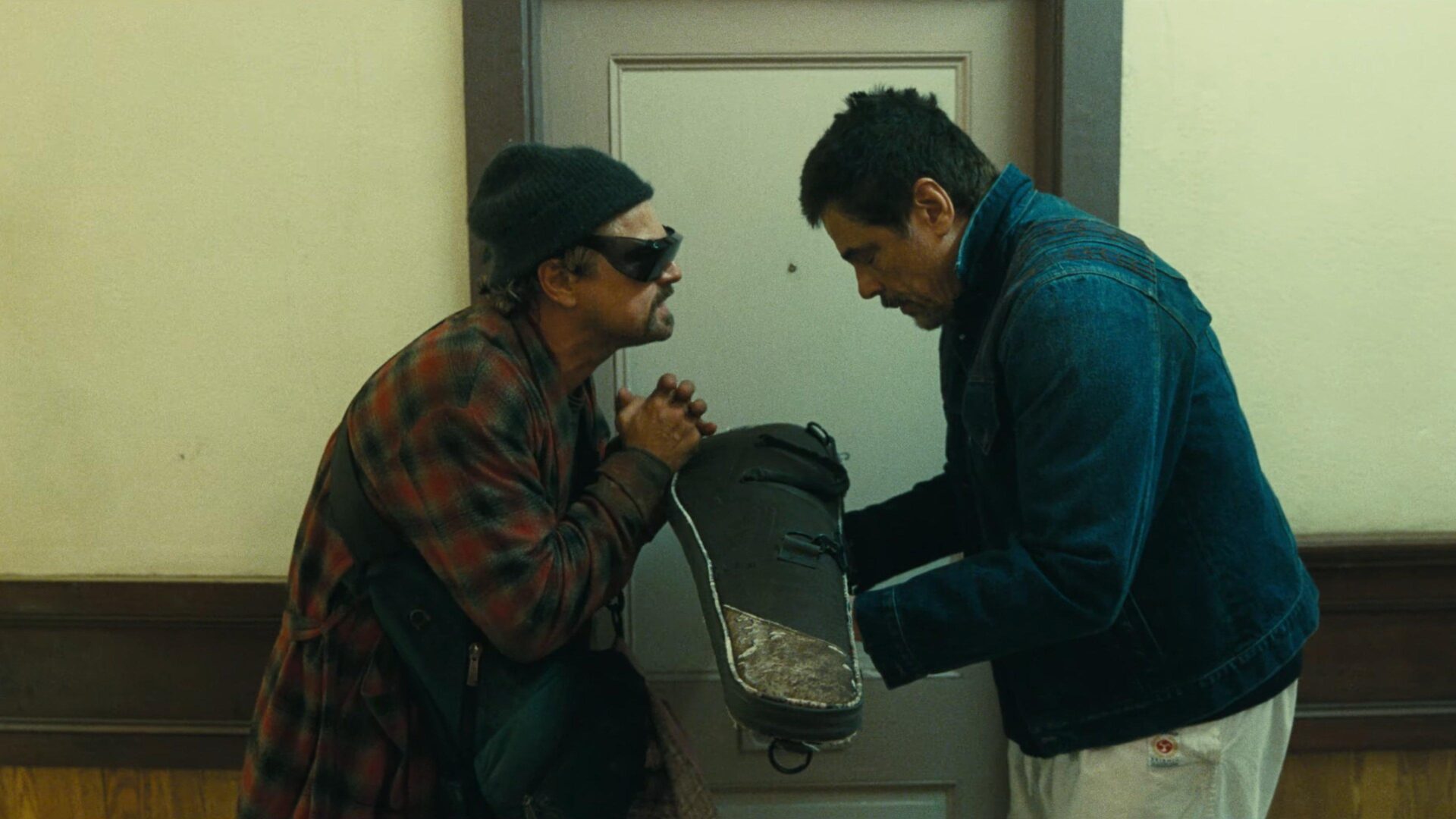
Technically speaking, One Battle After Another is as impressive as one would expect from an Anderson production. Shot with an observational sensibility by cinematographer Michael Bauman, the film often feels almost documentary-like in its visual approach. The camera lingers close to the characters, capturing moments with a verité immediacy that enhances the film’s sense of urgency. Lighting choices favour naturalism, while framing frequently emphasises the chaotic physical spaces Bob inhabits — cramped rooms, crowded streets, dusty hideouts where old revolutionaries wait out their obscure retirements. The overall effect is one of grounded realism, even as the narrative occasionally edges toward surreal satire. The editing deserves particular praise, especially during the film’s numerous action sequences. Rather than relying on disorienting quick cuts, Anderson and editor Andy Jurgensen build scenes gradually, allowing tension to escalate moment by moment. Each sequence feels structured around rising desperation, capturing the sense that Bob is constantly one step away from total disaster.

All of this culminates in a film that is as emotionally satisfying as it is entertaining. Without venturing into spoiler territory, the story ultimately resolves on a note that feels uplifting yet quietly melancholy — an emotional combination that serves as the perfect counterpoint to the film’s otherwise energetic, cathartic momentum. Anderson doesn’t hand the audience a neat triumph; instead he offers something closer to bittersweet relief. And I think that’s what makes One Battle After Another linger beyond the credits. Beneath the frantic chase narrative, the political satire and the eccentric characters lies a story about damaged people trying to navigate the wreckage of their past decisions. Bob may not be a traditional hero, but his struggle to reclaim some sense of purpose gives the film its beating heart.

The overwhelming impression I found with this film is simple: I had a blast with it. The writing is sharp, the performances are terrific, the filmmaking is confident, and the entire production hums with a kind of reckless creative energy that’s increasingly rare in large-scale cinema. If awards recognition tends to gravitate toward films that feel meticulously constructed from top to bottom, then it’s easy to understand why One Battle After Another found itself in the Best Picture conversation. But awards aside, it succeeds on a much simpler level as well — it’s a wildly entertaining film that never forgets the joy of storytelling. And sometimes, that’s exactly what great cinema should be.
Who wrote this?