
Movie Review – 28 Years Later
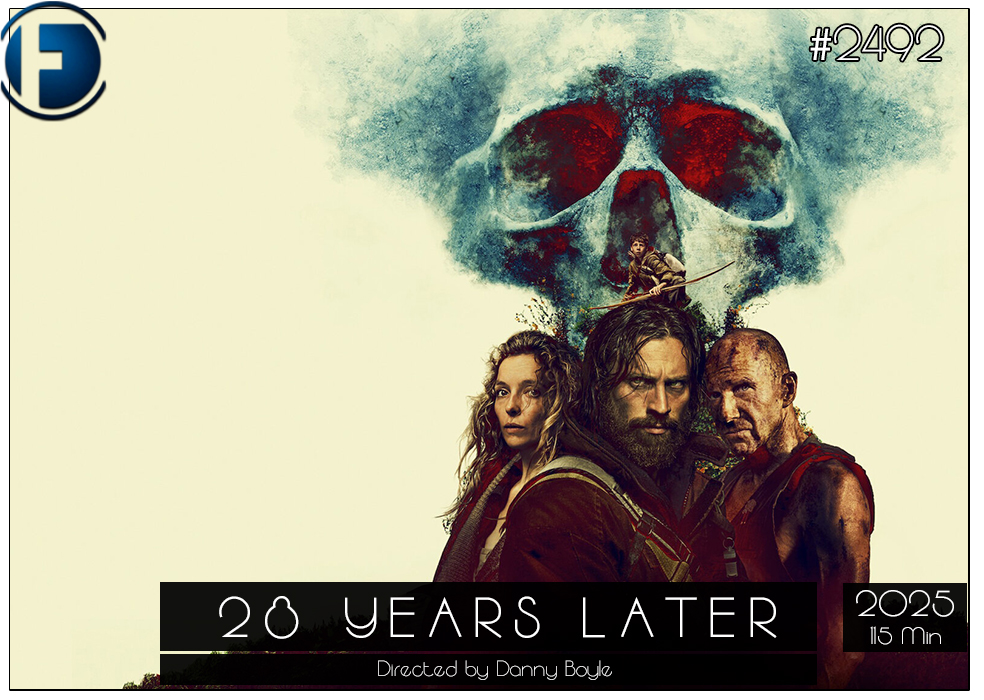
Principal Cast : Aaron Taylor-Johnson, Jodi Comer, Jack O’Connell, Alfie Williams, Chi Lewis-Parry, Edvin Ryding, Christopher Fulford, Stella Gonet, Ralph Fiennes.
Synopsis: A group of survivors of the rage virus live on a small island. When one of the group leaves the island on a mission into the mainland, he discovers secrets, wonders, and horrors that have mutated not only the infected but other survivors.
********
When Danny Boyle and Alex Garland first unleashed 28 Days Later onto cinema screens in 2002, the film didn’t merely revitalise zombie horror — it detonated it. The idea that the infected might sprint rather than shamble fundamentally altered the grammar of the genre, transforming a familiar horror trope into something that felt immediate, terrifying and violently unpredictable. The film’s lo-fi digital aesthetic only amplified the effect, creating a sense that civilisation had collapsed overnight and the camera simply happened to be there to record the aftermath.
Two decades later, Boyle and Garland return to that world with 28 Years Later, a legacy sequel that attempts to explore what Britain might look like after nearly thirty years of isolation from the rest of the planet. The Rage Virus never burned out, the story suggests. Instead, the global community effectively sealed the United Kingdom behind an invisible quarantine wall and moved on with the rest of civilisation, leaving whatever survivors remain to fend for themselves in a nation abandoned by history.
It’s a premise dripping with narrative potential. A country cut off from the world for three decades offers fertile ground for all sorts of storytelling possibilities: social evolution, cultural amnesia, the slow mutation of a civilisation forced to adapt without external influence. Yet while 28 Years Later gestures toward these themes, it rarely commits to exploring them with the depth or clarity the concept demands.
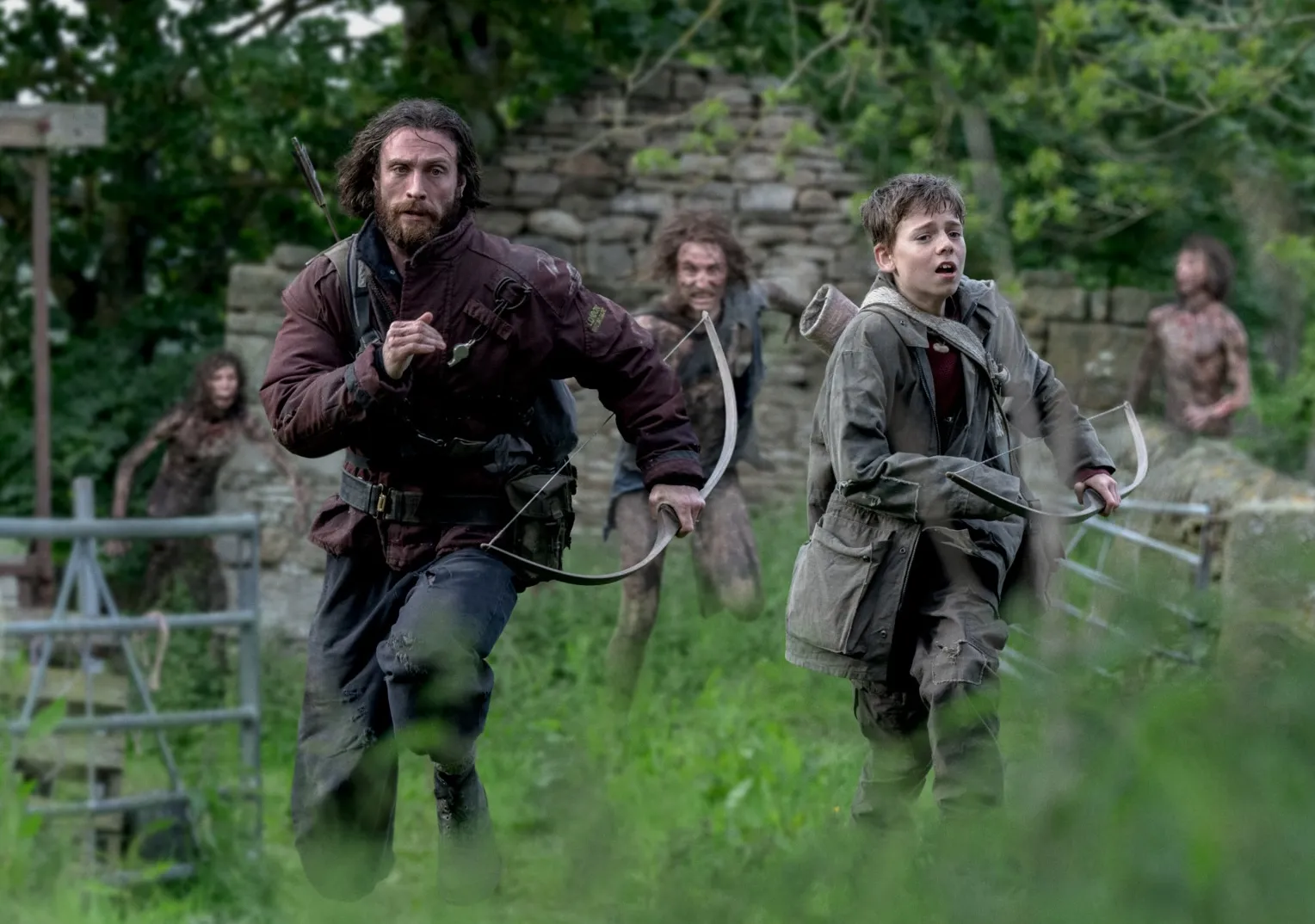
The film opens with a small island community linked to the mainland by a tidal sandbar — a fragile geographical quirk that allows occasional access to the infected territory beyond when the tide recedes. It’s an evocative image: a village perched nervously on the edge of the apocalypse, its inhabitants living in the uneasy shadow of the mainland’s feral wilderness. But the film introduces this society with frustrating speed. The mechanics of how the community functions remain largely unexplained. Who governs the settlement? What rules regulate movement between the island and the mainland? How has a generation of people grown up in a world where Britain has been effectively erased from the global map? The film doesn’t seem particularly interested in answering those questions, which contributes to the persistent feeling that the story has dropped audiences into the middle of a narrative whose foundations were never properly laid.
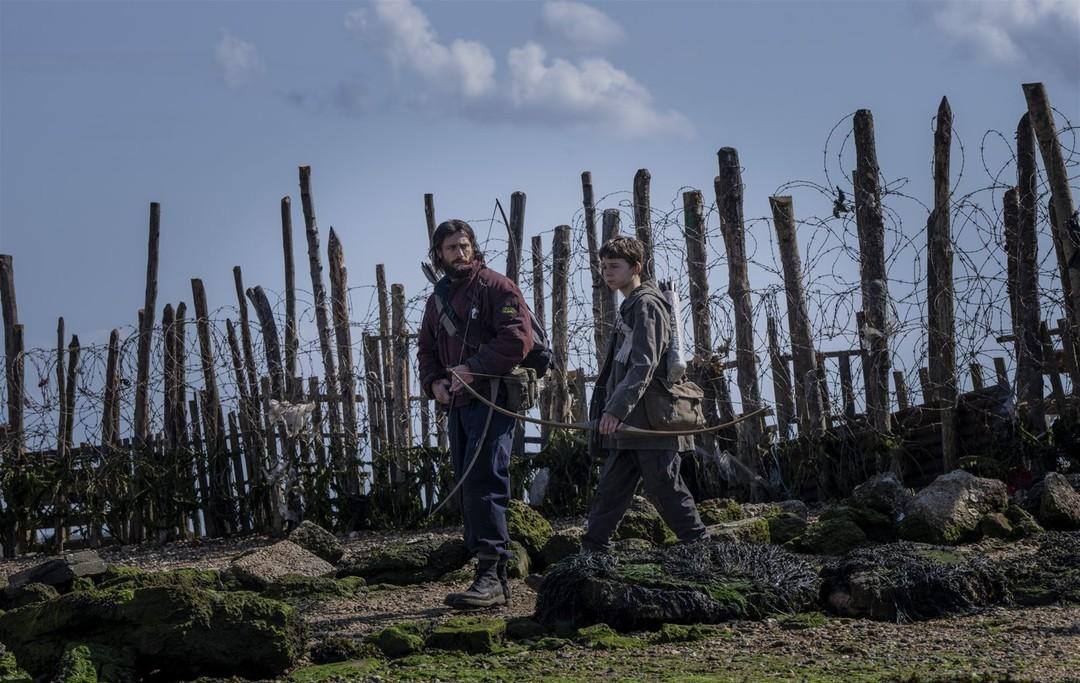
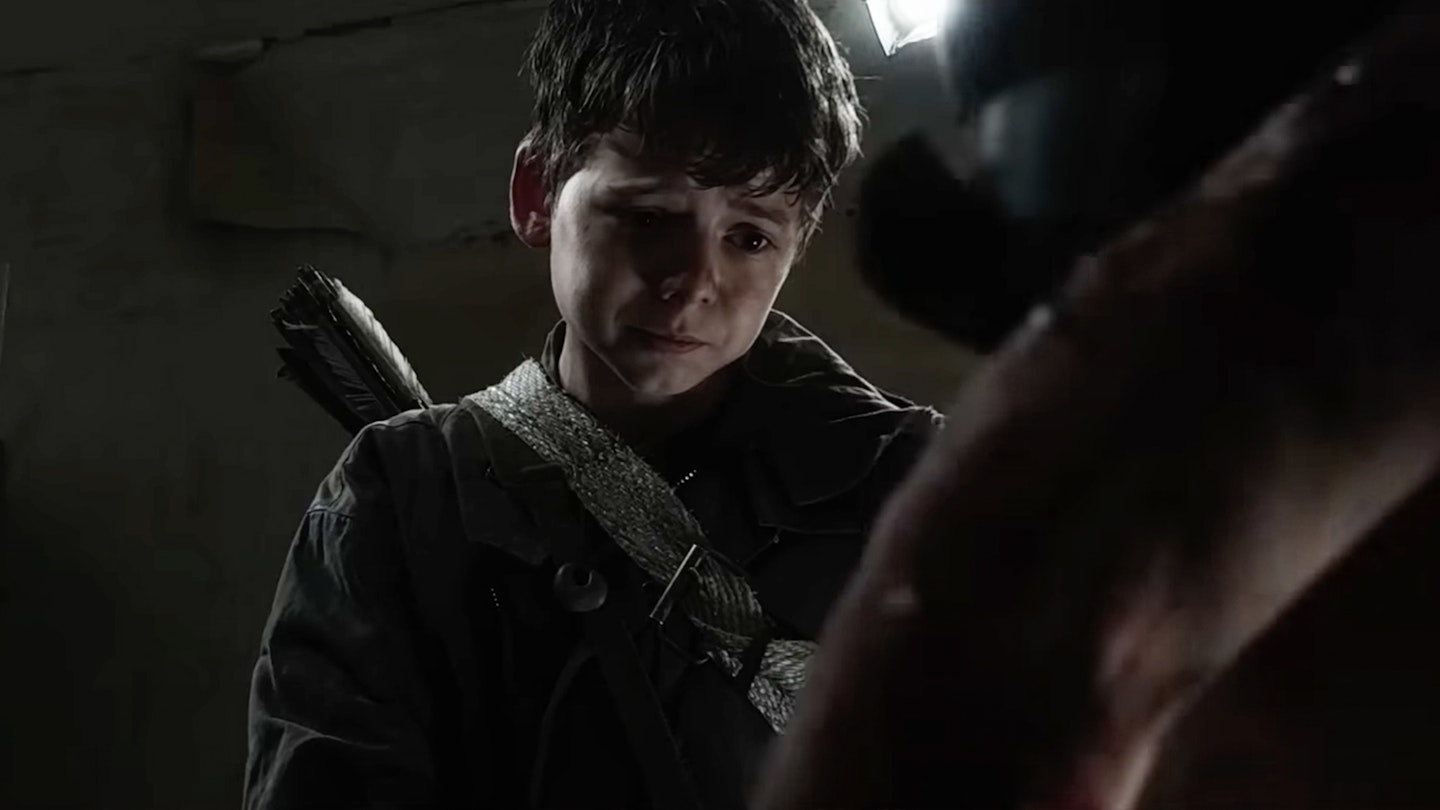
At first glance, the film appears to centre on the relationship between father and son, played by Aaron Taylor-Johnson and young actor Alfie Williams. Taylor-Johnson carries the presence of someone hardened by decades of survival in a world permanently scarred by the Rage Virus, and his early scenes suggest a narrative about passing knowledge down to the next generation — a brutal education in how to endure when civilisation has long since collapsed. Then the film abruptly shifts course. Roughly halfway through the story, Taylor-Johnson’s character — who up to that point feels very much like the film’s protagonist — is written out of the narrative, leaving Williams and his on-screen mother, played by Jodie Comer, to carry the remainder of the story. The structural whiplash is difficult to ignore. Had the film introduced Williams as the central perspective from the outset, the transition might have felt organic. Instead, the audience is invited to invest emotionally in one character before the narrative quietly hands the story over to another.
Williams works hard to shoulder the responsibility placed upon him. The young actor demonstrates a natural screen presence and handles the character’s accent convincingly, suggesting a performer with genuine promise. Yet the role itself places him in an unenviable position: carrying a large-scale apocalyptic narrative while surrounded by characters who rarely feel fully realised. As a result, the character’s decisions sometimes come across as frustrating rather than sympathetic. Several plot developments hinge on choices that appear bafflingly illogical, less like the behaviour of a frightened teenager navigating a nightmare landscape and more like the screenplay nudging the story toward its next destination. Comer’s role fares little better. Her character, an ailing mother whose illness initially appears poised to drive the narrative, gradually becomes something of a narrative cul-de-sac. Despite occupying a substantial amount of screen time, the character never develops into a meaningful emotional anchor for the story.
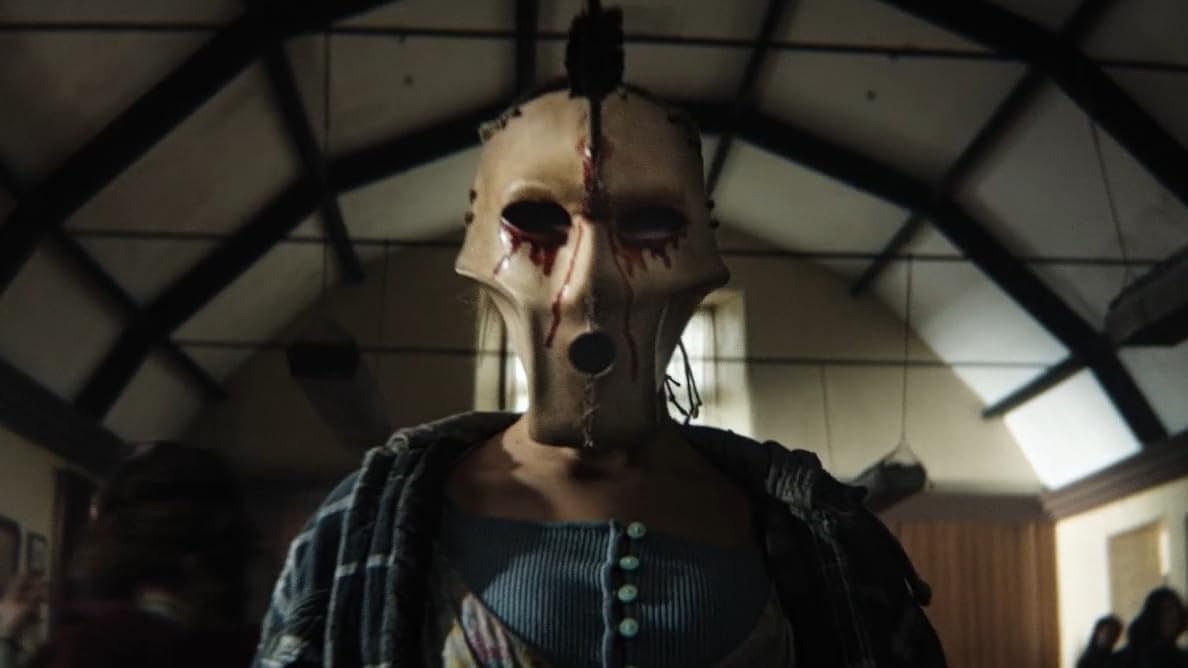
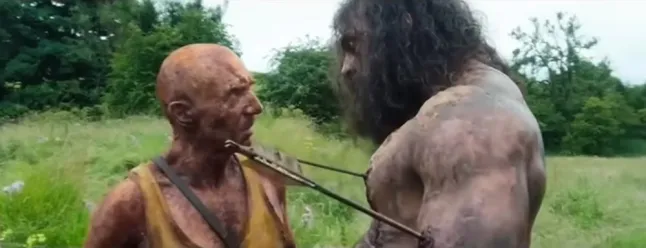
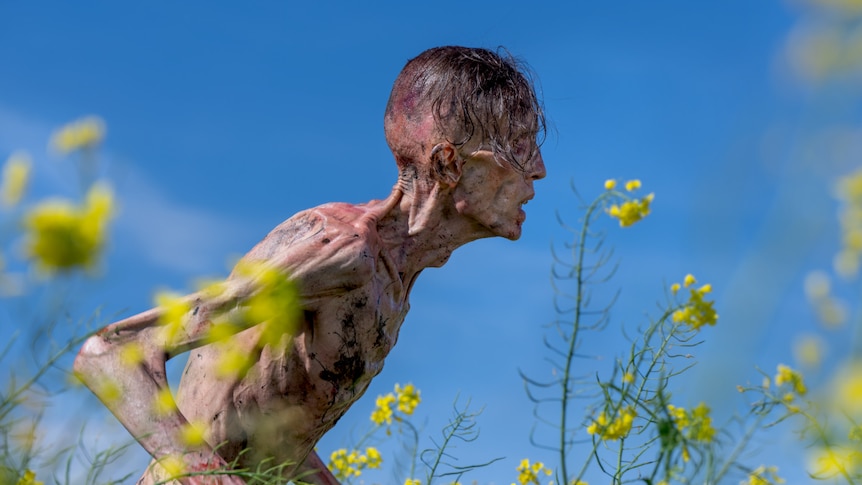
If anyone manages to inject genuine gravitas into the film, it’s Ralph Fiennes, who appears in the latter portion of the story as doctor Ian Kelson. Fiennes brings a quiet dignity to the role, suggesting layers of backstory through subtle gestures and weary expressions. Kelson emerges as a tragic figure attempting to preserve fragments of humanity within a world that has largely surrendered to chaos. In many ways, Fiennes ends up carrying the emotional weight of the film’s third act. His presence lends the narrative a gravity that often feels absent elsewhere, and his performance stands as a reminder of the extraordinary craft he brings to even the smallest roles. The film also introduces an intriguing addition to the franchise’s infected mythology: a new class of creatures known as “Alphas”. These infected individuals appear to have experienced a different physiological reaction to the Rage Virus, transforming them into towering, hyper-muscular predators — essentially the apex creatures of this feral ecosystem. The arrival of one such Alpha, played by Chi Lewis-Parry, provides one of the film’s more memorable moments. Lewis-Parry’s imposing physicality gives the creature a genuinely intimidating presence, and Boyle frames the encounter with kinetic intensity. Yet Boyle also makes a rather… bold staging choice. The Alpha appears entirely nude, and Lewis-Parry’s anatomy remains very much on display throughout the sequences he’s involved in. While the visual may reinforce the creature’s primal animalism, it also proves distractingly conspicuous — particularly given the actor’s rather pronounced… er, physical endowment.
One imagines Boyle understood precisely the kind of reaction such imagery might provoke. If nothing else, it certainly drives home the “Alpha” concept with memorable literalness.
For all these individual elements, however, the film never quite manages to coalesce into a satisfying narrative whole. Much of the story feels less like a self-contained chapter and more like an extended prologue for the next instalment. Seeds for future plotlines are scattered liberally throughout the film, yet the emotional arc of this particular story never fully crystallises. Seeding future developments isn’t inherently a problem — franchises have long relied on such narrative groundwork. But successful storytelling demands that the emotional core of the present story receives proper resolution first. In 28 Years Later, that payoff often feels like an afterthought, overshadowed by the film’s eagerness to set the stage for its sequel, 28 Years Later: The Bone Temple. One of the most intriguing narrative ideas introduced late in the film illustrates this problem perfectly. During one sequence, the characters encounter a heavily pregnant infected woman who gives birth to a baby that appears — astonishingly — not to be infected by the Rage Virus. It’s a fascinating concept. If the virus can produce uninfected offspring, it raises enormous questions about the future of humanity within this quarantined Britain. Could immunity exist within the next generation? Might the infection itself be evolving in ways that challenge everything survivors thought they understood about it? Yet the film treats this revelation less as a dramatic turning point and more as a dangling thread for future exploration. The idea arrives abruptly, unfolds with surprisingly little narrative scrutiny and then quietly recedes into the background as the story moves on.
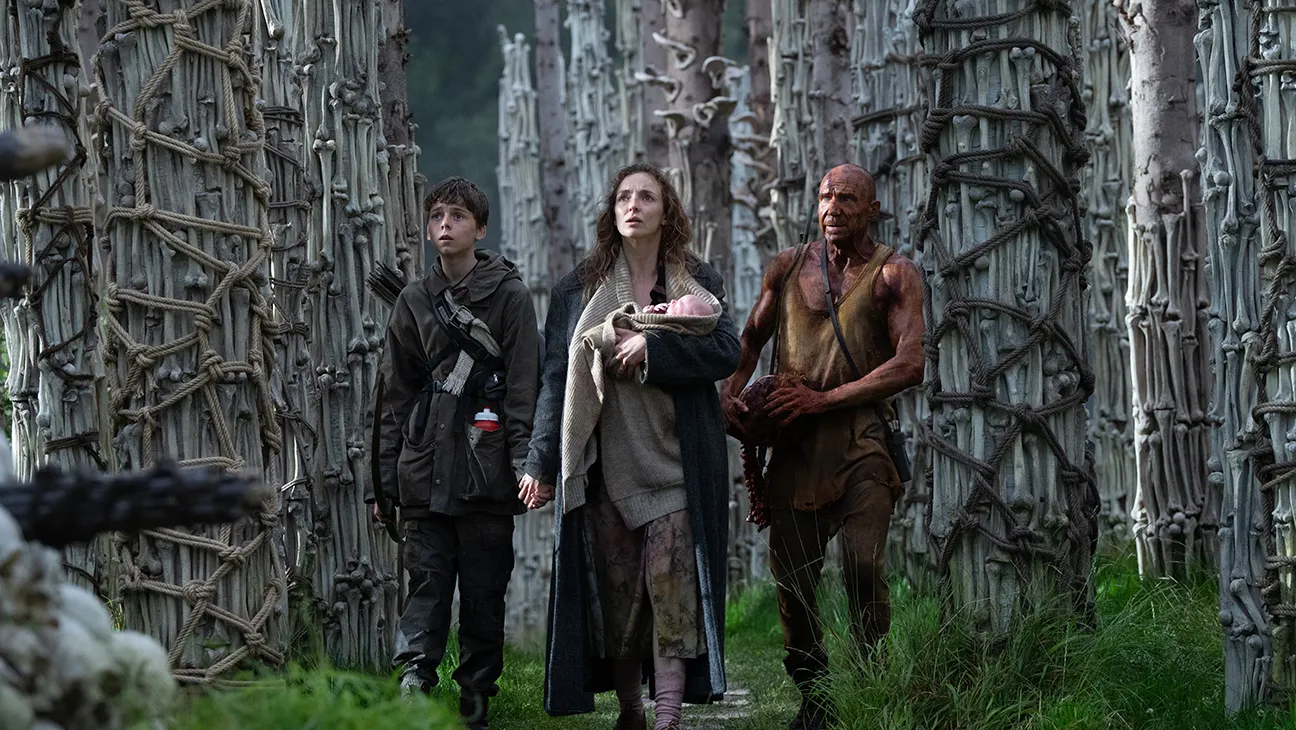
More puzzling still is the behaviour of the characters surrounding this moment. Throughout the entire franchise, proximity to the infected has been portrayed as an almost suicidal risk. Even a drop of contaminated blood can trigger infection within seconds. Yet here the characters suddenly find themselves lingering in close proximity to a visibly infected woman — admittedly one in the throes of labour — without the kind of panic that the series has spent decades conditioning audiences to expect. The moment feels like a strange narrative left turn, one that exists primarily to plant a sequel hook rather than meaningfully enrich the story being told.
Beneath these narrative missteps lies a thematic undercurrent the film gestures toward but never fully interrogates: the idea of social isolation and cultural amnesia within a nation cut off from the world. Thirty years of quarantine would inevitably reshape the collective identity of any society. A generation has grown up within this sealed-off Britain knowing nothing of the outside world except fragments of half-remembered history. Technology has faded. Communication networks have collapsed. Travel beyond the island’s boundaries is effectively impossible.
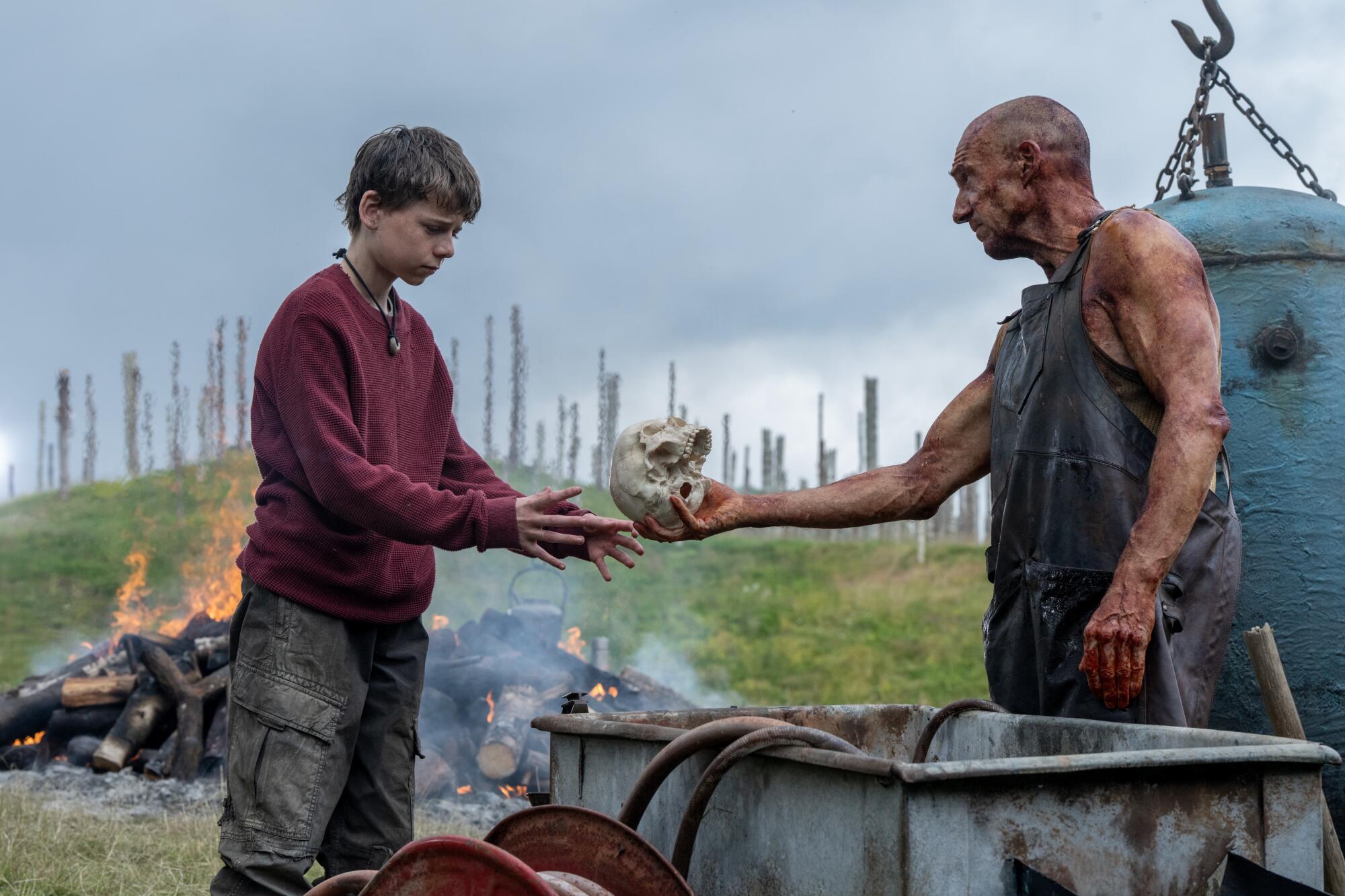
The result is a society living in a kind of historical limbo — aware that a world once existed beyond their shores but lacking the means to reconnect with it. This idea resonates strongly with the film’s broader atmosphere. The survivors appear trapped not only geographically but psychologically, inhabiting a cultural echo chamber where the past survives only as faint myth. The Rage Virus didn’t just devastate Britain’s population; it severed the country’s connection to the wider human story. In that sense, the film quietly suggests that the true horror of the Rage Virus may not be the infected themselves but the slow erosion of memory and identity within a civilisation forced to exist in isolation. It’s a compelling thematic thread — one that could have elevated 28 Years Later into something genuinely profound. Yet like so many of the film’s ideas, it remains largely unexplored, hovering around the edges of the narrative without ever becoming its central focus.
The film ultimately concludes not with a cathartic climax but with an oddly abrupt winding down of its narrative threads. Just as the story appears to be building toward a final confrontation, the film simply stops, offering little in the way of emotional resolution. A brief coda introduces new characters destined to appear in the sequel 28 Years Later: The Bone Temple, accompanied by a tonal shift that feels almost jarringly reminiscent of the operatic world-building found in the Mad Max films. By that point, however, the primary story has already lost much of its narrative momentum. None of this makes 28 Years Later a failure outright. The film contains moments of striking imagery, several genuinely tense action sequences and a handful of committed performances. Yet for a franchise that once revolutionised modern horror, the film ultimately feels oddly superficial — a competent but unremarkable entry in a genre it once helped redefine. The Rage Virus may still be raging across Boyle’s cinematic Britain, but the shock and invention that once made this world feel electrifying now seem to have faded into the long shadow of the original outbreak.
Who wrote this?