
Movie Review – Red Sonja (2025)
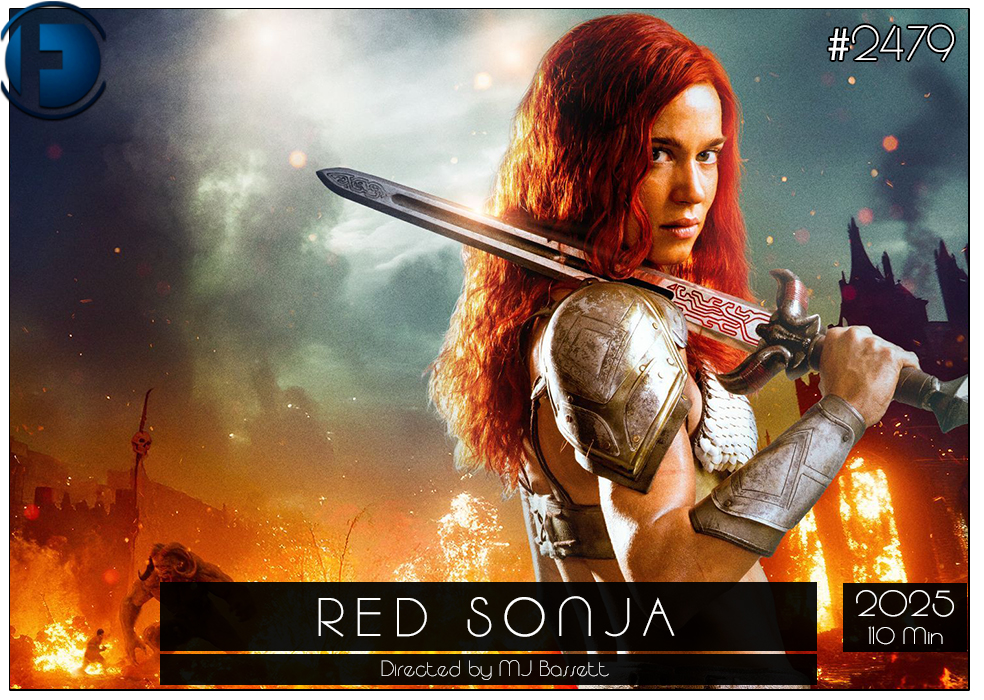
Principal Cast : Matilda Lutz, Wallis Day, Robert Sheehan, Michael Bisping, Martyn Ford, Eliza Matengu, Veronica Ferres, Luke Pasqualino, Katrina Durden, Rhona Mitra, Trevor Eve, Philip Winchester, Ben Radcliffe.
Synopsis: Captured and forced to fight for survival, Red Sonja must rally an army of outcasts to reclaim her freedom and take down a tyrant and his ruthless bride.
********
There are so-bad-they’re-good remakes, there are not-as-good-as-they-could-be misguided remakes, and then there’s Red Sonja — a film that, by most measurable standards, feels like it’s fighting a losing battle from the moment the first sword is unsheathed. Director M.J. Bassett’s attempt to resurrect the flame-haired warrior from the pages of Robert E. Howard’s pulp mythology — itself spun out of the shadow of “Conan the Barbarian” — lands with a thud that reverberates through almost every creative choice on screen. This 2025 iteration of Red Sonja is as risible as big-budget fantasy gets, a production that looks perpetually caught between ambition and limitation, spectacle and suffocation.
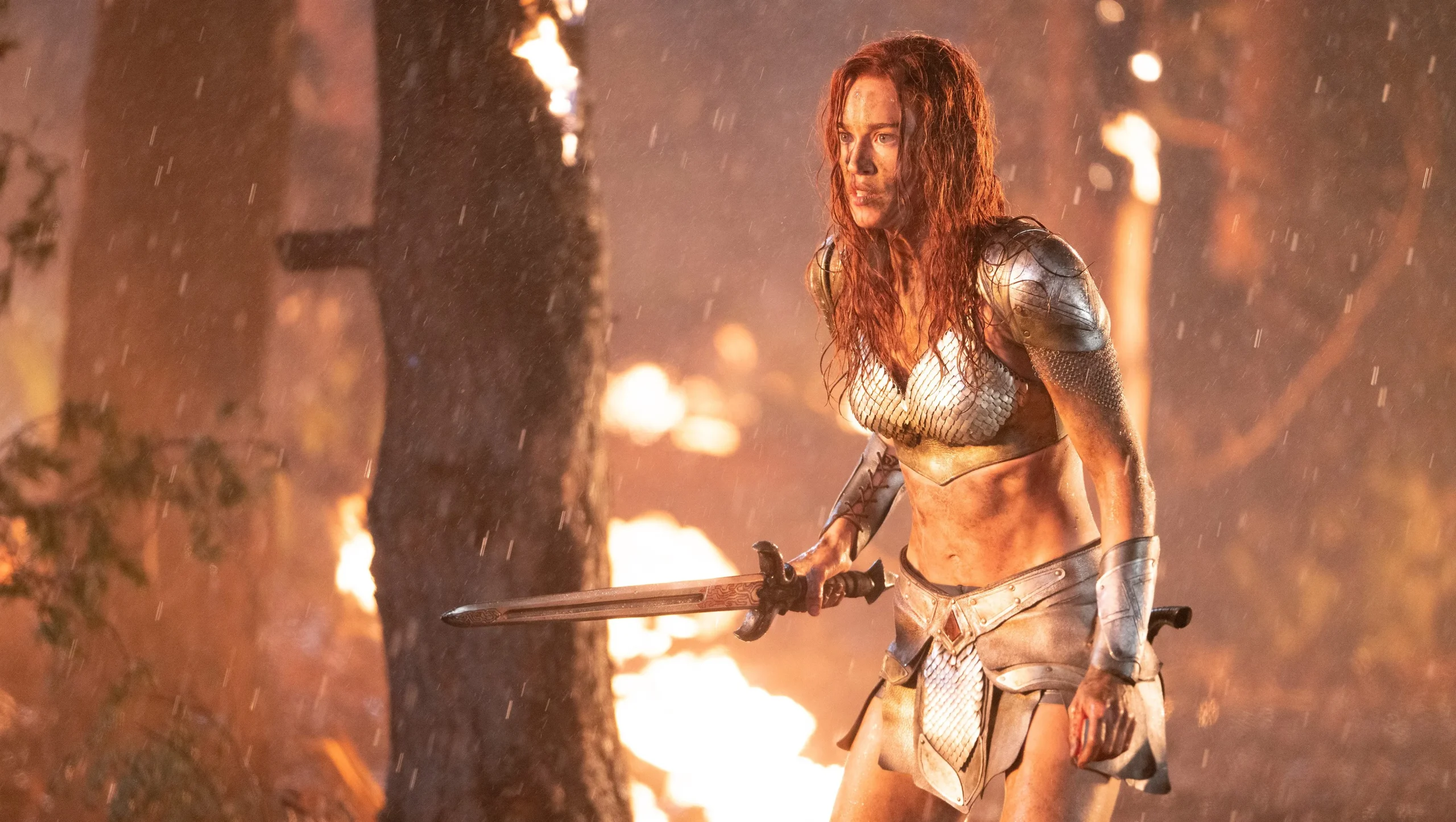
There are flashes — genuine ones — of craft. Some of the visual effects, both practical and digital, scrape into the mid-to-good range, and the costuming (particularly that of Matilda Lutz in the title role) suggests that someone, somewhere, cared deeply about texture and silhouette. But these aesthetic flourishes are draped over dialogue that clangs like cheap steel and performances that veer wildly from wooden to hysterical. The end result is a film that sits uncomfortably close to the 1985 Red Sonja starring Brigitte Nielsen — not quite as unintentionally hilarious, but perilously adjacent.
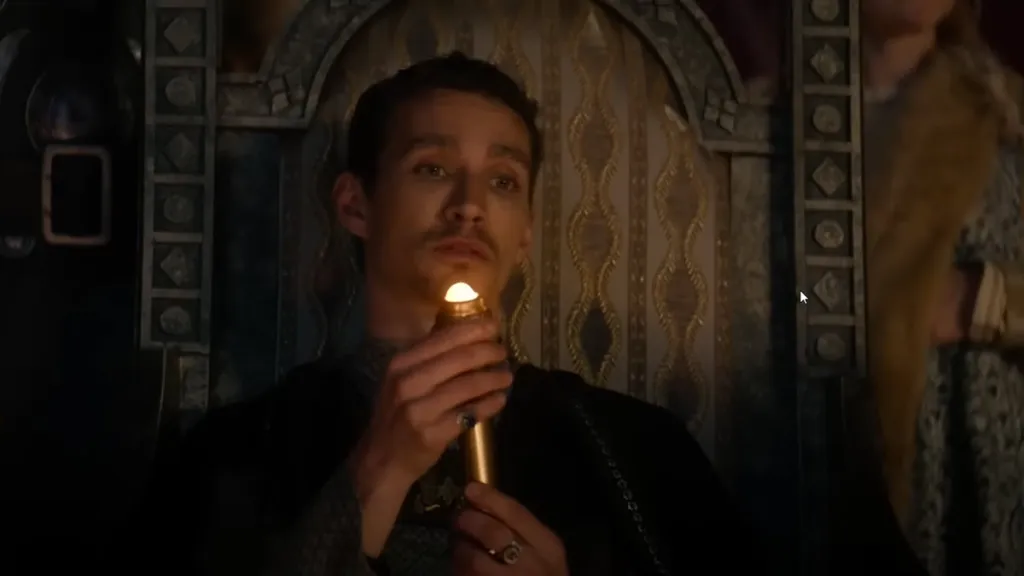
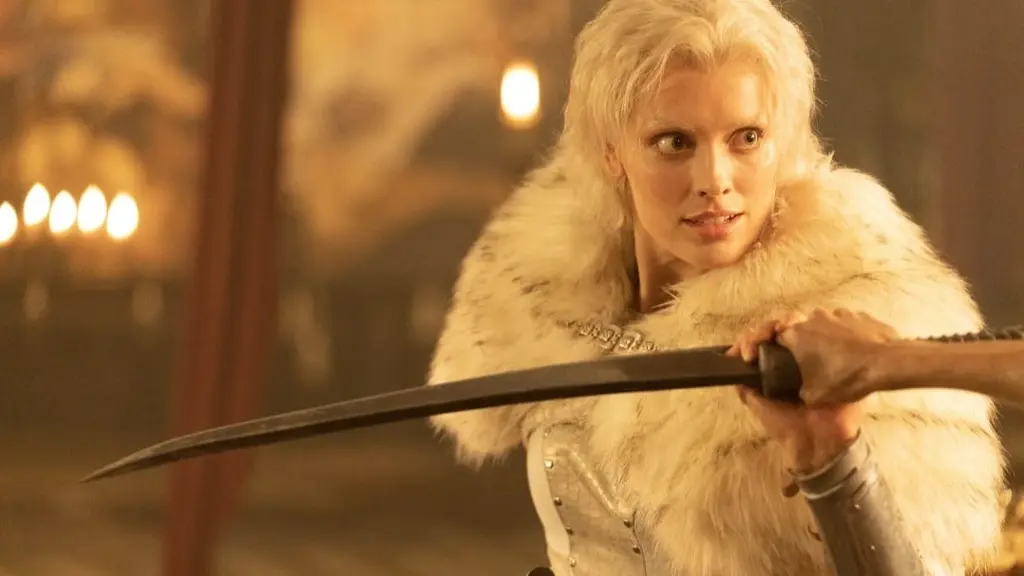
Lutz, to her credit, throws herself into the role with admirable commitment. There’s a proto-feminist edge to her Sonja — an attempt to reframe the character as something more than chainmail pin-up fantasy — and physically she embodies the warrior ethos with conviction. She looks the part in every frame. Dramatically, however, she is left stranded by a screenplay that never rises above blunt-force exposition and adolescent posturing. Her performance is about as strong as the material allows, which isn’t saying much, though there’s enough screen presence there to suggest better projects could unlock something worthwhile. Opposite her, Robert Sheehan chews through the scenery as the villainous Dragan with a kind of gnashing, camp theatricality that almost — almost — bends the film into cult territory. His performance is broad, preposterous, and occasionally entertaining in spite of itself. Wallis Day’s Annisia, meanwhile, is saddled with the thankless task of being generically nasty, a consort whose menace never quite transcends costume and glare.
Bassett, whose earlier genre efforts include Solomon Kane and the Megan Fox-led military actioner Rogue, clearly understands the grammar of sword-and-sorcery cinema. She strives for rousing spectacle and splashes the screen with blood, grit and operatic fury. Yet the film feels neutered by a constrained narrative scope and an oddly suffocating sense of smallness. For a story that gestures toward kingdoms in peril and world-altering mysticism, the canvas feels cramped. Sets appear sparse despite visual expansiveness. The geography never convinces. There’s a palpable sense that the budget may have been funnelled into fancy 4K cameras and leatherwork rather than world-building or, perhaps most crucially, script development.
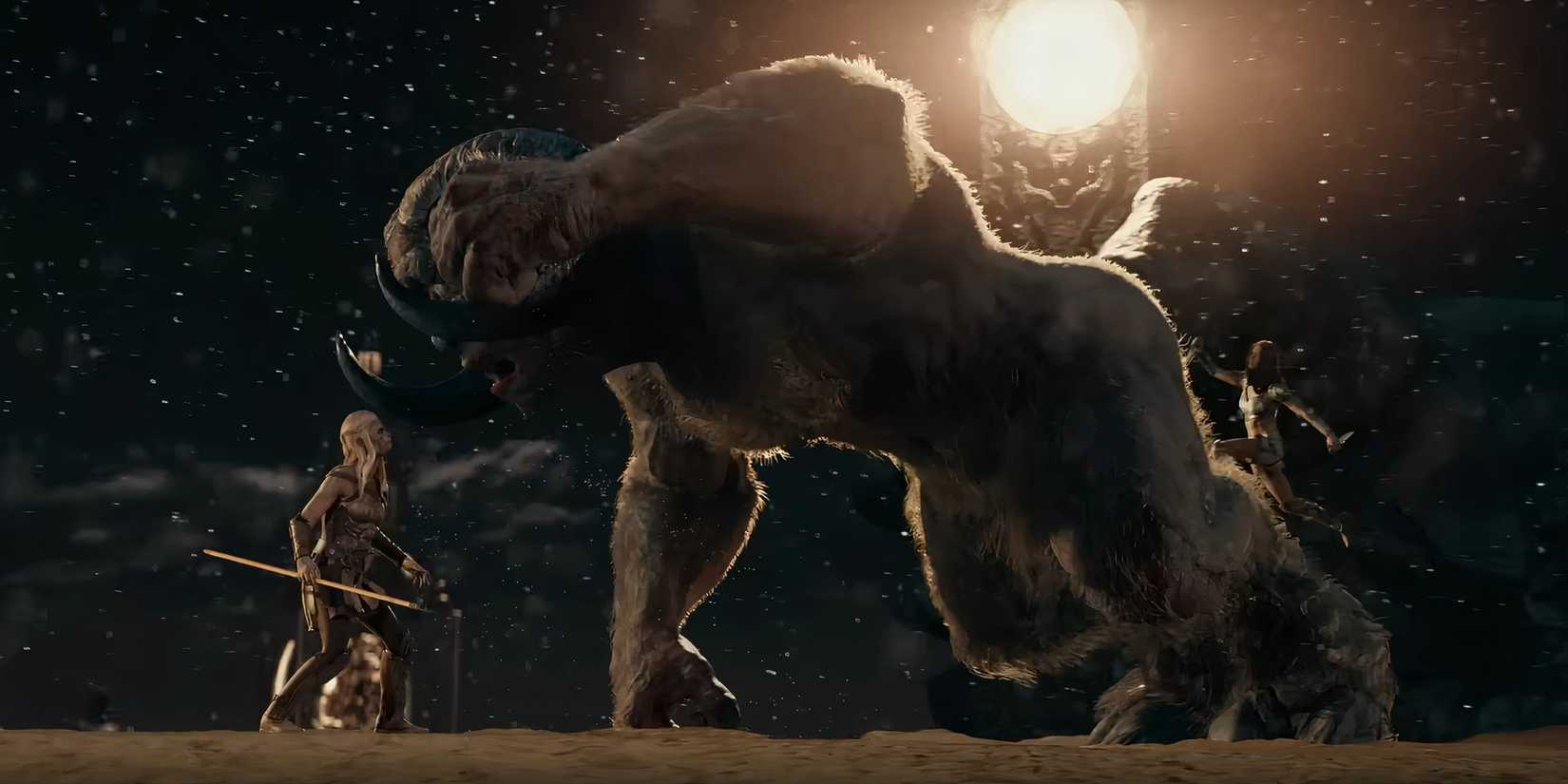
The plot, such as it is, follows orphaned warrior Sonja on a revenge quest against Dragan and Annisia, who scour the land for a mysterious book promising unlimited power. It’s the skeletal framework of an epic: vengeance, dark magic, tyrannical overlords. Yet the execution wobbles between earnest myth-making and what can only be described as C-grade skin-flix tonality. The film gestures toward feminist reclamation while simultaneously indulging in the very gaze it pretends to critique. That tension is never interrogated, merely displayed. Action sequences, the lifeblood of this genre, should be propulsive and bruising. Instead, they often lack heft and dynamism, casualties of muddled editorial rhythm and uninspired camera placement. Fights feel staged rather than feral, while sword and weapon impacts land too softly. The choreography seldom achieves the bone-crunching physicality the material demands. That said, there is one gloriously unhinged sequence involving a giant cyclops in a cliffside gladiator arena that is so ludicrously committed to its own absurdity it becomes genuinely entertaining, in no small part thanks to a minor role turn from subgenre staple Rhona Mitra. It’s a bonkers sequence in the best possible way — the kind of moment that reminds you how deliriously fun fantasy can be when it stops pretending to be prestige.
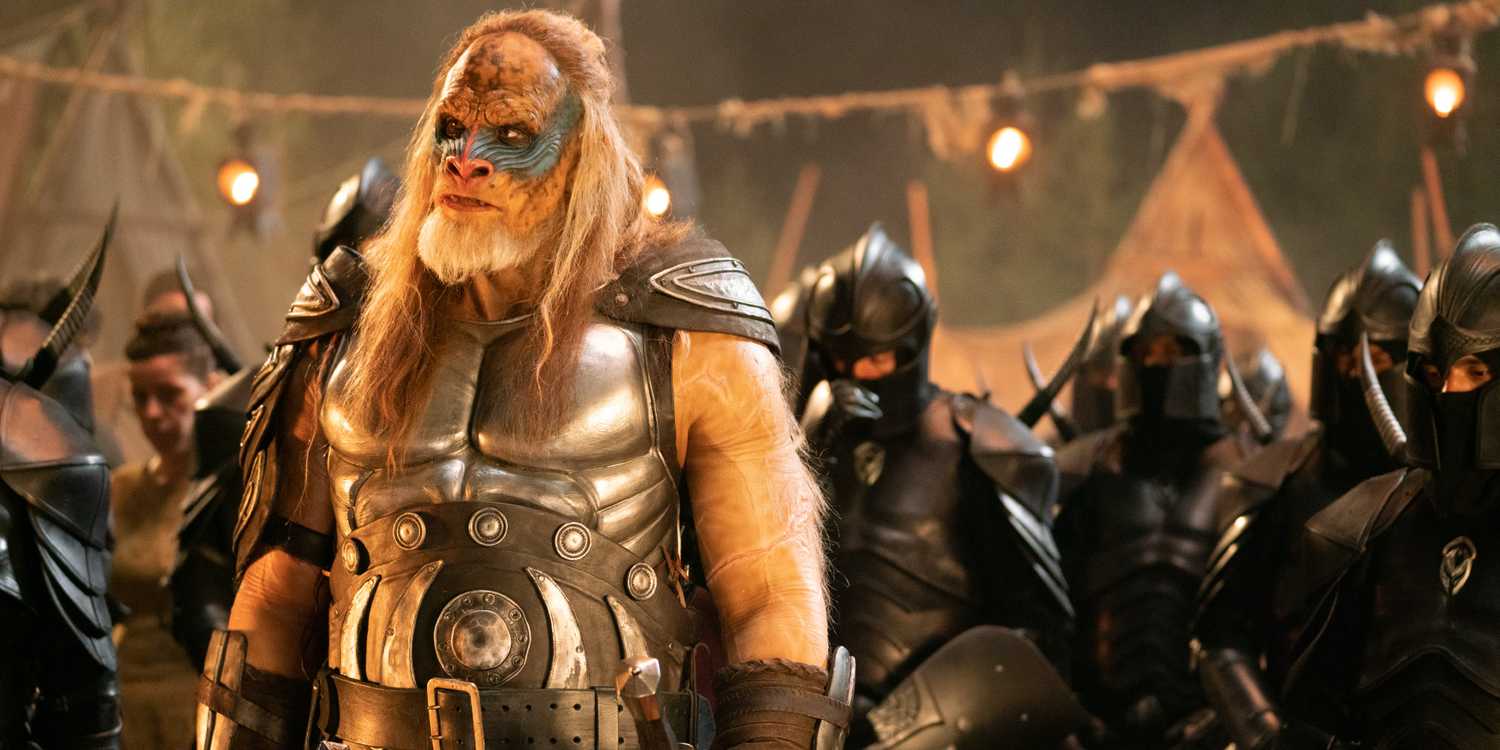
And yet those moments are isolated spikes in an otherwise uneven landscape. The film longs to herald itself as the dawn of “a new generation” of fandom, to reintroduce Howard’s pulp sensibilities to audiences raised on CGI-heavy franchises. But Conan-adjacent mythology hasn’t exactly dominated the cultural conversation for decades, and memories of prior misfires in this arena still linger. The appetite for this particular brand of barbarian mythos may simply not be as ravenous as studio executives hope. There’s a wider world implied within Red Sonja — hints of politics, mythic history, civilisations beyond the frame — but the film never capitalises on that sense of scale. The orphan-revenge storyline becomes a narrow corridor through which the narrative trudges, rarely glancing sideways at the broader terrain it gestures toward. The result is fantasy that feels boxed in, epic in aspiration yet provincial in execution. For all its flaws, though, I can’t quite bring myself to dismiss it outright. It’s a lowbrow, colourful, intermittently enjoyable disaster — the sort of film that, under the right circumstances, might inspire midnight-movie affection. Squint at it, lower your expectations, perhaps add a social lubricant or two, and there are fragments of fun to be had. Not sustained fun, not coherent fun — but fragments.

What it isn’t, unfortunately, is a star-making vehicle for Matilda Lutz. If anything, it’s a reminder that charisma alone cannot rescue anaemic material. She has presence; you can see it flicker beneath the clumsy dialogue and erratic pacing. One suspects she was promised something mythic, something iconic. Instead, she’s been handed a project that tries desperately to make fetch happen. And fetch, as it turns out, is still not happening.
Who wrote this?