
Movie Review – Frankenstein (2025)
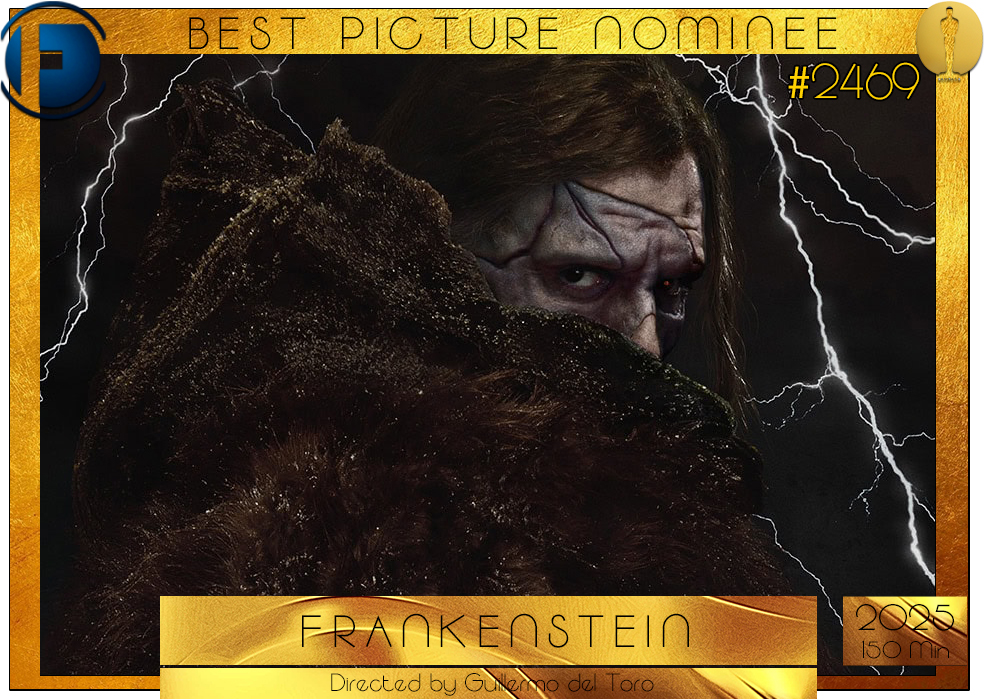
Principal Cast : Oscar Isaac, Jacob Elordi, Mia Goth, Felix Kammerer, David Bradley, Lars Mikkelsen, Charles Dance, Christoph Waltz, Kyle Gatehouse, Christian Convery, Lauren Collins, Sofia Galasso, Ralph Ineson, Burn Gorman, Nikolaj Lie Kaas.
Synopsis: Dr. Victor Frankenstein, a brilliant but egotistical scientist, brings a creature to life in a monstrous experiment that ultimately leads to the undoing of both the creator and his tragic creation.
********
Oscar-winning director Guillermo del Toro has built a career out of bringing the weird, wacky, obscene and nightmarish to the big screen; from his early horror works like Cronos and The Devil’s Backbone, to more mainstream fare in Hellboy and Crimson Peak, the Mexican director has always had a definitive style bordering on the fantastical, none perhaps moreso than his cult-classic Pan’s Labyrinth, or his Best Picture-winning Gothic-horror masterpiece The Shape of Water. While we will likely never get to see what he might have mustered in Middle-earth, the acclaimed visual stylist continues to work his magic yet again with an adaptation of Mary Shelley’s legendary horror novel, Frankenstein. Folks may yawn and ask why we needed another version of a story that’s been done to death (pun intended, absolutely), and what del Toro might offer to this tale that’s new or interesting in the 21st century, but the pedigree of the script, the sublime production design, and the director’s substantive faithfulness to the original text ensure a version many will find entrancing for years to come.
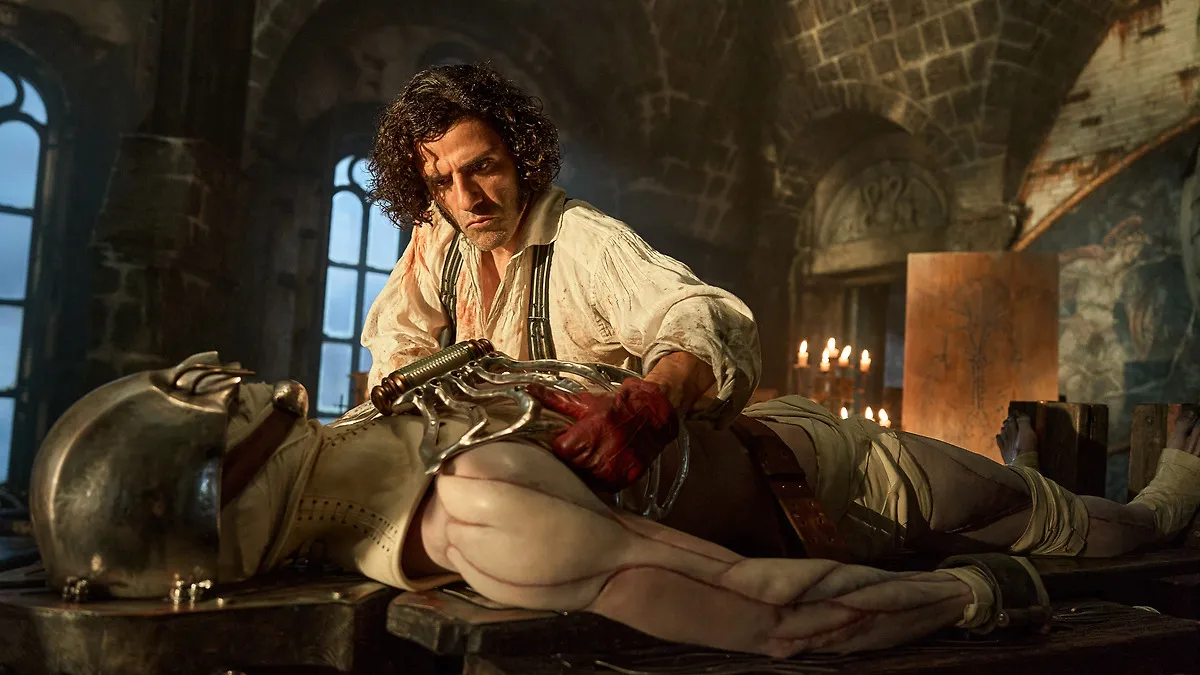
Told largely in flashback, the story centres on manic, wealthy baron Victor Frankenstein (Oscar Isaac) and his attempts to “bring the dead back to life”. To wit: he assembles a creation of limbs and organs from corpses of the very best (soldiers) and the very worst (criminals), animating this monstrosity with the power of electricity (among other things), and unwittingly unleashing a creature upon the earth that cannot be killed, is immensely powerful, and yearns for the singular thing Victor cannot provide: death. As the Creature (Jacob Elordi) pursues his creator to the far ends of the earth, the increasingly recalcitrant baron recounts his story to a Danish navy captain trapped in the ice at the North Pole.
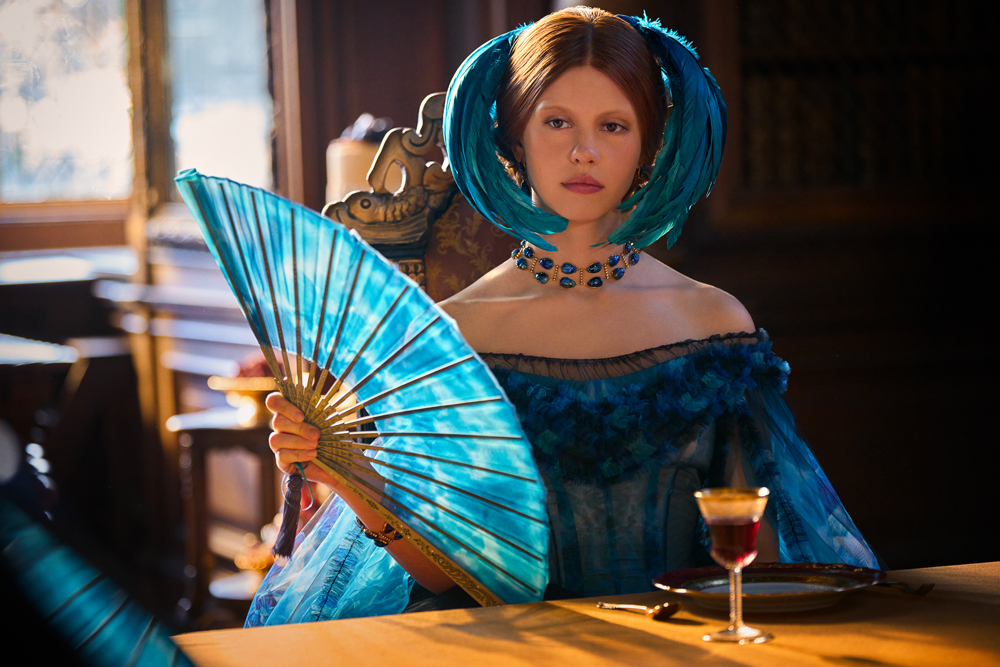
The umpteenth cinematic retelling of Shelley’s classic horror story — a literary blockbuster when first published in 1818 and a staple of multiple media formats in the centuries since — has undoubtedly influenced many of our cultural artistic greats, Guillermo del Toro included. It’s a story that, in an alternative universe, the great Tim Burton might have taken well to, had he not already subverted the idea in Edward Scissorhands, or his short-film, puppy-centric riff in Frankenweenie. Burton’s enormously gothic aesthetic is perfect fodder for Frankenstein’s orgiastic violence and melancholy, heavily romanticised here by Mia Goth’s expanded and more central role as Elizabeth — a potential romantic focal point not only for Victor and his brother William (Felix Kammerer), but also for the Creature, with whom she forms a maternal bond that will lead to inevitable tragedy. I would suggest, though, that Burton’s innate sense of whimsy might undercut the traumatic and violent nature of Shelley’s tale in an effort to homogenise it for audiences. Guillermo del Toro’s turn at the adaptation plate, by contrast, delivers a violent, operatic rumination on death, creation, moral responsibility and human hubris that goes a long way toward transforming this 19th-century science fiction horror masterwork into a modern pop-culture event.
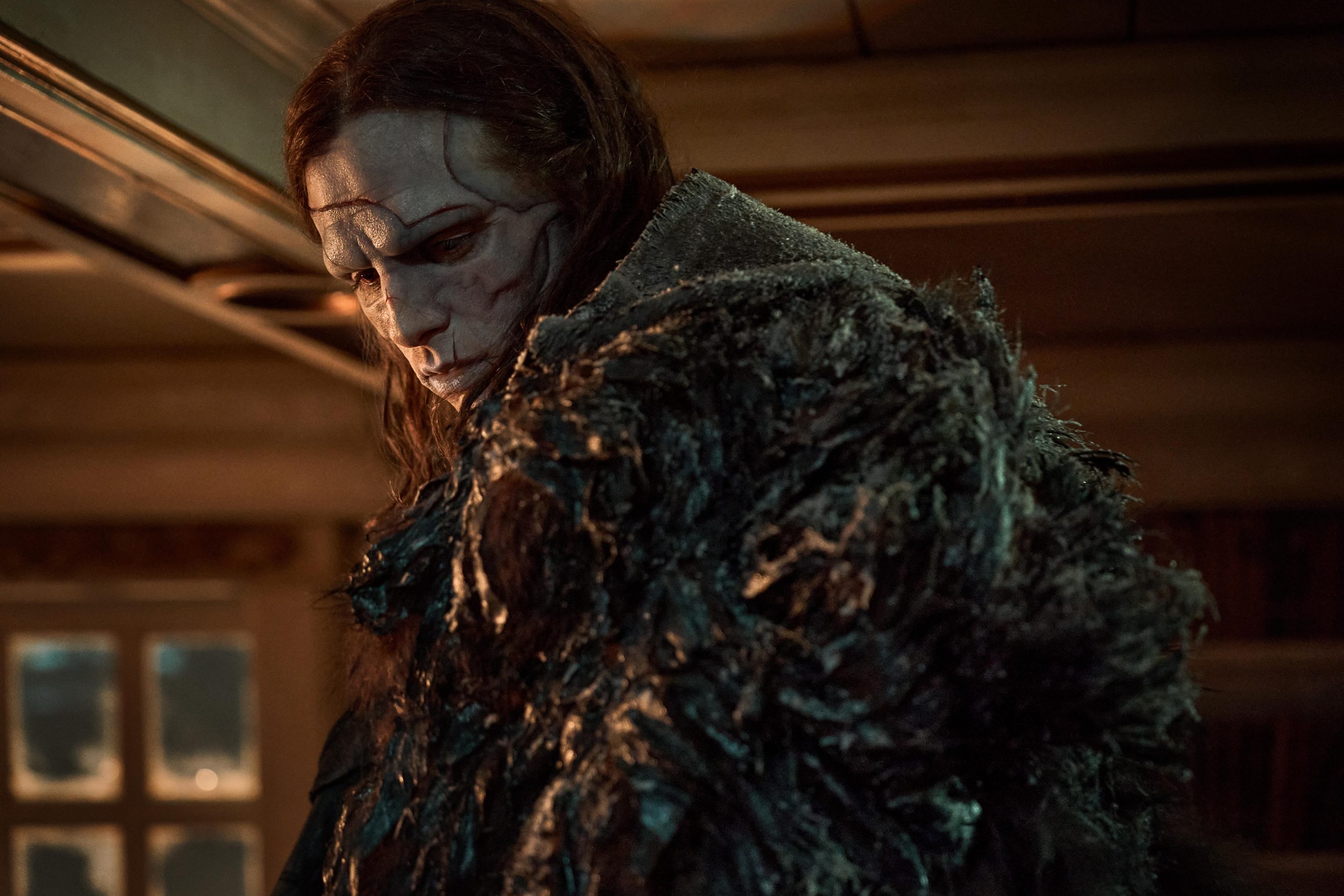
Let’s get the obvious gags about “the monster isn’t Frankenstein, it’s Frankenstein’s Monster” out of the way early — in this version, like so many others, both Victor Frankenstein and the Creature he brings to life are monsters. One is a monster of upbringing: Victor, a put-upon and moderately literate medical student berated by his odious father (a wonderful Charles Dance), and bereft of maternal love after his mother dies giving birth to his brother William. The other is the Creature, a literal and metaphorical manifestation of humanity’s hubris — the belief that we can conquer death with science, without realising the consequences such arrogance might unleash upon us all. Jacob Elordi’s Creature is hardly the lumbering, square-headed icon of old, instead presenting as a lithe, infantile man-child who grows into his own intelligence and sense of self thanks to a protracted stay at a snowbound farmhouse under the care of a blind old man (David Bradley, who could play this sort of role in his sleep). Elordi is entirely charismatic, giving the Creature a brooding, empathetic arc of violent impulse and single-minded desire, and lending dramatic weight to a monstrous character in ways I hadn’t quite expected from this adaptation.
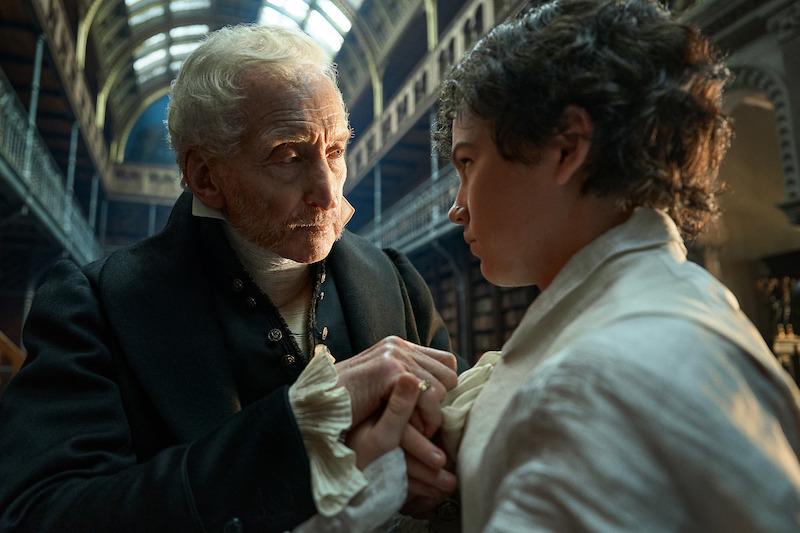
Del Toro’s screenplay delves into themes of isolation, revenge and prejudice, class and the very nature of humanity, never weighing the film down with cumbersome monologues or blunt exposition. Instead, it encases the well-trodden ideas of Shelley’s subtext within the framework of a nightmarish fairy tale or cautionary story. The framing device of the novel is retained, with Victor aboard an icebound Danish navy vessel recounting the origins of the Creature to the ship’s captain (Lars Mikkelsen — yes, that’s Mads Mikkelsen’s brother, and best known to American audiences as Grand Admiral Thrawn in the Disney+ series Ahsoka). From here, the film develops its central ideas of revenge — both Victor and the Creature blame the other for their lot in life — ambition, and, more interestingly, the responsibility of the creator to their work, a theme given heightened cultural visibility in recent years by films like Oppenheimer. The addition of Christoph Waltz as a wealthy benefactor of Victor’s is a wonderful subplot that doesn’t resolve until the second act reaches its zenith, and the Oscar-winning actor is among innumerable highlights of the casting director here. Frankenstein is a deeply thematic story spanning multiple complex characters, and Guillermo del Toro’s film captures most of these elements extremely well, if not entirely without flaw.
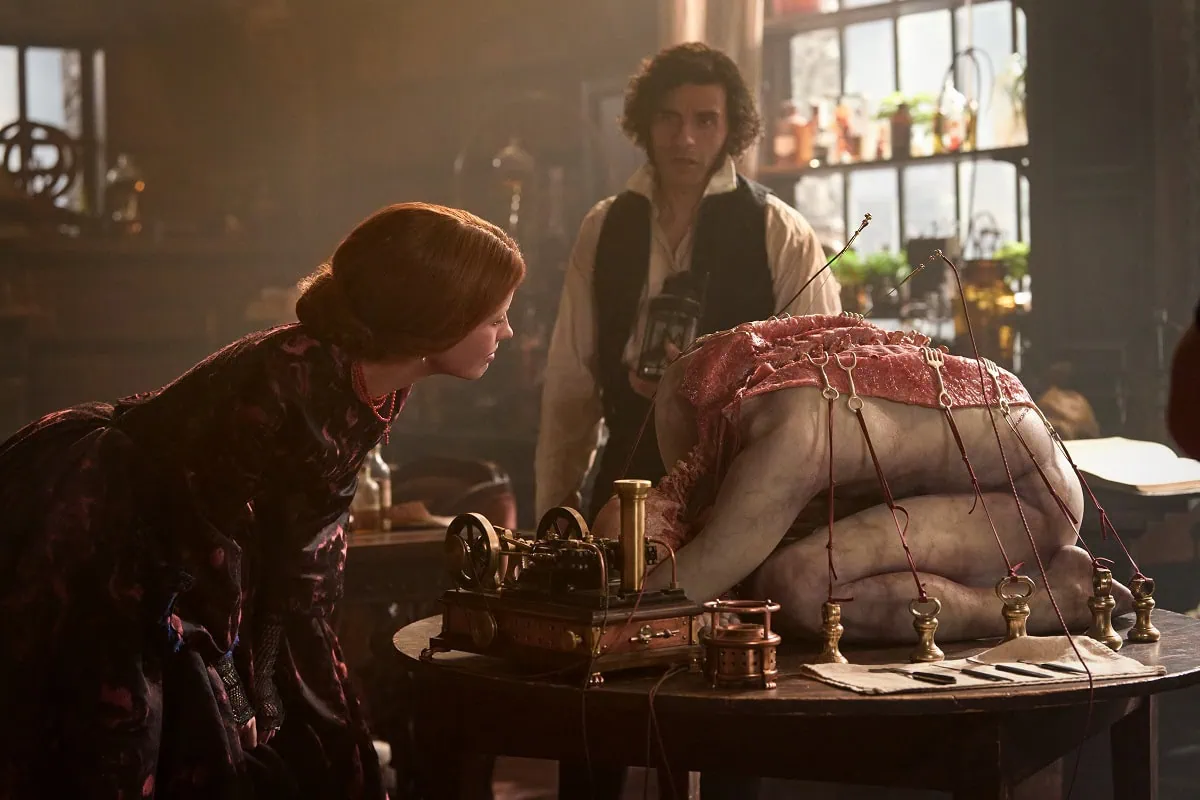
If nothing else, Frankenstein is a visual treat. Nearly every frame is a work of art, with Tamara Deverell’s stunning production design a particular highlight, and Dan Laustsen’s crisp, often naturalistic cinematography frequently breathtaking. Some of the film’s visual effects don’t quite nail the desired impact — a pack of wolves roaming the Scottish Highlands feels less convincing than similar sequences in the Twilight films from over a decade ago — and there’s a faint sense of “shot inside a volume” to a handful of key scenes. Still, the set design of Frankenstein’s cliff-set laboratory, and the prosthetic work used to bring the Creature to life (credit due to principal makeup artist Alexandra Anger), is sublime, and crucial to selling the film’s internal aesthetic. Alexandre Desplat’s musical accompaniment aches with longing and sorrow in keeping with the film’s themes, and while I’d be hard-pressed to hum a tune after the fact, it suits the film’s tone, pacing and emotional register splendidly.
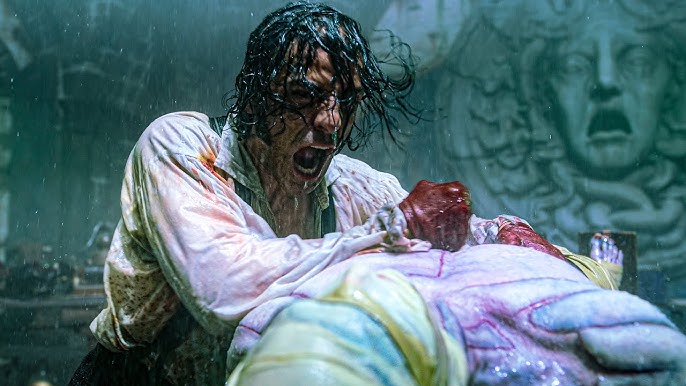
The 2025 edition of Frankenstein is a film of masterful pedigree. It is suitably gory and violent — a story in which a man stitches together the organs and limbs of dead human beings hardly lends itself to the family-friendly quadrant — and impeccably told through Guillermo del Toro’s exquisitely rendered camerawork. The editing is luxuriant, the design work across sets, costumes and overall production is of the highest calibre, and nobody in this stellar cast puts a foot wrong. At times mesmerising, at times a rumination on deeply cathartic elemental material, and an altogether unforgettable adaptation of a hugely well-known story, Frankenstein surprises and enchants with every frame. An instant classic.
Who wrote this?