
Movie Review – Stargate
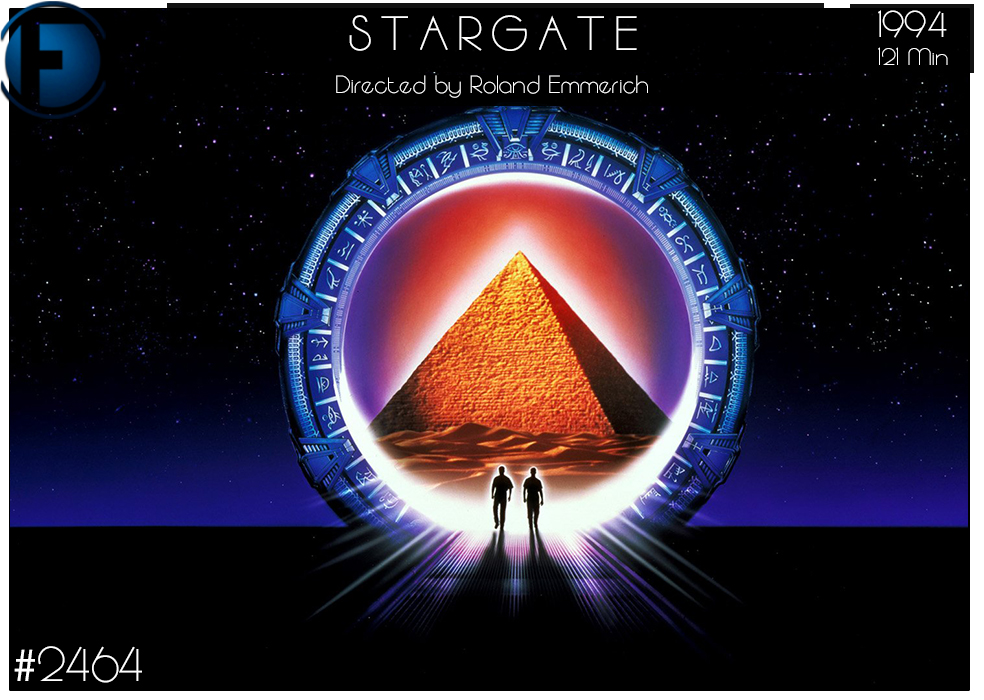
Principal Cast : Kurt Russell, James Spader, Jaye Davidson, Viveca Lindfors, Alexis Cruz, Mili Avital, Leon Rippy, John Diehl, Carlos Lauchu, Djimon Hounsou, Erick Avari, French Stewart, Christopher John Fields, Derek Webster, Rae Allen, Richard Kind.
Synopsis: An interstellar teleportation device, found in Egypt, leads to a planet with humans resembling ancient Egyptians who worship the god Ra.
********
It’s been a very long time since I last sat down and watched Roland Emmerich’s mid-90s Egyptian sci-fi blockbuster Stargate with any real seriousness – arguably twenty years since I snapped up an exclusive US DVD copy – and my nostalgic eyes were pleased to discover that the film’s sense of fun and adventure remains just as strong, and just as kitschy, as ever. Stargate has been available in high definition for some time now, but my memories of the film were tied firmly to the soft, murky experience of standard-definition DVD. Revisiting it on a crisp 4K screen was like watching it for the first time all over again.

While the increased resolution inevitably exposes some of the seams in the early digital visual effects, Stargate holds together surprisingly well given that it arrived barely twelve months after Jurassic Park and only a couple of years removed from Terminator 2. Bolstered by David Arnold’s hugely engaging score and a wealth of gloriously overcooked exposition from James Spader, Stargate is a raucous, half-serious, and unapologetically racially stereotypical event film from the man who would soon crown himself Hollywood’s reigning maestro of large-scale destruction.
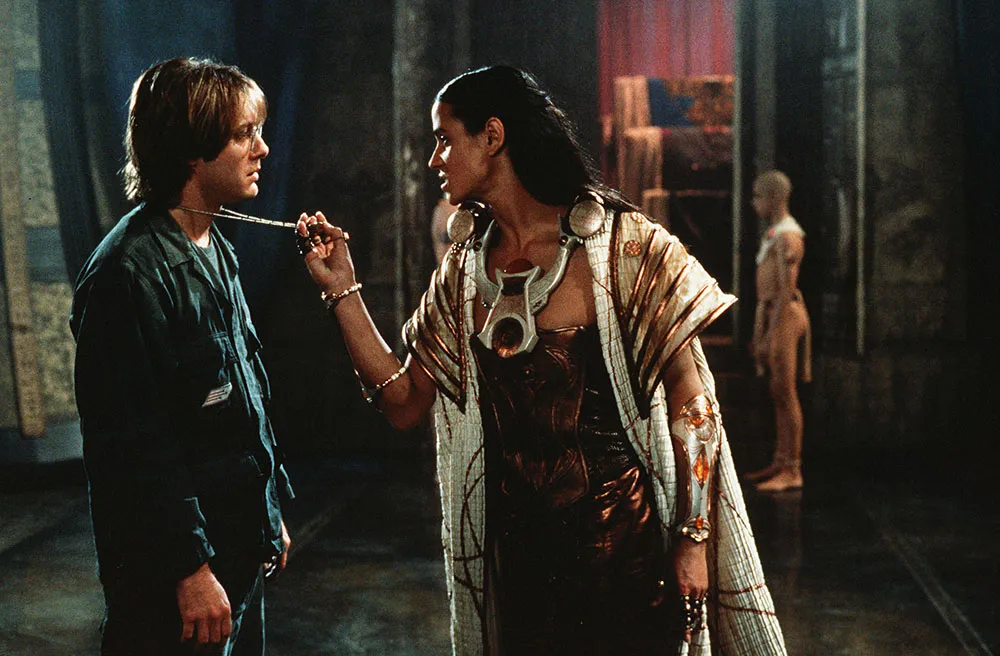
The franchise-building plot follows Egyptologist Daniel Jackson (Spader), who is recruited by the US military to unlock the secrets of a long-hidden artefact uncovered on the Giza Plateau in the late 1920s. The discovery turns out to be an apparently alien “Stargate”, a device capable of transporting matter across the universe in seconds. When the machine is activated, Jackson joins a crack team of US Air Force hoo-rahs led by suicidal Colonel Jack O’Neil (Kurt Russell, sporting one of the most magnificent GI Joe haircuts ever committed to film) and steps through the portal to a distant world eerily similar to our own ancient past. There, they encounter a population of humans who worship a god resembling the Egyptian deity Ra – revealed to be a powerful, orphaned alien of malign intent. This parasitic creature inhabits human bodies to house its spirit, and upon detecting Earth’s advanced weaponry, decides our planet must be destroyed.

While Emmerich’s film is often overshadowed by the multiple television series it spawned in the late 1990s, the original Stargate remains a genuinely fun, slightly camp action-adventure that rarely takes itself too seriously. It represents one of Spader’s earliest forays into mainstream cinema, following a career largely defined by indie fare, while Russell’s stoic, deadpan Jack O’Neil is perhaps the least fully developed element of the narrative. O’Neil’s backstory – a grief-stricken soldier whose young son accidentally shot and killed himself – feels like an oddly grim way to open such a breezy romp. The film gestures toward a more introspective character arc, but this emotional groundwork never really pays off. The double act between Spader and Russell never meaningfully engages with this trauma beyond providing a thin motivation for O’Neil’s willingness to sacrifice himself. Noble, sure, but dramatically undercooked.

Almost everything else, however, works rather well. Spader’s “controversial” Egyptologist is a laughably contrived creation, written purely to deliver exposition and keep the story machinery ticking over. While Spader remains an engaging screen presence, he feels underserved by a script that saddles him with a perfunctory romance with Sha’uri (Mili Avital), which blossoms out of nowhere and exists largely to satisfy blockbuster box-ticking. Emmerich and co-writer Dean Devlin – who also serves as producer – are clearly following a Hollywood checklist here.
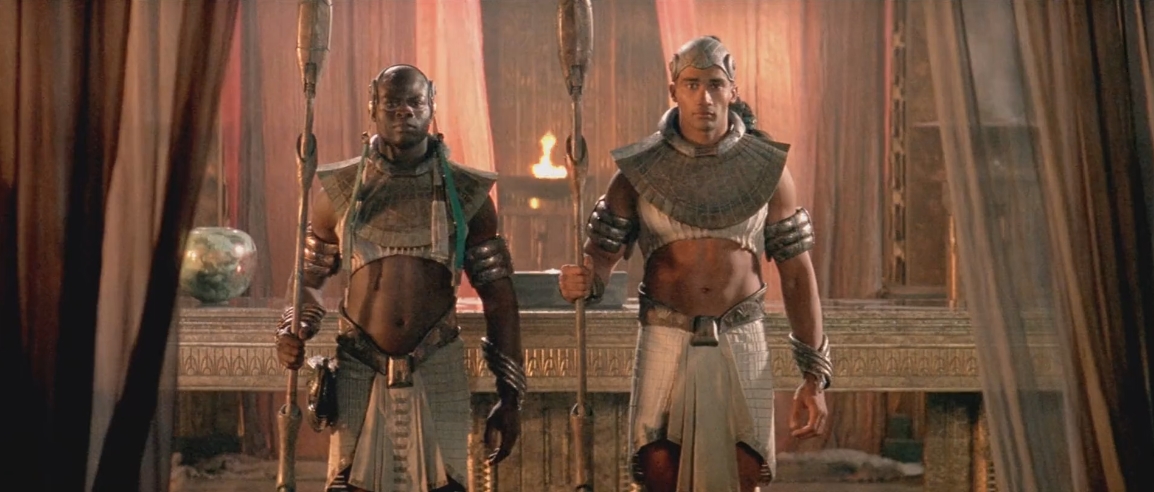
To their credit, the film works despite its generic genetics, blending mythology and antiquity with sci-fi futurism and humanity’s persistent fear of extraterrestrial life. Emmerich revels in the fantastical nature of the premise, showboating with confidence. The off-world design is richly Egyptian in flavour, with just enough alien variation to feel distinct, while the film also drops a hefty white-saviour trope into the mix with barely a shrug. No, Stargate isn’t doing anything particularly new, but the alchemy of familiar ingredients proves both effective and entertaining. It also helps having a solid cast at your disposal – Richard Kind is always watchable and he pops in early, and Erick Avari cements himself as “oh, it’s that guy” again, while a young Djimon Hounsou plays one of the aliens’ human guards, and Swedish-born Old Hollywood actress Viveca Lindfors has a prominent early role. Again, even if the material ain’t Shakespeare, having a cast able to work this material as well as they do is a blessing for both the film and the viewer!

Revisiting the visual effects also proved particularly interesting. I’d long remembered Stargate’s CGI as being more impressive than it actually is. Viewed now in high definition, the film’s relatively limited digital work is far more apparent, and yet – with a few exceptions – it still holds up remarkably well. Some matte paintings and model shots don’t quite click, and the digital helmet effects and wormhole sequences (predating Marvel’s nanobot mask removals by two decades) lack the suspension of disbelief they once had on DVD or in my hazy memories of its 1994 cinema run.

That said, there’s far less overt artifice here than I expected. Much of Stargate relies on practical effects, and that tangibility is key to why the film still feels grounded. The set design, both interior and exterior, is first-rate and often jaw-dropping given the budgets of the era. Jaye Davidson’s performance as Ra – a malicious, eternally sinister alien wearing a human body – is magnificently over the top, and his climactic demise, complete with Emmerich’s now semi-patented digital bomb clock countdown cliché, still drew a clap and “yeah, you’re fucked” from me.

Though Stargate now reads as a clear template for Emmerich’s later career – right down to the reappearance of grey alien imagery in Independence Day just two years later – the film remains an absolute belter. Crowd-pleasing, top-notch Hollywood hokum of the highest order, there’s scarcely an original idea to be found, but the mix of Spielbergian ancient-meets-modern adventure, 2001-era cosmic awe and echoes of Universal’s classic monster films (The Mummy, Dracula) wrapped in David Arnold’s tireless, heavy-lifting score makes Stargate a bona fide 1990s classic.
It remains one of Emmerich’s best films, and arguably a crucial stepping stone in the redefinition of blockbuster cinema that Hollywood is still trying – and often failing – to replicate today. Terrific fun.
Who wrote this?