
Movie Review – Luckiest Man In America, The
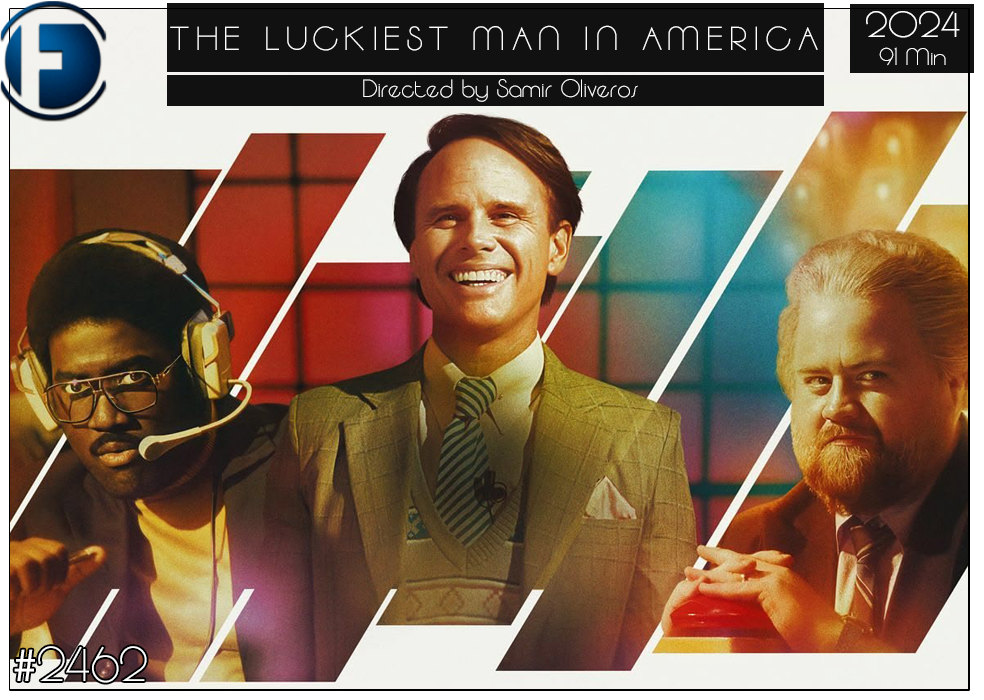
Principal Cast : Paul Walter Hauser, Walton Goggins, David Strathairn, Maisie Williams, Shamier Anderson, Johnny Knoxville, Brian Geraghty, Patti Harrison, Haley Bennett, Damien Young, Lilli Kay, James Wolk, Shaunette Renee Wilson.
Synopsis: May 1984. An unemployed ice cream truck driver steps onto the game show Press Your Luck harboring a secret: the key to endless money. But his winning streak is threatened when the bewildered executives uncover his real motivations.
********
With a typically Hollywood catch-all disclaimer splashed across the very top, Samir Oliveros’ based-on-a-true-story biopic about conman, two-bit charlatan and improbably brilliant game-show contestant Michael Larsen emerges as a polished, intimate dramatic thriller that lacks nothing for impact while deliberately eschewing broader scale. It is, frankly, a hugely enjoyable story about a quintessentially all-American everyman sticking it to the man.
Paul Walter Hauser – a performer I continue to believe is grossly underrated within the cinema community for his intensely inward-focused, observational style – plays Larsen sporting a hilarious hairstyle (which, to be fair, is so close to the real-life Larsen’s that it’s uncanny), along with what appear to be spectrum-adjacent behaviours and deeply introverted qualities. The result is a captivating, if intentionally aloof, portrayal of one of television game show history’s most controversial figures.
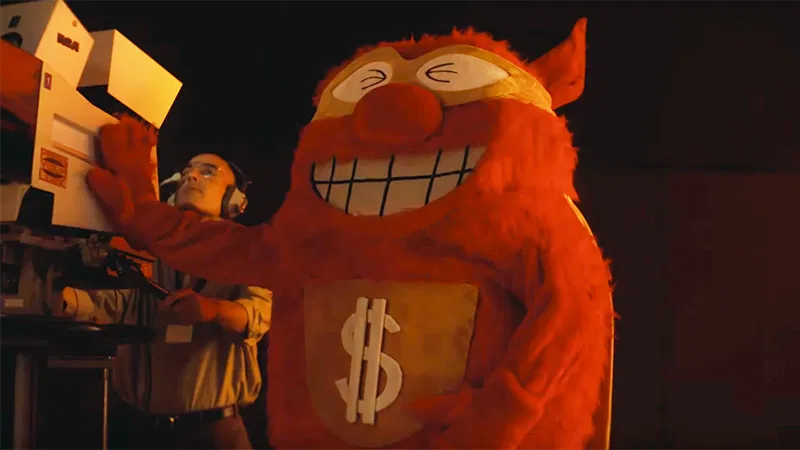
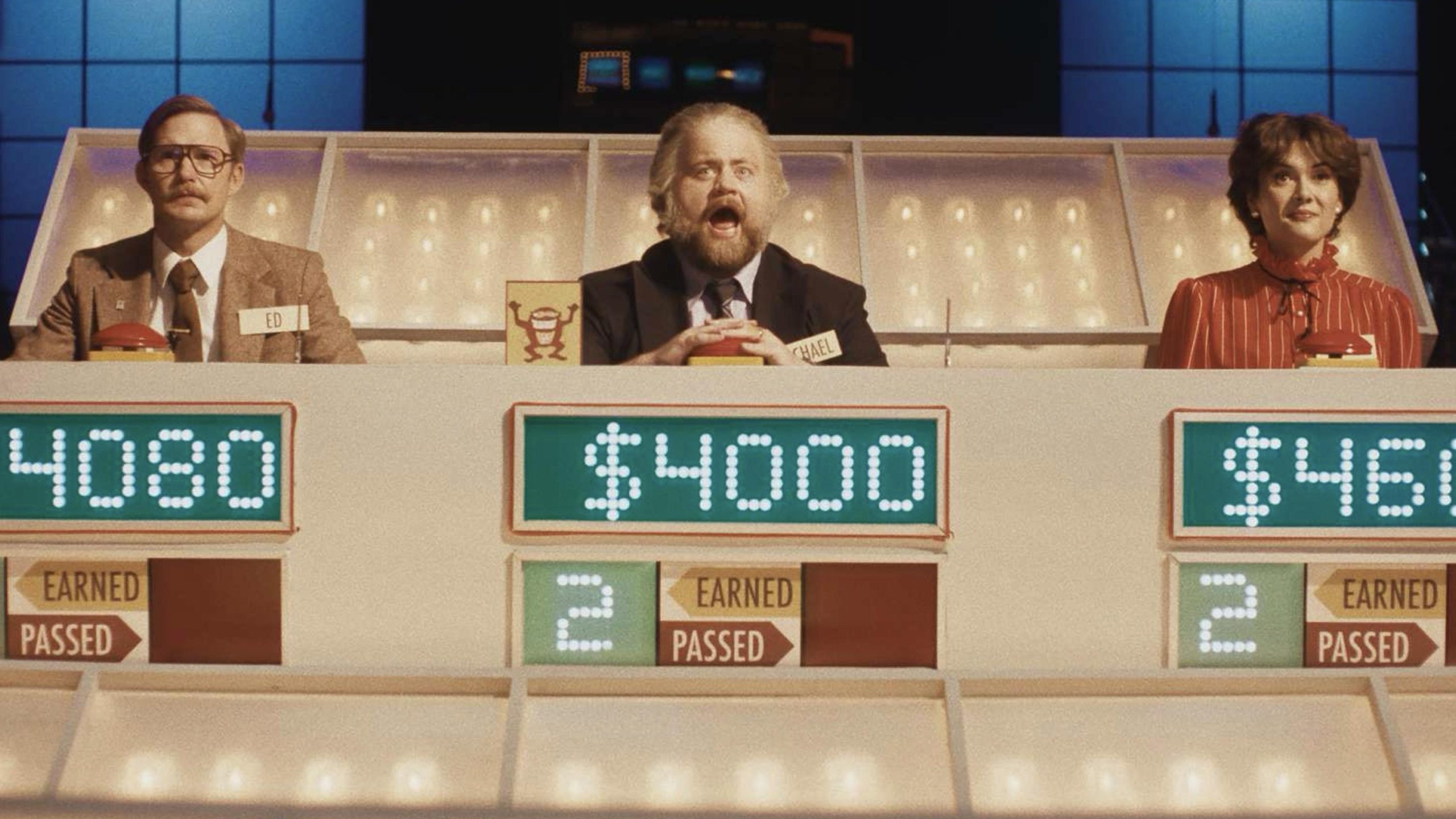
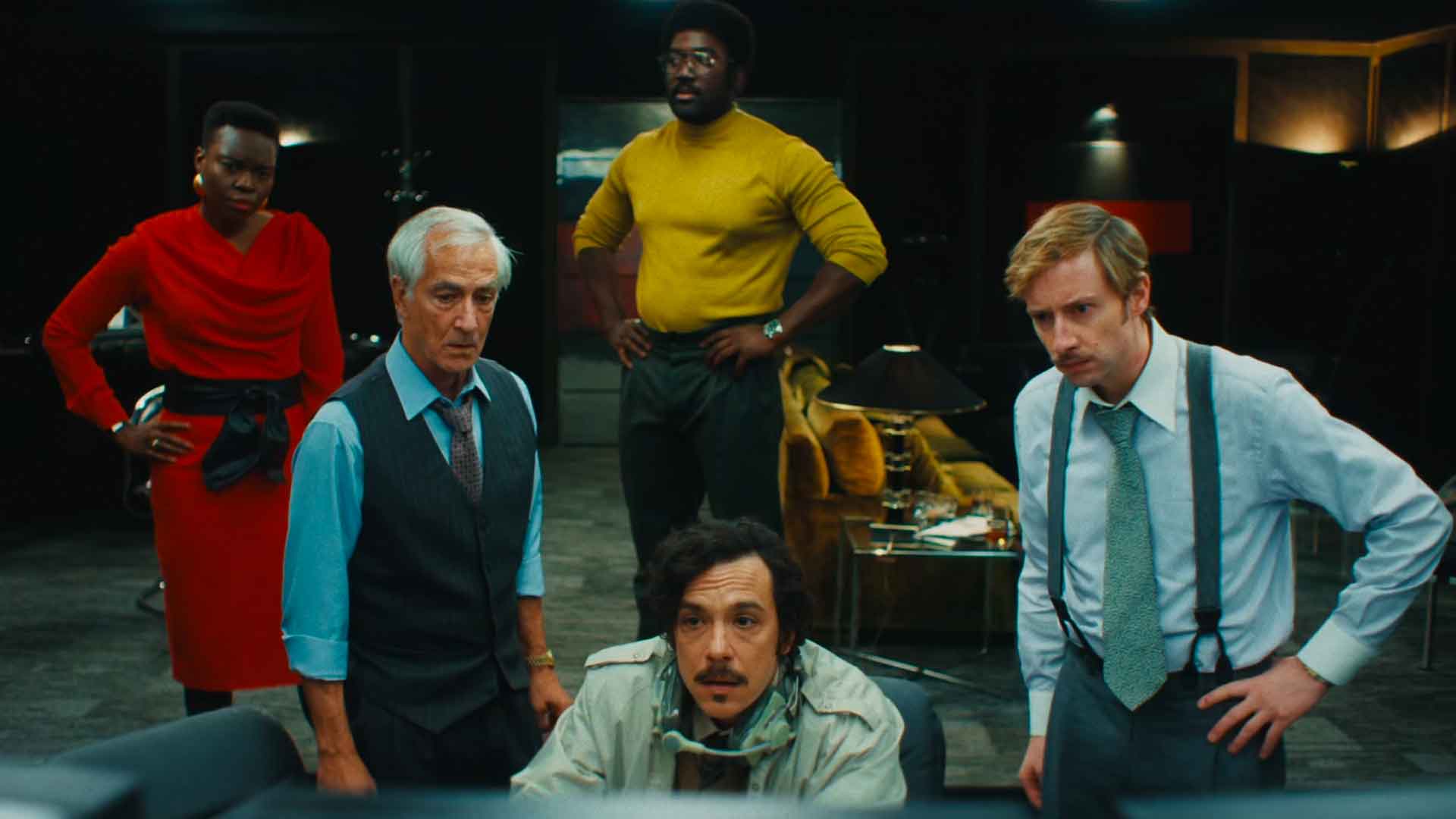
When Larsen appeared on an episode of the then-popular game show Press Your Luck in 1984, neither the producers nor the audience had any idea of the magnitude of what he was about to accomplish. The game itself was a simple exercise in chance: contestants pressed a buzzer to stop a swirling, multi-patterned board of cash prizes – or a Whammy, which instantly wiped out all accumulated winnings. Typical episode winnings capped out at around $14,000, a substantial sum at the time. By continuing to play, Larsen’s episode ultimately stretched into two, across two consecutive broadcasts on CBS, with Larsen steadily building an enormous cash pool as he seemingly defied probability. Egged on by the in-studio crowd, and opposed behind the scenes by increasingly panicked show producer Bill Carruthers (David Strathairn), who desperately wanted Larsen to hit a Whammy, the episode becomes a quiet war of attrition. With CBS executive Kauffman (Damian Young) breathing fire over the mounting losses, the show’s architects attempt to put Larsen off his game, to absolutely no avail.

The film is deliberately vague about the precise accuracy of Larsen’s psychology, but presents him as exhibiting autistic traits – something poorly understood and rarely acknowledged in the early 1980s – which allow him to memorise the board’s five repeating patterns. As one stunned studio executive remarks upon realising what Larsen has done, “Only five patterns?”, to which comes the sheepish reply, “That’s all our budget would allow” – perhaps the most damning indictment of showbiz corner-cutting imaginable. Crucially, Larsen never actually cheated, despite CBS initially claiming otherwise; he simply mastered the game’s mechanical limitations and exploited them with clinical precision.

Hauser is superb in the role, blending introspection, melancholy and quiet defiance. The gradual unveiling of Larsen’s family life and personal history unfolds in parallel with the taping of the show, heightening the film’s emotional stakes and dramatic tension. Oliveros, co-writing with Maggie Briggs, keeps the pressure simmering by maintaining a deliberately claustrophobic scale. Most of the film unfolds within the studio itself, with only rare excursions into the outside world, creating an oppressive, almost authoritarian atmosphere that turns the set into a battleground.
The period detail is impeccable, thanks largely to some excellent production design. Costuming, set decoration and even the liberal use of kitschy 1980s cinematographic effects are deployed to maximum effect, cleverly disguising the film’s modest budget. The editing initially proved disorienting for me, but once the film settles into its rhythm it takes off with confidence. Oliveros, still relatively inexperienced as a feature director – this being only his second full-length film – delivers the necessary tension, dramatic heft and tonal control with surprising ease. There’s a grindhouse energy to The Luckiest Man in America that recalls those battered VHS trailers of old, as though the film itself has been dragged through analogue decay. Despite the pristine production values, the deliberately cheesy 1980s aesthetic fits perfectly with the low-fi, nostalgic nature of the story and the idea of one man quietly beating the system at its own game.

Ultimately, The Luckiest Man in America delivers a charming, often emotionally wrenching portrait of a deeply controversial figure. Larsen’s death in 1999 means he never saw Hauser’s pitch-perfect portrayal, but I suspect he’d have been impressed by just how well this film turned out. Clocking in at a brisk 90 minutes, it never overstays its welcome and benefits from a handful of strong supporting performances and subplots that enrich the drama. David Strathairn’s sweaty, flummoxed Bill Carruthers deserves special mention, capturing the smarmy desperation of a producer trapped between ratings, ego and an unfolding disaster. This is a genuine little gem – a welcome palate cleanser from the endless parade of blockbuster capeshit – and for viewers unfamiliar with American game show history, it’s a terrific snapshot of a very specific kind of 1980s scandal.
Who wrote this?