
Movie Review – Adventures Of Tintin, The: The Secret Of The Unicorn
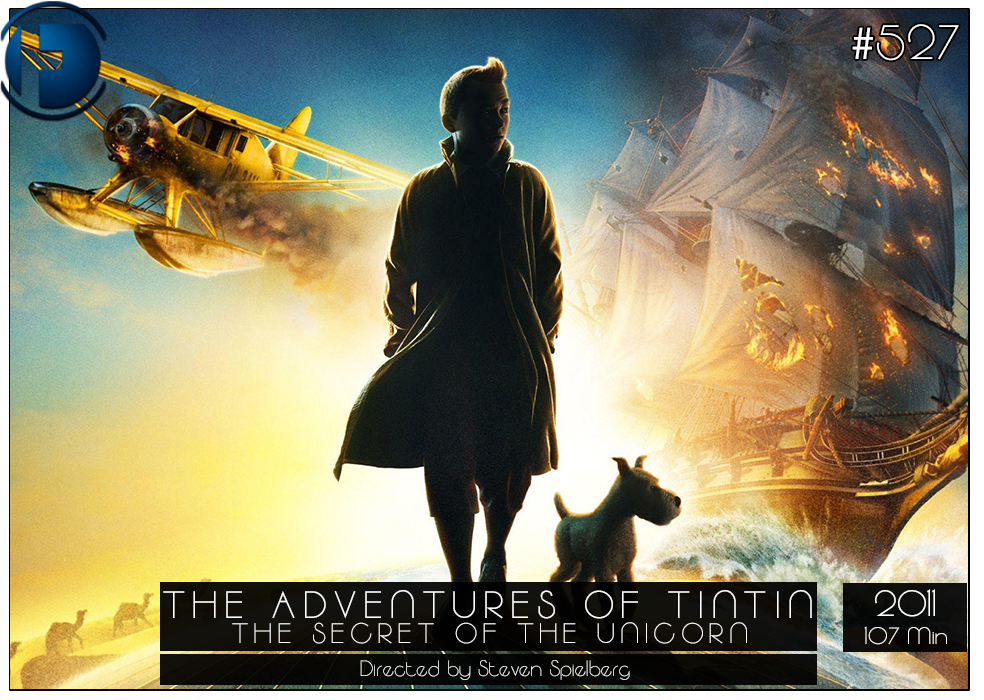
Principal Cast : Jamie Bell, Andy Serkis, Daniel Craig, Simon Pegg, Nick Frost, Toby Jones, Daniel Mays, Tony Curran, Mackenzie Crook, Gad Elmaleh, Enn Reitel, Carey Elwes, Sebastian Roche, Mark Ivanir, Phillip Rhys, Sonje Fortag, Kim Stengel, Joe Starr.
Synopsis: A young reported is swept up on the search for a lost sunken treasure, together with his faithful dog Snowy, and a drunken sea captain named Haddock. Together, the trio must thwart the plans of a descendant of one of the Haddock family’s oldest nemesis, the pirate Red Rackham.
******
It’s been a while since I actually smiled during a Steven Spielberg film. The last time I outwardly smiled during a Spielberg film was during The Terminal, back in 2004. Since then, Spielberg’s not made a film with so much sheer cinematic energy as the first of an intended trilogy of films about Tintin, the young reporter renowned around the globe thanks to the pioneering comic work of Belgian artist and storyteller, Hergé. No, not even Kingdom of the Crystal Skull, which was, let’s face it, an exercise in CGI and green-screen cash-grabbery. He’s made great films, of course (Munich, War of the Worlds), but none since The Terminal have seen him return to that “adventure yarn” style he pioneered during the 80s. Heck, you’d have to go back to the ill-toned Jurassic Park sequel to find him trying to capture that old magic.
It’s no surprise Spielberg, and co-producer Peter Jackson, found a kinship with Hergé’s adventuring reporter character; it’s pretty obvious that both Indiana Jones and Tintin represent similar traits and ideologies — both travel the world seeking treasures and solving mysteries, usually in exotic locations, and become involved with seedy villains and death-defying escapes from danger. I guess it’s a kind of literary symmetry that Spielberg, who approached Hergé during the 80s for permission to work on a Tintin film, eventually helmed the first big-screen adaptation of the classic comic creation with which he held such an affinity.
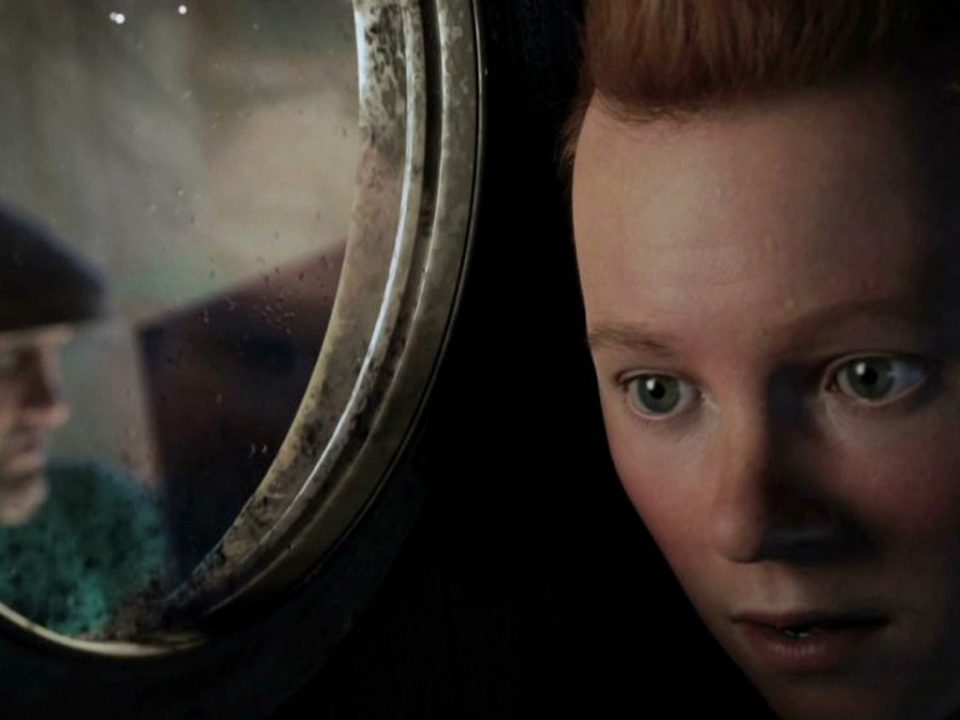
While Tintin is relatively unknown in the USA, elsewhere in the world he is massively popular, both culturally and in a literary sense. Most adults will have read, seen or been exposed in one form or another to Tintin, his canine companion Snowy, and the drunken anger-management-avoiding Captain Haddock, who have been published in comic form since the 1920s. Tintin was created by Belgian cartoonist Hergé in 1929 and originally published as a newspaper serial before evolving into one of the most influential European comic franchises of the twentieth century. The stories follow the adventures of the young reporter Tintin, his fox terrier Snowy, and an expanding ensemble of recurring characters such as Captain Haddock, Thomson and Thompson, and Professor Calculus. Over decades, the series developed from early adventure strips that occasionally reflected outdated political and cultural perspectives into far more sophisticated narrative works.
Particularly after the Second World War, Hergé refined his research methods and storytelling precision, resulting in tighter plotting, stronger character development and a greater emphasis on visual authenticity. The books are renowned for their clear-line art style, globe-trotting settings and meticulous attention to visual detail — elements that directly inform Spielberg’s adaptation.

Right, now you’re up to speed, let’s shunt forward to this film, known outside of the USA by its subtitle, The Secret of the Unicorn. The film is actually based on two of Hergé’s original books, The Secret of the Unicorn and The Crab with the Golden Claws, both of which were released in the 1940s, while certain elements of a third book, Red Rackham’s Treasure, were lifted to complete the tale. The script, originally crafted by former Doctor Who showrunner Stephen Moffat and honed by director Edgar Wright (Hot Fuzz, Scott Pilgrim vs. the World) and his scripting cohort Joe Cornish, meshes the intertwining narratives of Hergé’s two books into one cohesive whole, merging characters, set-pieces and ideas from across the Tintin universe and bringing them convincingly together as one film. The film not only had to set up the world of Tintin and introduce us to both the titular star and his canine companion Snowy, but also to the series’ third major protagonist, Captain Haddock. It had to traverse continents and cultural boundaries, as well as keeping up the mystery of discovery so synonymous with the Tintin books, and I think the film does that exceptionally well.
Is it just me, or did you find yourself slightly aroused at the prospect of Steven Spielberg and Peter Jackson working on the same film? I damn near spontaneously combusted the day I heard that was happening, and on Tintin no less. Sorry for the graphic mental image, but the thought of two of Hollywood’s heavyweights working on a single project — an animated motion-capture project, no less — filled me with a giddy, geeky glee I’d not felt since hearing Jackson was making The Lord of the Rings back in the mid-90s. Spielberg, who marks The Secret of the Unicorn as the first animated film he’s directed, makes the transition to full CGI over live-action with apparent ease, even though he still seems to approach the medium with a live-action mentality. I guess it’s served him well all these years, so why not stick to what you know, right? Together with Jackson and the continue-to-astonish team over at Weta Digital in New Zealand, Spielberg brought one of my all-time favourite literary creations to life in a full-blown animated feature — the likes of which we’ve been dying to see all these years.
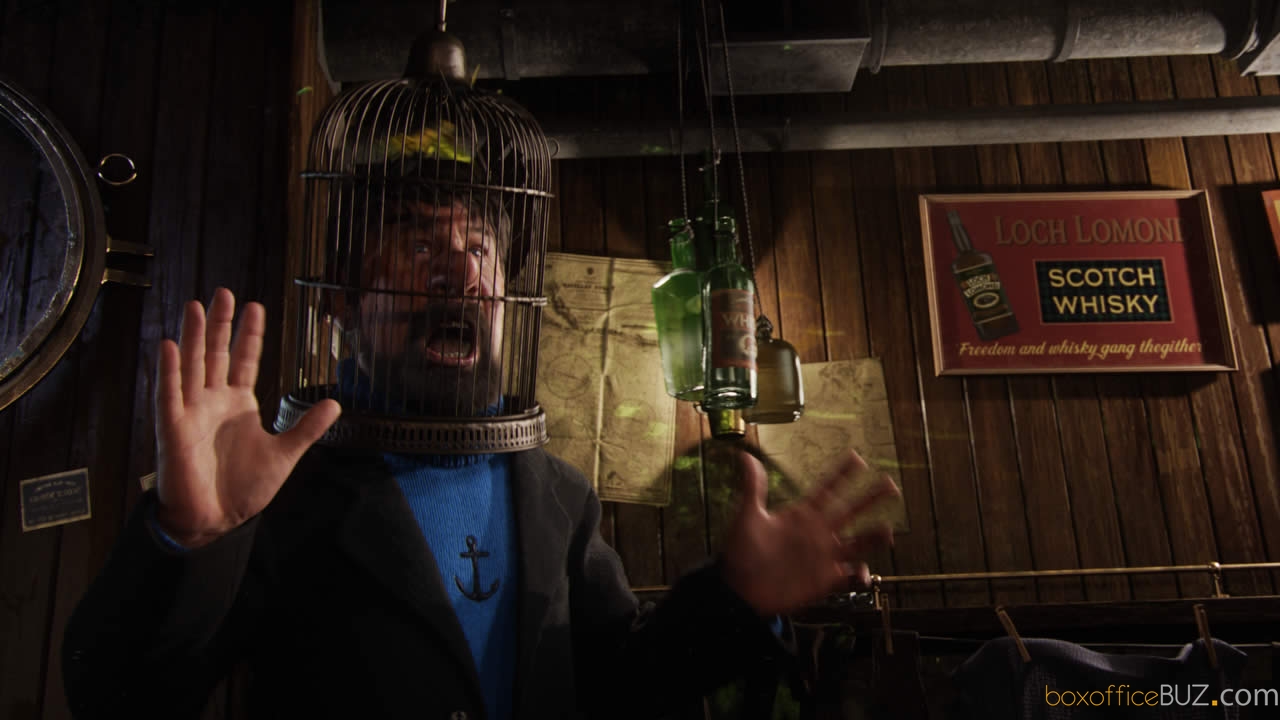
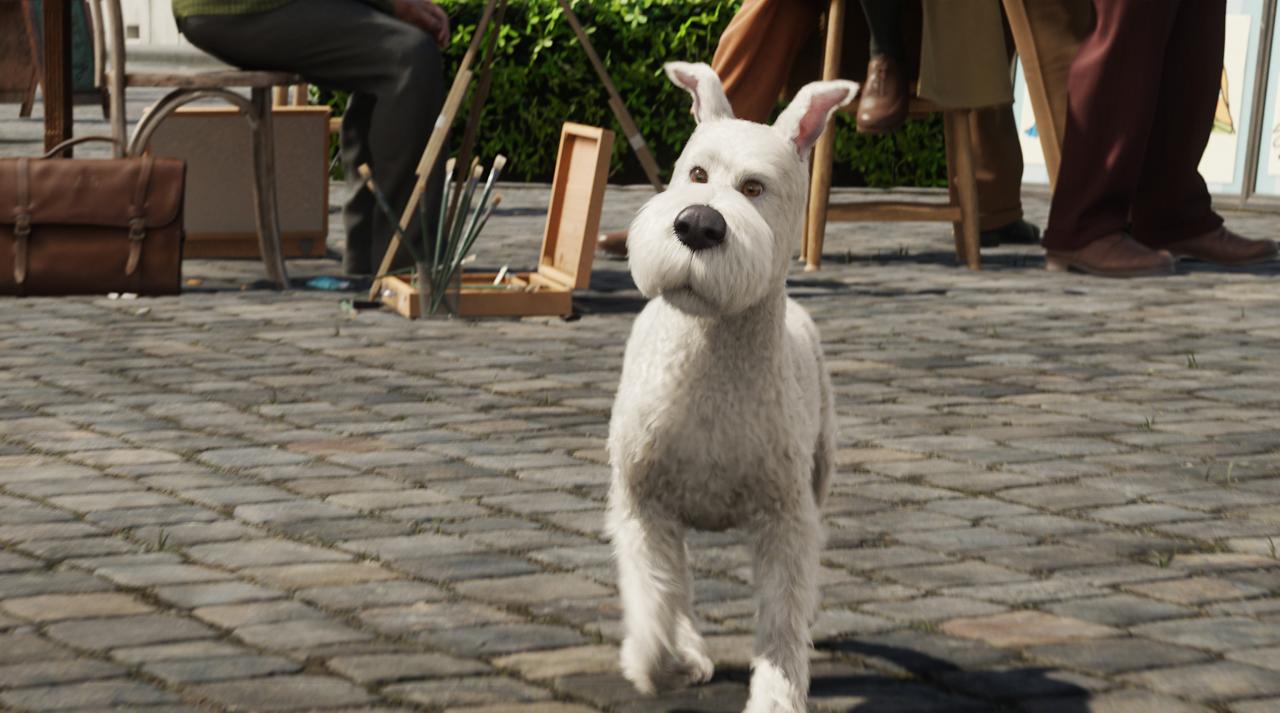
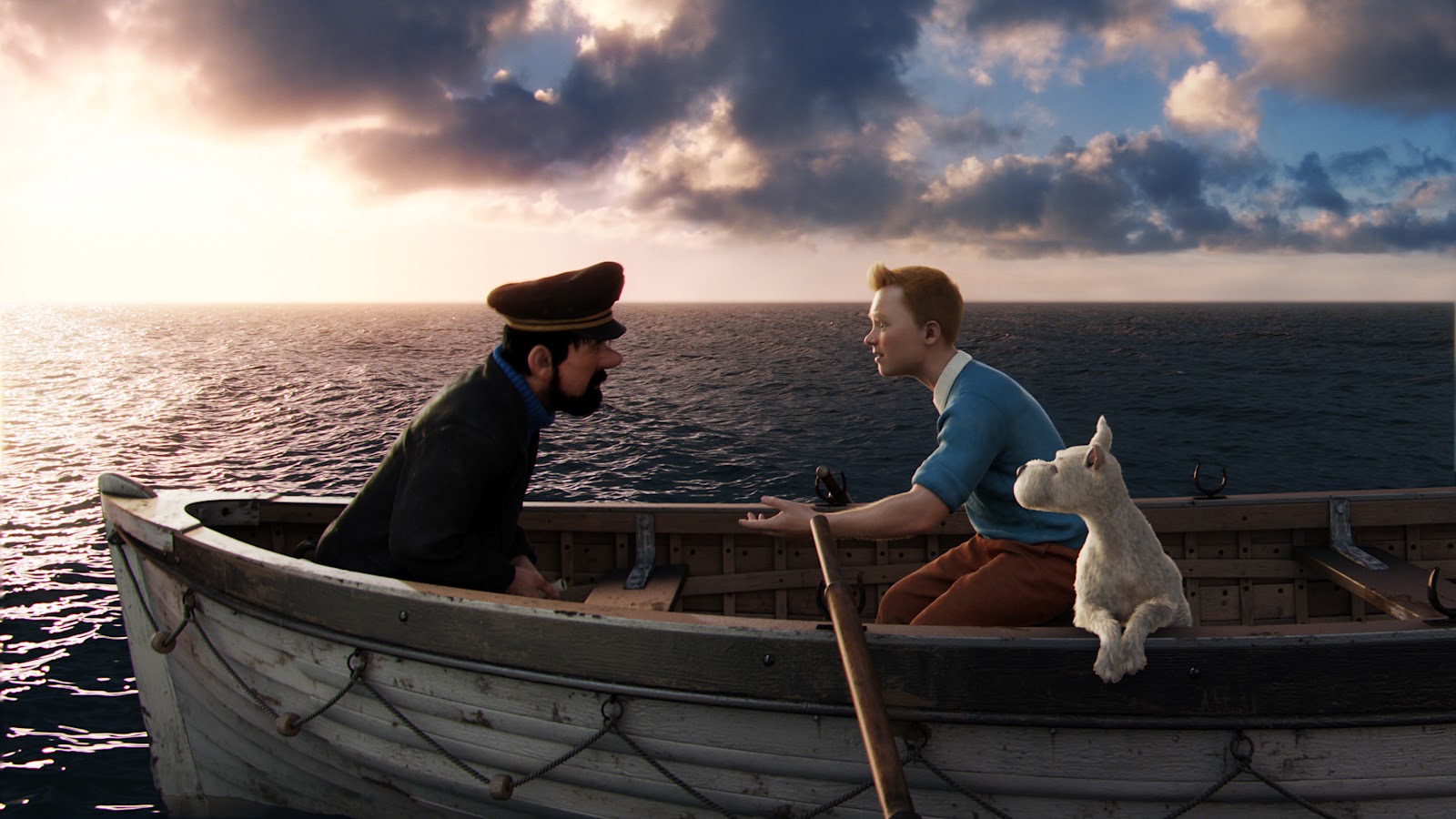
The story the film tells involves young reporter Tintin (performed by Jamie Bell) living in an unnamed European town (possibly French) with his Fox Terrier dog Snowy, who is caught up in the intrigue surrounding the importance of a model ship he finds at a flea market. Immediately after purchasing the beautiful model ship, known as The Unicorn, he is accosted by strangers looking to buy it off him — Tintin refuses, however you get the sense that these men won’t take no for an answer. And they do not, with Tintin learning through various messages that the boat is one of three known to exist which will lead to a long-lost sunken treasure — a treasure now pursued by a man known only as Sakharine (performed by Daniel Craig). When he sneaks onto Sakharine’s boat to follow him and locate another Unicorn, Tintin meets the drunken, belligerent captain of the vessel — who’s been locked in his cabin after the crew mutinied — Captain Archibald Haddock (performed by Andy Serkis). Together with Haddock, whose family history has direct ties with the sunken treasure and the ancestry of Sakharine himself, Tintin and Snowy circle the world to find the next key to unlocking the whereabouts of the treasure indicated by a scroll hidden within his Unicorn’s mast.
For those of you reading this who’ve seen the movie but are yet to pick up a Tintin book, may I humbly suggest getting off your backside and doing so as immediately as humanly possible. It’s criminal that there are certain sections of the world where Tintin is not a cultural touchstone. Spielberg has, in my humble opinion, pulled off the near-impossible: he’s actually brought Tintin and his world to magnificent, breathing, explosive life. That’s not to say Tintin is without flaw, because there are certainly elements of the film which could have been improved, but as far as simple escapist entertainment goes, I don’t think Spielberg has done this well in decades. It’s a fun film, not trying to do anything other than entertain — and Tintin does exactly that. There are elements of grand adventure, crime-thriller tension, slapstick comedy (most of which actually is the film’s major weakness) and a noir-tinged mystery all sloshing together in Spielberg’s massive cauldron of cinematic escapism. It’s only a brave director — or one with the confidence Spielberg possesses — who could pull this off with integrity.
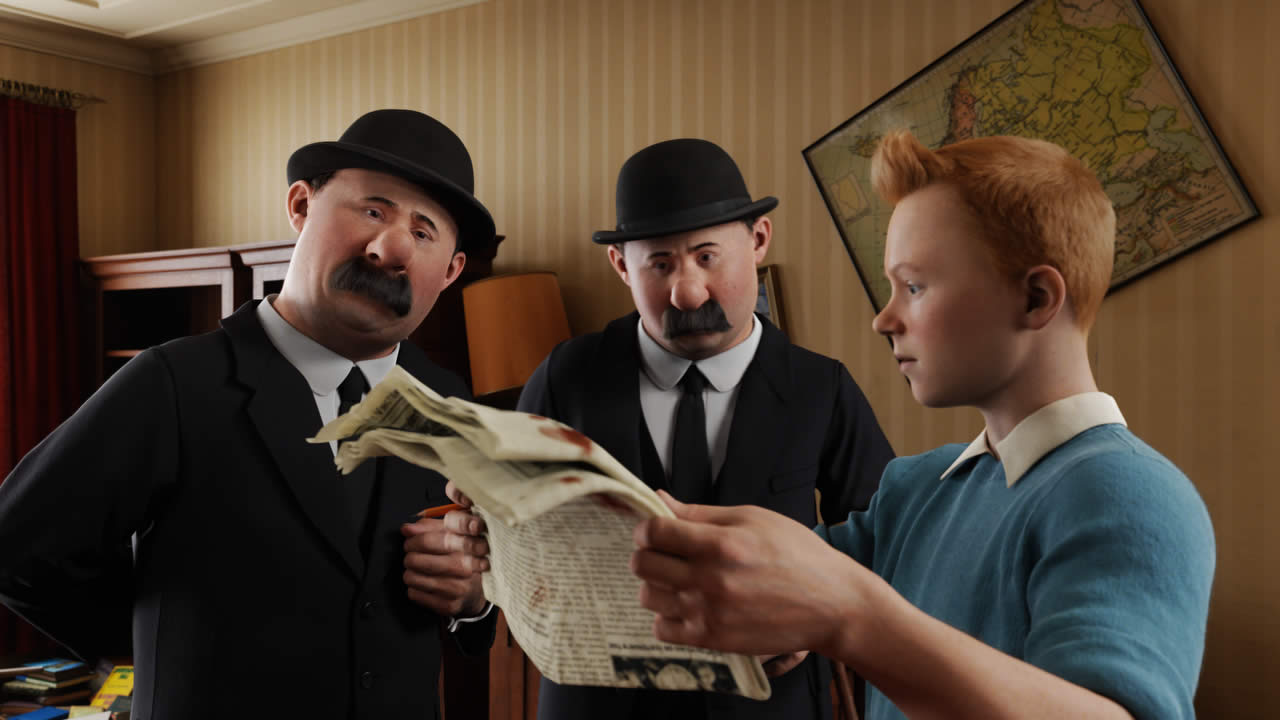
Jamie Bell provides a close approximation to what I’d imagined Tintin would sound and act like were he real. His accent is spot on, his mannerisms convincing, and he’s backed up ably by performance-capture veteran Andy Serkis. Serkis delivers Haddock with a Scottish accent (a creative decision I wasn’t prepared for but have come to accept as a strong choice), while comedy legends Nick Frost and Simon Pegg play the bumbling Interpol agents Thomson and Thompson. Thomson and Thompson are supposed to be the comic relief, and while I can’t argue with Pegg and Frost’s pedigree, they’re given so little time and so little material that their impact is reduced considerably. I actually found Haddock funnier than the moustachioed detectives — which was a shame given how amusing they are in Hergé’s original books. If there’s a single weakness in the film, this might be it. It’s minor, or major depending on expectations, but the script didn’t give them room to breathe. Central villain Sakharine — who also doubles as the “historical” Red Rackham in one of Haddock’s ancestral flashbacks — is delivered with flair by Daniel Craig. Craig sinks his teeth into what was a fairly generic antagonist and adds more menace than I expected. I was a little flabbergasted by the rather abrupt conclusion to his character, but there’s enough ironic humour in Haddock’s confrontation with him that it works. Stunt casting includes Toby Jones as a toff-ish pickpocket whose influence on the plot is marginal, even though he appears prominently in the opening section. Why this Silk character is even in the film remains unclear since he contributes little to the outcome. Still, it’s always welcome to see a talent like Jones on screen. Daniel Mays appears as one of Sakharine’s henchmen, while Scottish actor Tony Curran makes a brief appearance as Delacourt.
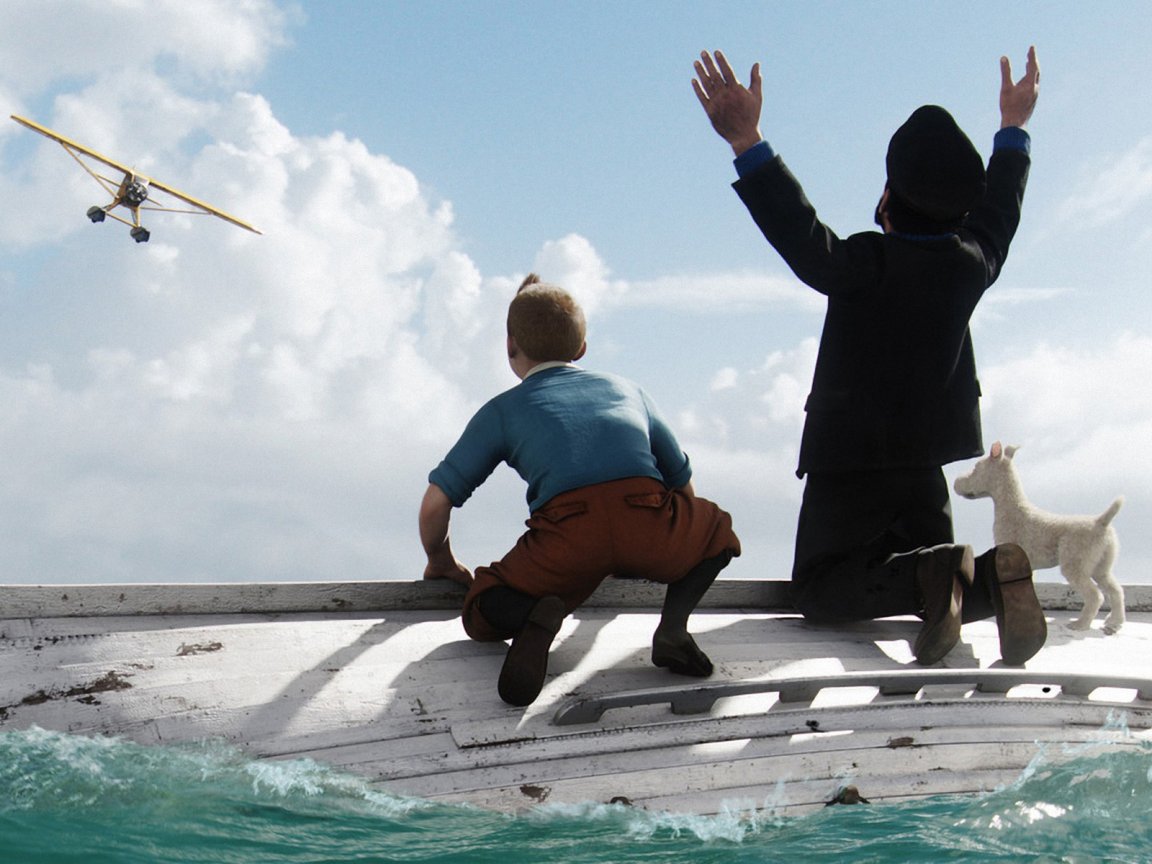
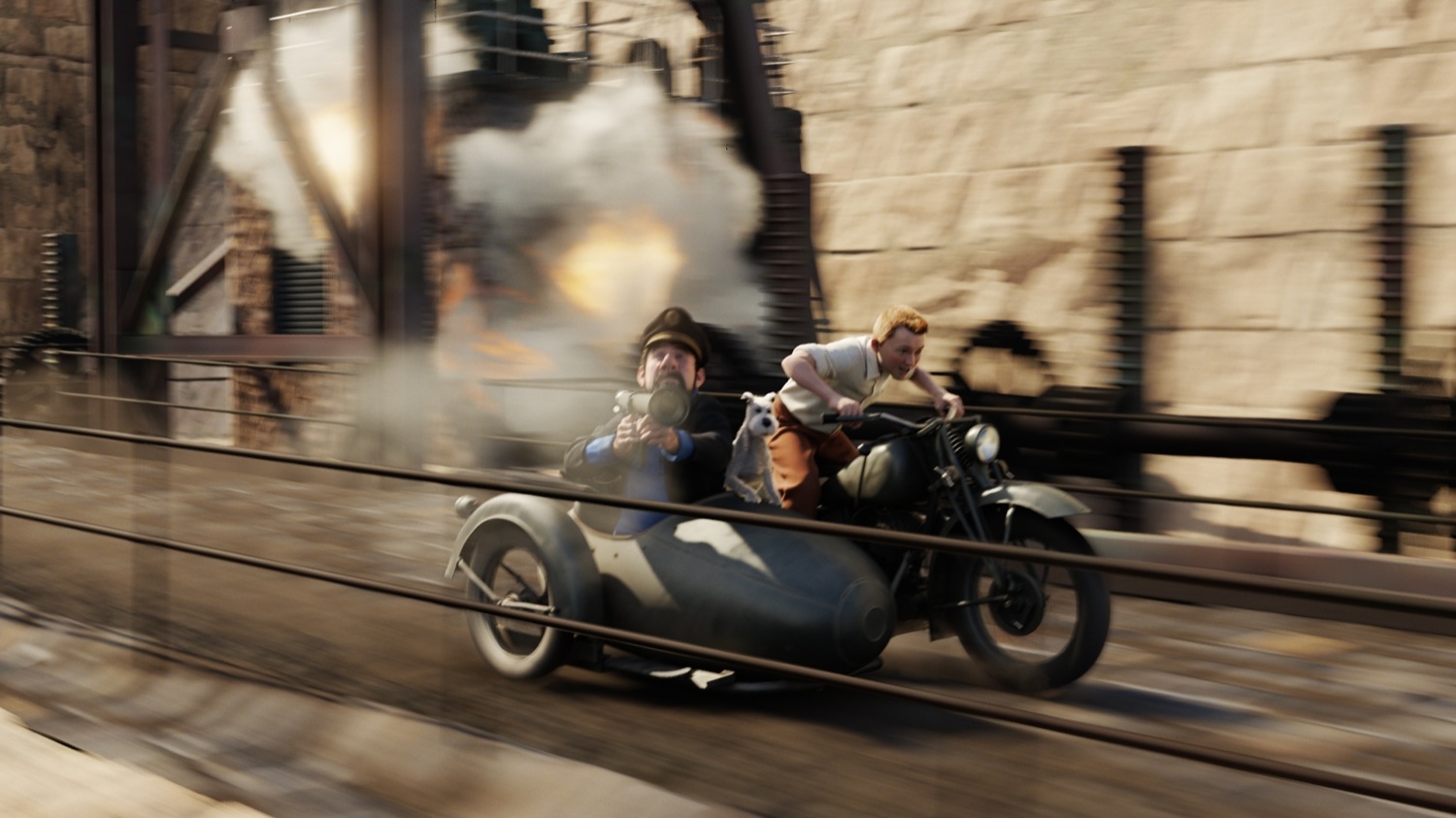
Where the film succeeds enormously is in its breathless sense of adventure and scale. We’re thrust into all manner of vehicles and set-pieces — including the remarkable use of two shipping cranes in one battle sequence — to propel the story around the globe. A standout moment is Tintin and Haddock’s escape from an overflowing dam through the Arabian town of Bagghar (don’t try to Google it — it doesn’t exist), where Spielberg employs a digitally enabled long-take style to follow the characters down a mountainside and through chaotic streets as they attempt to recover three pieces of parchment from a villain. It’s breathtaking and quintessential Spielberg. John Williams’ orchestral score is terrific — from the jazzy 1920s-inspired opening theme to the bombastic action cues. Williams scores every beat with confidence. None of the themes are instantly iconic compared with his work on Raiders of the Lost Ark, Jurassic Park or Jaws, but the music fits the film seamlessly.
The Adventures of Tintin: The Secret of the Unicorn is a cumbersome title for what is essentially a simple adventure story. The characters aren’t deeply developed beyond what Hergé provided, but that isn’t the point. The film rips along at pace under Spielberg’s assured direction, delivering pure escapist entertainment. It’s an adventure film first and foremost — and a wildly enjoyable one at that.
***
This review was re-edited in March 2026 for several grammatical and spelling inconsistencies. Information about the original Tintin comic books have been incorporated into this review for relevance.
Who wrote this?

Another Tintin movie would be awesome
As you saw in my review, I thought it was entertaining but that was pretty much it. It felt like Spielberg was trying a little too hard for something here and somehow came up short. Still, I had a bit of a fun time with this one none the less. Good review Rod.
My recent post Halloween Horror Movie Month: 28 Weeks Later (2007)
Thanks, Dan. I had fun with it too, even if there were some wobbly bits! 😀
I have to admit I was dazzled by Tintin, saw it on blu-ray and it looked great. The visuals are fantastic. And I was thoroughly entertained by a good mystery that only loses its way towards the end. Another good addition to Spielberg's CV.
My recent post Top 10 James Bond Opening Credit Sequences
Too true – both this and War Horse are both worthy entrants into his filmography. Thanks Dan!!
Will you hate me forever if i tell you i hated this movie? I turned it off after 45 mins as I was bored to tears!!
My recent post Cinema Review – Frankenweenie
This comment is almost worthy of causing the revocation of your official Film Critic Card. Bored? Obviously somebody didn't read the books this film was based on……
Why would I read anything FRENCH????? LOL
i really got into this one as well. Good, solid entertainment. Like your writing.
My recent post Are You Octoberfest Drunk? An Online Quiz
Awww shucks, you're too kind, my friend.
Always fun reading your own words some time later, surprises me everytime 😉
Nice to read you enjoyed this one a lot as well, excellent review!
My recent post Sound of My Voice (2011)
Thanks Nostra, always happy to link to another writer's work!!